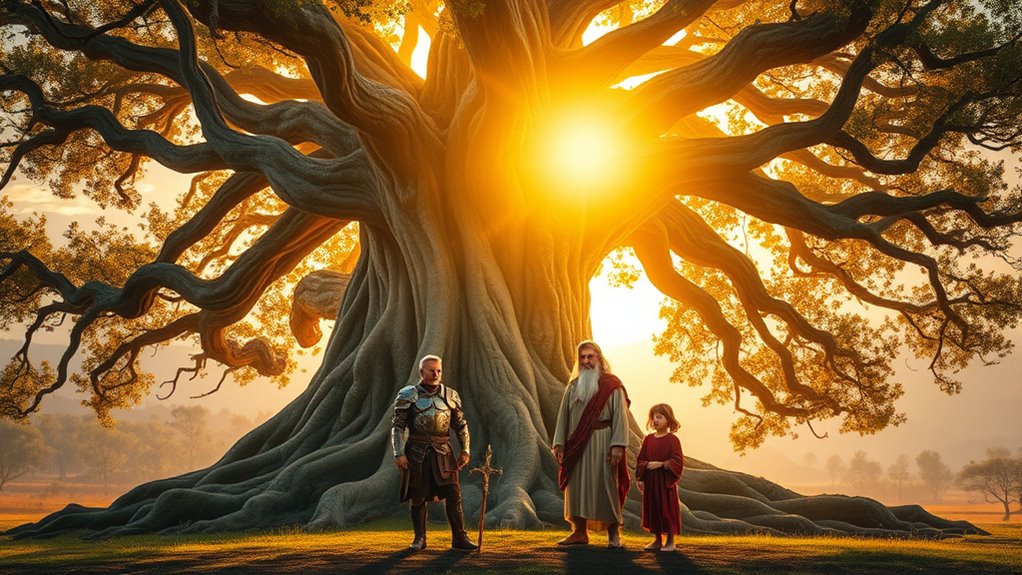

To harness mythic archetypes for universal appeal, focus on using symbols and characters that tap into shared cultural stories, like heroes, mentors, or shadows. Incorporate familiar motifs, but add fresh twists to keep your audience engaged. Understanding the deeper meanings behind these archetypes helps create stories that resonate across cultures and generations. Continue exploring how these timeless symbols can elevate your narratives and forge lasting emotional connections.
Key Takeaways
- Incorporate universal archetypes like the hero, mentor, and shadow to create relatable and emotionally resonant stories.
- Use culturally rich symbols and motifs to foster deep connections across diverse audiences.
- Reframe familiar archetypes with innovative perspectives to maintain relevance and encourage reflection.
- Layer symbolism and metaphor to embed cultural motifs, enhancing story depth and universality.
- Balance tradition with novelty through multimedia storytelling to amplify engagement and memorability.

Have you ever wondered how ancient stories continue to resonate across cultures and generations? It’s because they tap into universal themes and archetypes that speak to fundamental human experiences. When you harness mythic archetypes, you tap into a shared cultural symbolism that transcends time and geography. These archetypes act as mental shortcuts, allowing audiences to instantly connect with characters and stories on a deep level. To do this effectively, you need to understand the storytelling techniques that utilize these symbols to evoke emotion and meaning.
Using familiar symbols like the hero, the mentor, or the shadow creates an immediate connection with your audience. These archetypes carry cultural symbolism that resonates across different societies, making your story accessible and compelling. For example, the hero’s journey isn’t just a narrative pattern; it reflects universal human struggles and aspirations. When you incorporate this into your storytelling, you tap into a collective subconscious that recognizes the pattern and feels compelled to follow along. The key lies in how you present these archetypes—by emphasizing their symbolic significance and emotional depth, you make your story more relatable across diverse backgrounds.
Storytelling techniques centered on mythic archetypes often involve layering symbolism and metaphor. You don’t just tell a story; you embed it with images and motifs that evoke cultural symbolism. For instance, a quest can symbolize personal growth, a journey through darkness can represent overcoming fears, and a wise old figure can embody wisdom and tradition. When you weave these symbols into your narrative, you create a tapestry of meaning that audiences can interpret in various ways, depending on their cultural background. This layered approach makes your story adaptable and universally appealing, as it invites listeners to find their own reflections within the archetypes. Additionally, understanding how these archetypes are employed in different cultures can help you craft stories that are both authentic and resonant on a global scale. Recognizing the importance of cultural symbolism further enhances the depth and relevance of your storytelling. Moreover, exploring cross-cultural archetypes can deepen your understanding of shared human narratives and foster greater empathy.
Furthermore, effective storytelling with archetypes involves a balance between familiarity and novelty. You want to use well-known symbols but also introduce fresh perspectives or twists that keep the story engaging. This way, you honor the cultural symbolism while offering something new, ensuring the story remains relevant. By employing storytelling techniques that highlight the timeless nature of these archetypes, you foster a sense of continuity and shared understanding. This approach not only captivates your audience but also encourages them to see their own experiences mirrored in the narrative, strengthening the universal appeal of your story. Incorporating visual storytelling and multimedia elements can further enhance this connection, making your narrative even more impactful and memorable.
In essence, harnessing mythic archetypes involves understanding the power of cultural symbolism and applying thoughtful storytelling techniques. When you do this well, your stories transcend individual cultures, becoming part of a collective human experience that continues to inspire and resonate across generations. Recognizing the role of archetypes in storytelling can help you craft narratives that are both meaningful and enduring across diverse audiences.
mythic archetype storytelling guide
As an affiliate, we earn on qualifying purchases.
As an affiliate, we earn on qualifying purchases.
Frequently Asked Questions
How Can Mythic Archetypes Be Adapted for Modern Storytelling?
To adapt mythic archetypes for modern storytelling, you should focus on making them relatable and relevant. You can do this by updating their settings, character traits, or motivations to reflect current issues and audiences. Use archetype adaptation creatively, blending traditional symbols with contemporary themes. This approach keeps stories fresh, engaging, and universally appealing, ensuring that classic archetypes resonate in today’s diverse and dynamic storytelling landscape.
What Are the Cultural Considerations When Using Archetypes Globally?
When using archetypes globally, you must respect cross-cultural symbolism and regional storytelling nuances. Imagine sharing a hero’s journey in Japan, where the concept of harmony influences character arcs differently than in Western narratives. You need to understand cultural sensitivities, avoiding stereotypes or misrepresentations. By researching local myths and traditions, you guarantee your storytelling resonates authentically, fostering genuine connection and avoiding unintended offense across diverse audiences.
Can Archetypes Influence Behavior Beyond Storytelling and Branding?
Archetypes can indeed influence behavior beyond storytelling and branding by shaping social influence and behavior modification. When you recognize these universal symbols, you can tap into deep-rooted motivations and emotions that guide people’s actions subconsciously. This allows you to craft messages or environments that subtly steer behavior, leveraging shared archetypes to foster connection, inspire change, or reinforce societal norms effectively.
How Do Archetypes Evolve Across Different Historical Periods?
You might think archetypes are set in stone, but they’re more like a chameleon, changing with each era. Historical shifts and cultural reinterpretations shape how archetypes express themselves, reflecting societal values and fears. As time progresses, these symbols adapt, gaining new layers of meaning. You see this in stories, art, and behavior, showing that archetypes evolve, yet their core essence endures, connecting past and present seamlessly.
What Are Common Pitfalls in Applying Mythic Archetypes Effectively?
When applying mythic archetypes, you should watch out for common pitfalls like overgeneralization and stereotypes. These can make your characters or stories feel clichéd or offensive. Avoid forcing archetypes onto your narrative without considering context, as it can lead to misrepresentation. Instead, tailor archetypes thoughtfully, respecting their depth and diversity. This way, you create relatable, authentic stories that resonate universally without falling into predictable or harmful stereotypes.
universal symbols for writers
As an affiliate, we earn on qualifying purchases.
As an affiliate, we earn on qualifying purchases.
Conclusion
By embracing mythic archetypes, you tap into timeless stories that resonate across cultures—think of them as modern-day legends guiding your journey. Just like Hercules faced his trials, you too can draw strength from these universal symbols, transforming challenges into triumphs. Remember, the hero’s journey isn’t just ancient myth; it’s your story waiting to unfold. So, step forward with courage, knowing the gods of old are whispering encouragement in your ear.
hero's journey storytelling book
As an affiliate, we earn on qualifying purchases.
As an affiliate, we earn on qualifying purchases.
cultural symbolism in storytelling
As an affiliate, we earn on qualifying purchases.
As an affiliate, we earn on qualifying purchases.