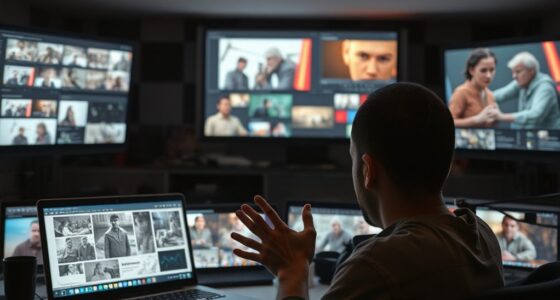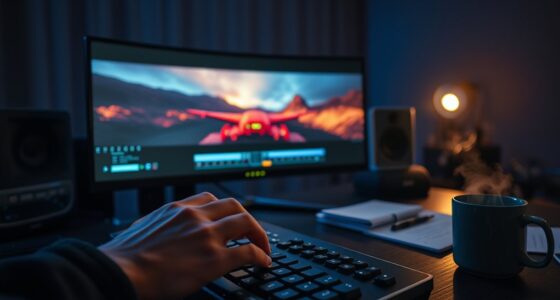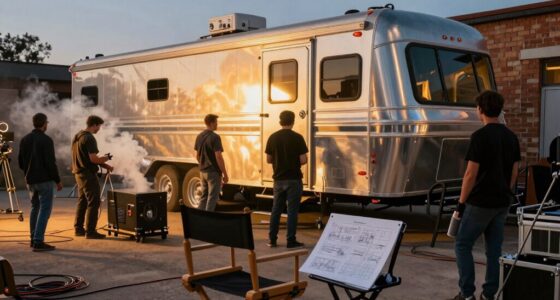
Using a full frame camera dramatically enhances your trailer’s look by delivering richer, sharper images with a cinematic feel. It allows you to create a shallow depth of field, making your subjects stand out and adding depth to your scenes. The camera’s increased dynamic range and better low-light performance give you more flexibility with lighting and color grading. If you keep exploring, you’ll discover how these features can help you craft even more compelling visuals.
Key Takeaways
- Full frame cameras deliver a cinematic, immersive aesthetic with sharp detail and depth, enhancing trailer visual appeal.
- They enable softer, natural lighting, creating flattering and dramatic shadows that add emotional depth.
- High dynamic range and color fidelity support nuanced color grading, emphasizing mood and tone.
- Larger sensors improve overall image quality, allowing for more flexible shot composition and storytelling.
- The resulting visuals communicate the story clearly and impactfully, elevating the trailer’s professional look.
When it comes to crafting a trailer that captivates viewers, the choice of camera plays a essential role—particularly the decision to shoot with a full frame camera. These cameras excel at delivering a rich, cinematic look that instantly grabs attention. The larger sensor size allows for a shallower depth of field, which helps you isolate subjects and create a more immersive experience. But beyond the technical benefits, the way you handle lighting techniques and color grading methods becomes key in shaping the final visual style.
With a full frame camera, your lighting setup has a greater impact on the mood and tone of your trailer. Because of the sensor’s size, you can use softer lighting to produce a more natural, flattering glow on your actors or key elements. It also grants you more flexibility in low-light situations, enabling you to craft scenes with minimal noise and beautiful, cinematic shadows. When lighting your shots, you might opt for diffused sources or bounce light to enhance the depth and dimension, taking full advantage of the camera’s ability to capture subtle tonal variations. This, in turn, gives you more room to experiment with contrast and highlight details that might get lost with smaller sensors.
Full frame cameras allow for softer lighting, richer shadows, and enhanced detail, elevating your trailer’s cinematic quality.
Color grading methods also play a critical role in elevating the footage shot on a full frame camera. Thanks to the high dynamic range and color fidelity, you can push your footage further during post-production without sacrificing image quality. Whether you’re aiming for a moody, desaturated look or vibrant, punchy colors, the larger sensor provides a solid foundation for nuanced grading. You can emphasize warmth or coolness, deepen shadows, or add a cinematic glow with greater control and precision. This synergy between the camera’s inherent image quality and your chosen color grading methods results in a polished, professional finish. Additionally, understanding sensor size and its influence on image quality can help filmmakers make more informed decisions when planning their shots. Recognizing how sensor size impacts image quality enables you to optimize your camera settings and lighting to achieve the desired cinematic effect.
Ultimately, the look of your trailer hinges on how well you utilize the full frame camera’s capabilities in tandem with your lighting techniques and color grading methods. The camera’s ability to produce sharp, detailed images with a beautiful depth of field sets the stage for creative choices. When combined with thoughtful lighting and skilled color grading, your footage transforms into a visually compelling story that draws viewers in from the first frame. This combination allows you to craft a trailer that not only looks stunning but also communicates your story with clarity and emotional impact.
full frame camera for filmmaking
As an affiliate, we earn on qualifying purchases.
As an affiliate, we earn on qualifying purchases.
Frequently Asked Questions
Do Full Frame Cameras Require Different Lenses for Trailer Filming?
Yes, full frame cameras often require different lenses for trailer filming due to lens compatibility and desired depth of field. You’ll want lenses specifically designed for full frame sensors to avoid vignetting and maximize image quality. These lenses also help you achieve a shallower depth of field, adding cinematic depth and focus control. Using the right lenses guarantees you get ideal sharpness, contrast, and aesthetic that matches your creative vision.
How Do Full Frame Cameras Impact Budget and Production Costs?
Using full frame cameras can increase your budget and production costs because they demand higher camera stability and more lighting. You’ll need costly stabilization gear to prevent shaky shots and additional or powerful lighting to compensate for the larger sensor’s depth of field. These factors can lead to increased equipment rentals and setup time, making your trailer production more expensive. Planning ahead helps manage these costs effectively.
Are Full Frame Cameras Suitable for Fast-Paced or Action Scenes?
Ever wonder if full frame cameras handle fast-paced action scenes? They can, if you prioritize camera stability and lighting considerations. Their large sensors capture stunning detail, but quick movements demand steady rigs or gimbals to avoid blur. You’ll also need excellent lighting to prevent noise. With proper setup, full frame cameras excel in dynamic scenes, delivering cinematic quality even in high-speed moments. Are you ready to harness their power for your action shots?
What Are the Common Challenges When Using Full Frame Cameras for Trailers?
You might find camera stability challenging with full frame cameras, especially during dynamic trailer scenes, because their larger sensors demand steady shots. Additionally, they often have higher lighting requirements, so you need ample lighting setups to avoid underexposure. Managing these factors is essential; otherwise, your footage could appear shaky or poorly lit, impacting the trailer’s professional look. Proper stabilization gear and adequate lighting are vital for ideal results.
How Does Sensor Size Influence Post-Production Editing and Color Grading?
Sensor size impacts post-production editing and color grading by requiring precise sensor calibration to guarantee color consistency across shots. Larger sensors capture more detail and dynamic range, giving you more flexibility during grading. You’ll need to pay attention to calibration to maintain uniform color tones, especially when combining footage from different cameras. Proper calibration helps you achieve seamless color consistency, making your trailer look polished and professional throughout the editing process.
cinematic lens for full frame camera
As an affiliate, we earn on qualifying purchases.
As an affiliate, we earn on qualifying purchases.
Conclusion
So, when you shoot your trailer with a full frame camera, you’re not just capturing images—you’re creating cinematic magic that could make Hollywood jealous. Every shot will explode with breathtaking detail, stunning depth, and an almost otherworldly clarity that commands attention. It’s like turning your project into a visual masterpiece that practically leaps off the screen. Trust me, once you go full frame, you’ll wonder how you ever settled for anything less—your trailer will be unstoppable!
lighting kit for video production
As an affiliate, we earn on qualifying purchases.
As an affiliate, we earn on qualifying purchases.
color grading software for videos
As an affiliate, we earn on qualifying purchases.
As an affiliate, we earn on qualifying purchases.