To navigate international co-productions effectively, you should understand the diverse funding models combining government grants, private investments, and international agencies, which influence budgets and creative choices. Embrace cultural exchange to enrich your content and guarantee cultural sensitivities are respected. Be prepared to handle legal issues, logistical challenges, and negotiation of shared profits. Balancing these elements can maximize your project’s success and appeal. Keep exploring how these factors come together for a smoother collaboration process.
Key Takeaways
- Understand each partner’s funding sources, criteria, and expectations to align financial and creative goals effectively.
- Foster open communication and trust to manage legal, language, and logistical challenges smoothly.
- Incorporate cultural exchange elements to enhance authenticity and appeal to diverse audiences.
- Negotiate clear agreements on intellectual property, profit sharing, and cultural representation upfront.
- Balance funding models, cultural sensitivities, and creative visions to ensure project success and global relevance.
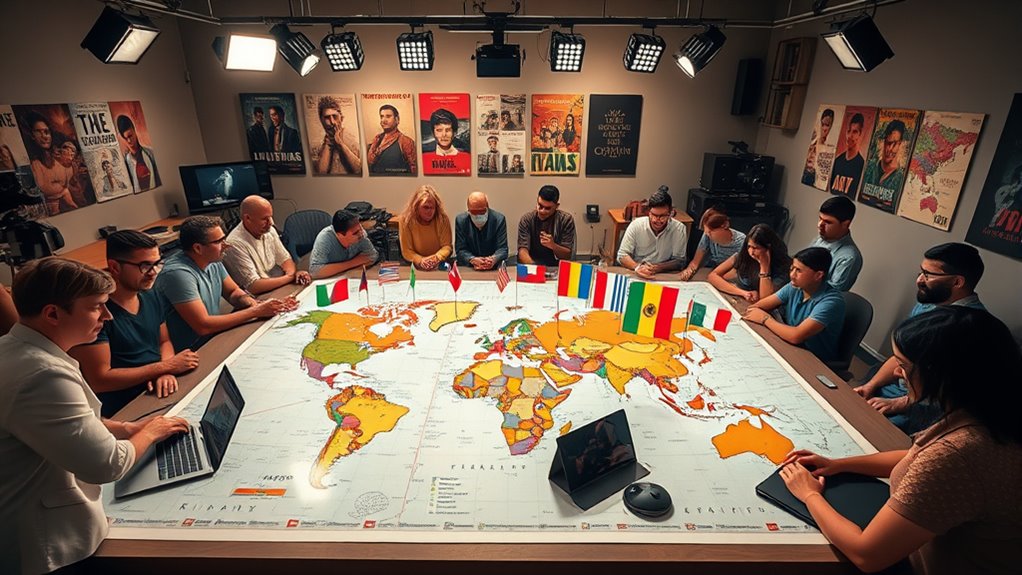
Have you ever wondered how international co-productions shape the global film and television industry? These collaborations blend resources, talent, and stories from different countries, creating content that appeals to diverse audiences worldwide. At the heart of these partnerships are funding models that determine how financial resources are pooled and managed across borders. You’ll find that some co-productions rely on a mix of government grants, private investments, and international funding agencies, each with specific criteria and expectations. Knowing how these funding models work is essential because they influence production budgets, distribution rights, and even creative decisions. For example, government incentives in certain countries encourage foreign filmmakers to include local talent or themes, fostering a more integrated cultural landscape. These financial arrangements are often designed to maximize returns while supporting local industries, making it indispensable for you as a producer or director to navigate the complex web of funding sources carefully. Additionally, understanding affiliate disclosure policies can help you be transparent about financial relationships involved in your projects.
Beyond finances, international co-productions serve as a powerful platform for cultural exchange. You get to showcase different traditions, languages, and storytelling styles, enriching the final product with authenticity and depth. Cultural exchange isn’t just a byproduct; it’s a strategic goal that helps build bridges between nations and audiences. When you collaborate across borders, you gain insights into different societal values, which can influence character development and narrative arcs. This exchange often leads to innovative storytelling techniques that wouldn’t emerge within a single cultural context. Furthermore, working with international partners exposes you to diverse creative approaches, broadening your perspective and enhancing your skills. As a result, international co-productions often stand out because they resonate on a universal level, appealing to global viewers while maintaining local relevance.
Navigating these collaborations requires balancing multiple interests—funding, cultural sensitivities, and creative visions. You need to understand the legal and logistical aspects involved in cross-border partnerships, including copyright laws, distribution rights, and language barriers. Building trust and open communication between international partners is essential, especially when negotiating aspects like cultural representation and shared profits. By appreciating the importance of funding models and cultural exchange, you position yourself to create compelling content that transcends borders. Ultimately, successful international co-productions depend on your ability to manage financial resources wisely while respecting and integrating diverse cultural elements. This balancing act not only enhances the quality of your project but also contributes to a more interconnected and vibrant global entertainment industry.
Frequently Asked Questions
How Are Intellectual Property Rights Divided in Co-Productions?
In co-productions, you typically divide intellectual property rights through licensing agreements, specifying each partner’s share of copyrights and royalties. You should clearly outline each party’s rights to prevent copyright disputes later. By drafting detailed licensing agreements upfront, you ensure everyone understands their rights, responsibilities, and revenue splits, reducing the risk of conflicts over intellectual property. Clear agreements help you manage rights effectively across different jurisdictions.
What Are Common Legal Challenges in International Co-Productions?
Think of international co-productions as crossing multiple bridges—each with its own rules. You’ll face jurisdictional complexities that can delay progress and contractual ambiguities that cause misunderstandings. These legal challenges demand careful navigation to avoid pitfalls. You must clarify each party’s rights and responsibilities upfront, ensuring your agreements are precise. By addressing these issues early, you keep your project moving smoothly across borders, avoiding costly disputes and delays.
How Do Funding and Financing Differ Across Countries?
Funding structures vary across countries, often involving public grants, private investments, or tax incentives. You’ll find that currency exchange impacts the amount of funding available and complicates budgeting. In some nations, government support is more accessible, whereas others rely heavily on private financing. You should carefully analyze each country’s funding landscape, considering currency risks, to guarantee your co-production remains financially viable and well-supported throughout the project.
What Cultural Considerations Impact Co-Production Agreements?
Think of co-production agreements as a delicate dance, where cultural sensitivities and language barriers shape every move. You need to understand local customs, avoid stereotypes, and respect storytelling traditions. Clear communication is essential; missteps can lead to misunderstandings or offense. By embracing cultural differences and fostering mutual respect, you build trust and ensure your project resonates globally, much like a harmonious symphony blending diverse instruments into one beautiful melody.
How Is Revenue Sharing Typically Managed Among Partners?
You typically manage revenue sharing through clear profit distribution agreements aligned with your revenue models. You decide how profits are split based on each partner’s contribution, rights, and investments. It’s essential to outline these terms upfront to avoid disputes. You might use percentage splits, fixed fees, or tiered models. Regularly review and adjust these agreements as the project evolves, ensuring all partners stay aligned and fairly compensated.
Conclusion
Steering international co-productions is like steering a ship through unpredictable waters. With each collaboration, you set your sails to catch new winds, balancing diverse cultures and goals. Though the journey may have storms and calm seas, your steady hand guides the vessel forward. Embrace the voyage, knowing that every challenge is a wave to ride and every success a shining lighthouse on the horizon, leading you toward a horizon of shared achievement and global connection.