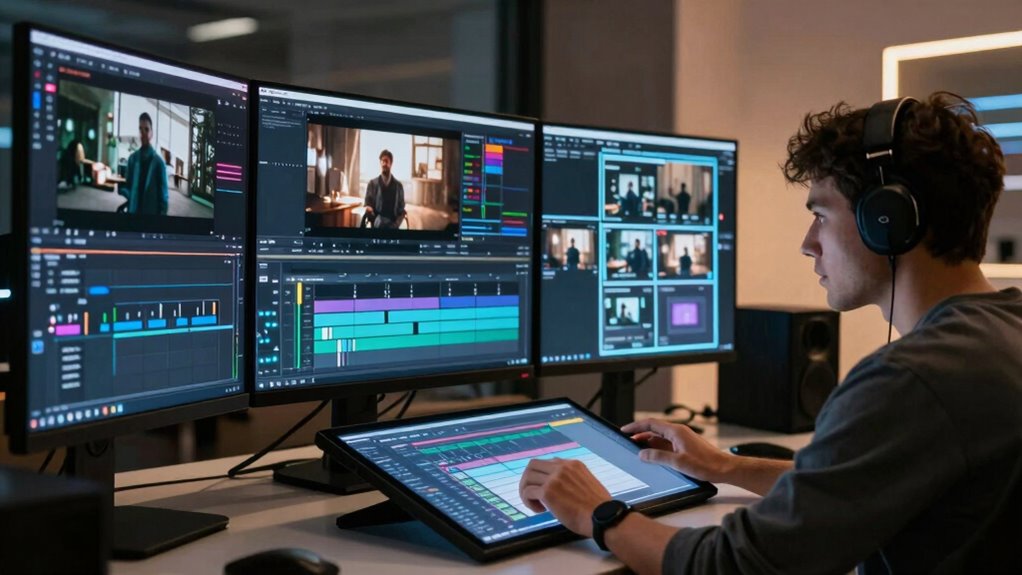

AI shot planning can help you identify potential shots, recommend sequences, and analyze viewer reactions to enhance engagement. It offers data-driven insights and trend patterns to guide your editing process, but it can’t grasp emotional nuances, storytelling details, or your creative vision. Human judgment remains essential to craft a compelling, unique narrative. If you want to discover how AI and your creativity can work together effectively, there’s more to explore here.

Get movie-night favorites delivered free — and shop member deals
- Fast, free delivery on millions of items
- Access to Prime Big Deal Days deals on October 6–7
- Prime Video, Amazon Music and more included
Key Takeaways
- Can identify potential shots and suggest sequences based on data analysis to enhance trailer flow.
- Cannot fully understand emotional nuance or interpret the narrative’s thematic intent.
- Assists in organizing and analyzing shots but relies on human editors for creative decisions.
- Analyzes viewer reactions to predict engaging shots, though predictions are not always accurate.
- Cannot replace human creativity, artistic vision, or cultural context in crafting trailers.
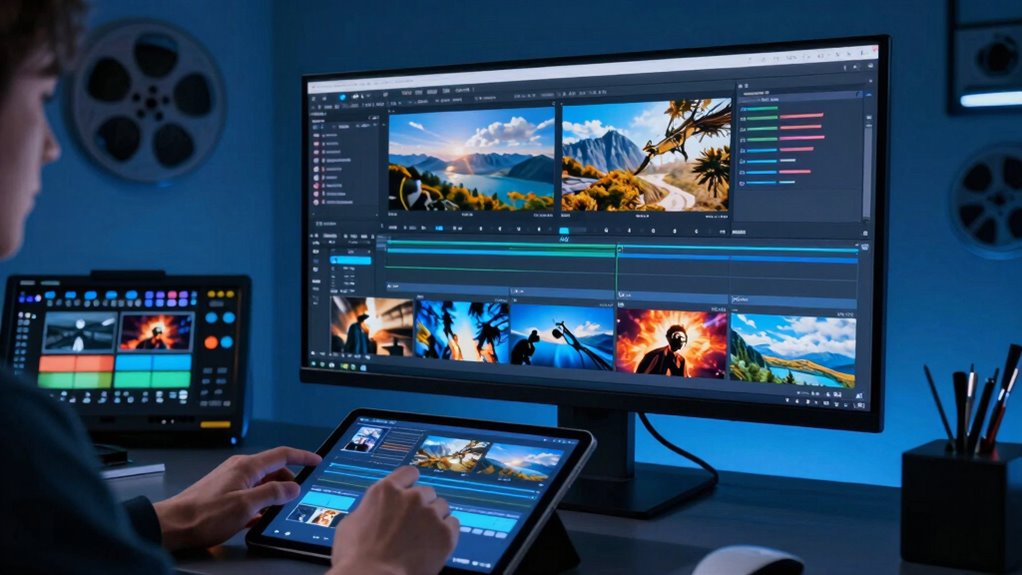
However, AI shot planning isn’t a magic wand. While it can identify potential shots and recommend sequences, it lacks the nuanced understanding of storytelling that a human editor brings. Emotional resonance, cultural context, and subtle cues often require human intuition. AI may suggest technically sound shots, but it cannot fully grasp the emotional impact you want to evoke or how a scene fits within the larger narrative arc. This means you’ll still need to rely on your judgment to select shots that resonate best with your target audience.
Audience engagement is at the core of trailer editing, and AI tools can help maximize it by providing data-driven insights. They can analyze viewer reactions or preferences to predict which shots are likely to generate excitement and curiosity. Still, these predictions aren’t foolproof. Creativity and spontaneity often produce the most memorable trailers, and AI’s tendency to favor popular or trending patterns might stifle originality if not used thoughtfully. It’s important to see AI as an assistant rather than a replacement for your creative instincts.
Furthermore, AI shot planning is limited in its ability to understand the aesthetic or thematic goals of your trailer. It can suggest technically *superior* shots or sequences, but it can’t interpret your unique vision or style. To truly make a trailer stand out, you’ll need to infuse your personal touch and creative vision into the process. Additionally, understanding the importance of content formats and how they influence viewer perception can help guide your editing choices. Ultimately, AI can be a valuable tool for organizing, analyzing, and *enhancing* shots, especially when working with virtual reality or aiming for high audience engagement. But it’s your artistic sensibility that will give your trailer the emotional punch that hooks viewers and leaves a lasting impression.
video editing shot list organizer
As an affiliate, we earn on qualifying purchases.
As an affiliate, we earn on qualifying purchases.
Frequently Asked Questions
How Does AI Shot Planning Integrate With Existing Editing Software?
AI shot planning typically integrates with existing editing software through plugins or APIs, allowing you to streamline your workflow. You’ll find it enhances user engagement by suggesting best shot sequences based on your footage. The technical integration is straightforward, often involving compatible formats or direct links to your editing tools. This makes it easier to incorporate AI-driven insights, boosting efficiency while maintaining control over your creative process.
Can AI Predict Audience Preferences for Trailer Shot Selection?
AI can predict audience preferences for trailer shot selection by analyzing data on audience engagement and genre specificity. You’ll find that AI identifies patterns in what viewers respond to, helping you choose shots that resonate most. While it’s not perfect, AI offers valuable insights, enabling you to craft trailers that better target your audience’s tastes and boost engagement, ultimately making your trailers more compelling and effective.
What Are the Limitations of AI in Capturing Creative Storytelling?
AI struggles with capturing creative storytelling because it often exhibits creative bias, favoring patterns and data over originality. It can’t fully interpret emotional depth or nuanced human experiences, which are essential for compelling narratives. As a trailer editor, you’ll find AI helpful for technical tasks, but it lacks the intuition and emotional sensitivity needed to craft stories that truly resonate. Human creativity remains crucial for authentic storytelling.
How Secure Is the Data Used for AI Shot Planning?
Your data used for AI shot planning is generally protected by security protocols designed to guarantee data privacy. Companies implement encryption, access controls, and regular security audits to safeguard your information. However, no system is entirely foolproof, so it’s essential to stay informed about how your data is handled and to choose services that prioritize robust security measures to keep your creative work safe.
Is AI Shot Planning Suitable for All Types of Film Genres?
Think of AI shot planning as a versatile artist’s palette—some colors suit certain genres better than others. It offers great genre versatility but might impose creative constraints for highly unique or experimental films. For mainstream genres like action or drama, it works well, streamlining edits. However, for niche or avant-garde projects, you may find it limiting, so you’ll want to balance AI suggestions with your creative vision.
trailer editing software with AI integration
As an affiliate, we earn on qualifying purchases.
As an affiliate, we earn on qualifying purchases.
Conclusion
Think of AI shot planning like a compass guiding you through uncharted waters. It can point you in the right direction, helping you navigate complex footage and streamline your editing process. But remember, it’s not the captain steering the ship—your creative instinct still charts the course. Embrace AI as your loyal navigator, not your sole captain, and you’ll find your trailer’s story unfolding with purpose and precision.
viewer reaction analysis tools for video
As an affiliate, we earn on qualifying purchases.
As an affiliate, we earn on qualifying purchases.
professional trailer editing monitor
As an affiliate, we earn on qualifying purchases.
As an affiliate, we earn on qualifying purchases.
Halloween Picks
halloween
As an affiliate, we earn on qualifying purchases.