Smart devices are transforming filmmaking by making advanced stabilization, clear audio capture, and workflow improvements more accessible. You can film steady shots while moving, thanks to smart gimbals and sensors that counteract unwanted movement. Wireless microphones and AI-enhanced audio tools help capture professional sound in any environment. Plus, features like real-time monitoring and auto-focus streamline your process, reducing equipment needs and boosting creativity. Continue exploring to discover how these innovations can elevate your filmmaking experience.
Key Takeaways
- Smart gimbals and stabilized mounts enable smooth footage during dynamic movements, reducing reliance on bulky equipment.
- Wireless audio systems and AI-enhanced microphones improve sound quality in varied environments.
- Real-time monitoring and automatic focus streamline shooting, reducing crew size and setup time.
- Compact, portable devices expand creative flexibility, allowing high-quality filming in diverse locations.
- Advanced technology democratizes filmmaking, making professional tools accessible to amateurs and independent creators.
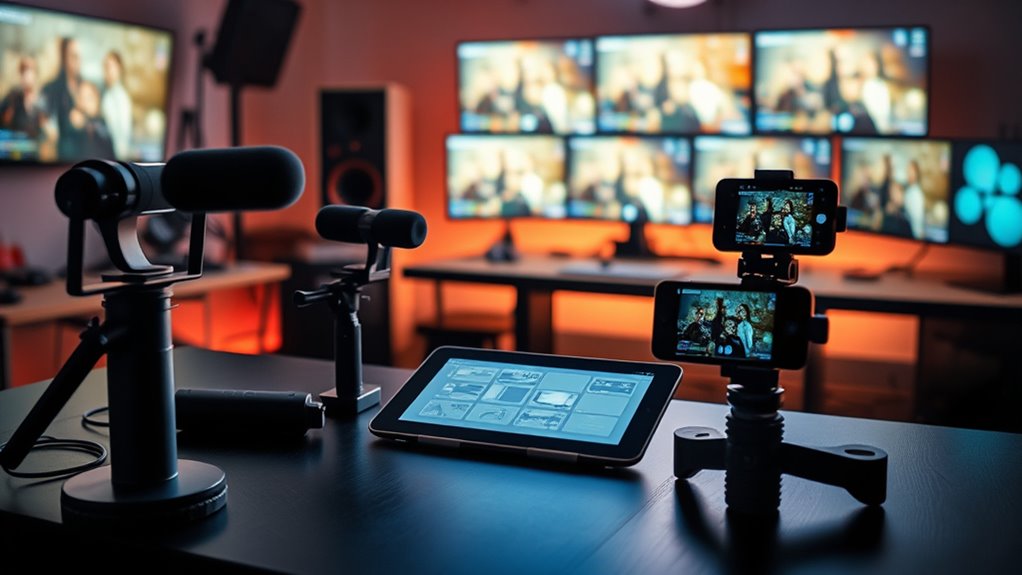
Have you ever wondered how smart devices are transforming filmmaking? It’s no secret that technology is revolutionizing the way movies are made, and you’re at the forefront of this change. With smart devices, the process becomes more accessible, efficient, and creative. One vital area where these devices make a difference is in camera stabilization. Traditional filmmaking required heavy, expensive equipment to keep shots steady, but now, smart gimbals and stabilized mounts are making it easier for you to achieve smooth footage. These devices use sensors and algorithms to counteract unwanted movements, allowing you to walk, run, or even jump while maintaining steady shots. This means you can capture dynamic scenes without the need for bulky rigs, making your workflow more flexible and less cumbersome. Plus, many of these stabilization tools are compact and portable, enabling you to shoot high-quality footage on the go, whether you’re in a studio or out in the field.
Alongside camera stabilization, audio enhancement has become more sophisticated thanks to smart devices. Clear, crisp sound is essential in filmmaking, and now, you can substantially improve audio quality without professional-grade equipment. Smart microphones and wireless audio systems automatically filter out background noise and focus on your subject’s voice, making your recordings sound professional even in noisy environments. Some devices even come with built-in AI that can recognize and optimize specific sound types, ensuring your dialogue remains intelligible and natural. This technology allows you to shoot interviews, dialogue scenes, or ambient shots without sacrificing audio quality, saving you time in post-production. Additionally, these smart audio devices often connect seamlessly with your camera or smartphone, simplifying the entire recording process and reducing the need for extensive setup. As you incorporate sleep and mental health practices into your creative routine, you may find your focus and inspiration improve, leading to more compelling storytelling.
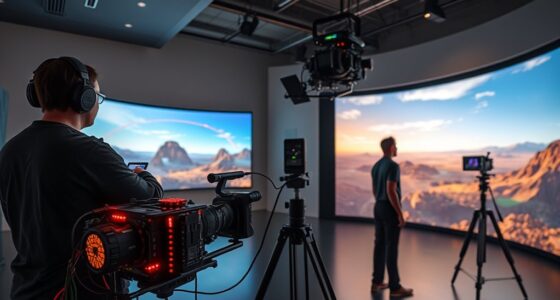
The integration of smart devices into filmmaking doesn’t stop at stabilization and audio. You also benefit from features like real-time monitoring, automatic focus adjustments, and intelligent scene recognition, all of which streamline your workflow. You can make quick adjustments on set, ensuring your shots are perfectly framed and correctly exposed, all while maintaining high production value. These tools empower you to create more professional-looking films without the need for large crews or expensive equipment. As you embrace these innovations, you’ll find that your creative possibilities expand, giving you the freedom to tell stories more efficiently and effectively. Ultimately, smart devices are democratizing filmmaking, making it easier for both amateurs and professionals to produce engaging, high-quality content.
smart camera gimbal for filmmaking
As an affiliate, we earn on qualifying purchases.
As an affiliate, we earn on qualifying purchases.
Frequently Asked Questions
How Do Smart Devices Impact Traditional Filmmaking Budgets?
Smart devices considerably impact traditional filmmaking budgets by reducing costs and improving accessibility. You can cut expenses on equipment and crew, as smart devices often replace expensive gear. These devices also make filmmaking more accessible, allowing you to shoot high-quality content without a large budget. This cost reduction and accessibility boost empower you to create more with less, opening doors for indie filmmakers and small teams to produce professional films efficiently.
Can Smart Devices Fully Replace Professional Filming Equipment?
You can’t expect smart devices to fully replace professional filming equipment, as they’re still catching up. While they’ve opened doors to new cinematography techniques, they often lack the equipment durability needed for high-end productions. Think of it as bringing a knife to a gunfight—smart devices are great for quick shots, but professional gear delivers the precision and quality that serious filmmakers require. They’re more complementary than complete replacements.
What Are the Limitations of Using Smart Devices in Filmmaking?
You might find smart devices helpful, but they have limitations. Privacy concerns can arise if sensitive footage is unintentionally shared or hacked. Technical reliability is another issue; smart devices may freeze or malfunction during critical shots, risking delays or poor quality. While they’re great for quick setups, for complex scenes or professional standards, traditional equipment still offers better control, consistency, and security.
How Do Smart Devices Influence Storytelling Techniques?
Smart devices are like paintbrushes for your storytelling, shaping how you craft narratives. They enable you to create mobile storytelling experiences that are dynamic and engaging, using immersive visuals to draw viewers into your story world. With instant access to editing tools and real-time sharing, you can experiment with different techniques, making your storytelling more interactive and personalized. This shifts the traditional narrative approach, making your audience feel more connected and involved.
Are There Legal Considerations When Using Smart Devices for Filming?
Yes, you should consider legal issues when using smart devices for filming. Privacy concerns are vital; make sure you have permission when capturing people or private property. Also, protect intellectual property rights by avoiding unauthorized use of copyrighted content or software. Always stay informed about local laws and regulations, and obtain necessary releases or permits to prevent legal complications, safeguarding your project and respecting others’ rights.
wireless microphone for video recording
As an affiliate, we earn on qualifying purchases.
As an affiliate, we earn on qualifying purchases.
Conclusion
As you embrace smart devices in filmmaking, you’ll find they’re transforming how stories are told. Did you know that 85% of filmmakers now rely on smartphones for capturing scenes? This statistic shows just how accessible and powerful these tools have become. By leveraging smart tech, you can boost creativity, cut costs, and streamline production. So, explore these innovations—you’ll be amazed at what you can create with just a few smart devices at your fingertips.
As an affiliate, we earn on qualifying purchases.
portable video stabilization device
As an affiliate, we earn on qualifying purchases.
As an affiliate, we earn on qualifying purchases.