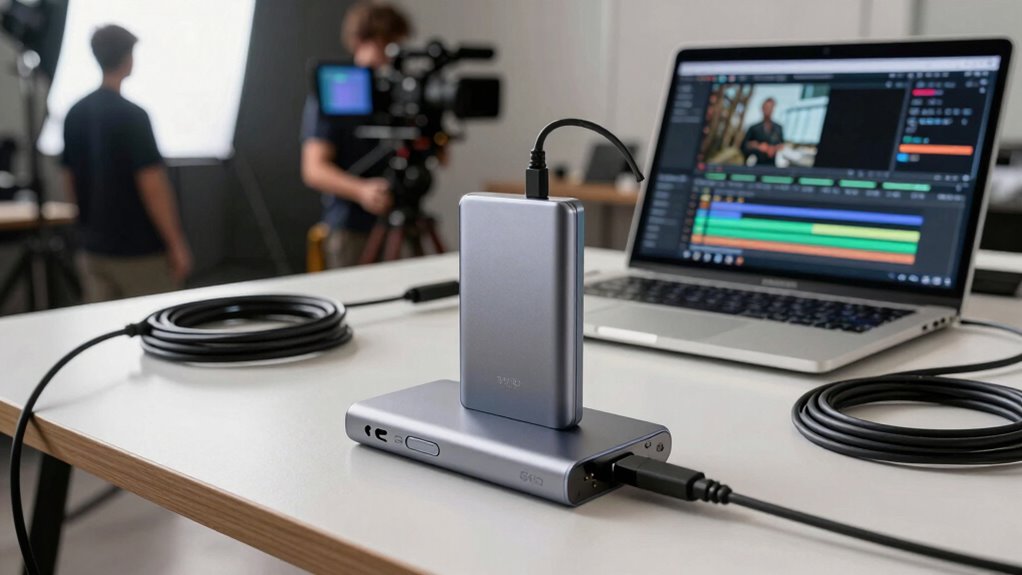

Portable SSDs have transformed how you handle data on set by replacing slow, bulky drives with fast, reliable storage. You can transfer large video files quickly, reducing downtime and streamlining workflow. They also enhance data security with encryption and backup options, ensuring your footage stays safe. Collaboration becomes easier as you share files seamlessly between team members and remote locations. Discover more about how these drives are shaping the future of production workflows.
Listen free for 30 days with Audible
Thousands of audiobooks and originals — cancel anytime.
As an affiliate, we earn on qualifying purchases.
Key Takeaways
- Enabled rapid transfer and access of large video files, reducing workflow delays on set.
- Facilitated easy, secure sharing of footage among team members and remote collaborators.
- Improved data security with encryption and backup options, protecting sensitive production content.
- Reduced reliance on bulky hardware, enhancing portability and on-set flexibility.
- Supported real-time data management, speeding up decision-making and streamlining production processes.
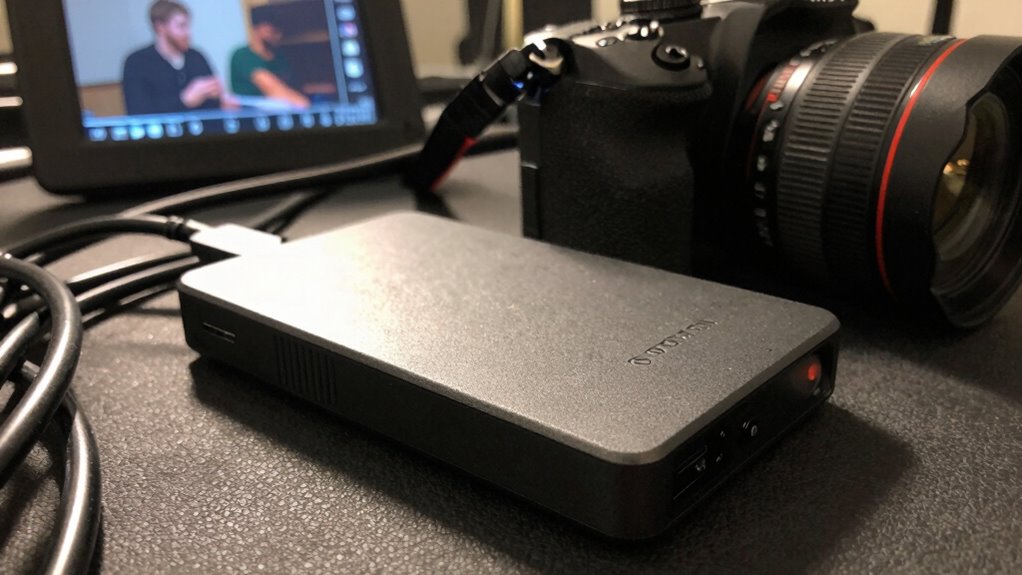
In the fast-paced world of film and television production, portable SSDs have revolutionized how you manage and transfer data on set. Gone are the days when you’d rely solely on bulky hard drives or slow transfer methods. Today, SSDs offer rapid file access, making it easier to move large video files between cameras, editors, and post-production teams. Their compact size means you can carry multiple drives, guaranteeing that no footage gets left behind or lost due to hardware failure. This shift has considerably improved your workflow, reducing downtime and keeping production on schedule.
With this increased efficiency, you also need to prioritize data security. Portable SSDs often come with hardware encryption options, helping you safeguard sensitive footage from theft or unauthorized access. As files travel between on-set locations and editing suites, risk management becomes essential. Implementing a robust data security strategy means not only using password protection and encryption but also guaranteeing that your files are backed up regularly. Cloud backup plays a key role here, providing an additional layer of safety. By syncing your SSD data to a secure cloud platform, you create a failsafe that allows you to recover footage if a drive is damaged or lost. This dual approach—local SSD storage combined with cloud backup—gives you peace of mind, knowing your valuable footage is protected against unforeseen events.
Furthermore, portable SSDs facilitate faster collaboration. Instead of waiting for large files to transfer via slower methods, you can quickly share footage with team members in real-time, whether they’re on set or remote. This immediacy accelerates decision-making and keeps production moving smoothly. Plus, with advances in encryption and cloud backup, you’re not just speeding up workflows—you’re also maintaining the integrity and confidentiality of your data. This is especially important when working with sensitive content, such as proprietary scripts, unreleased footage, or confidential client projects.
In essence, the adoption of portable SSDs has transformed how you handle on-set data. Their speed and portability enable more efficient workflows, while integrated security features and cloud backup options guarantee your data remains safe and accessible. As technology continues to evolve, you’ll find that these drives become even more integral to keeping your production operations seamless, secure, and resilient. Additionally, the advancements in storage technology ensure that SSDs keep getting faster, more reliable, and better suited for high-demand environments like on-set filming.
As an affiliate, we earn on qualifying purchases.
Frequently Asked Questions
What Are the Cost Differences Between Portable SSDS and Traditional Storage Options?
The cost comparison between portable SSDs and traditional storage options varies. Portable SSDs generally cost more upfront per gigabyte but offer faster speeds and greater durability. If you need higher storage capacity, traditional HDDs might be cheaper, but they’re slower and less reliable. You’ll need to weigh the benefits of portability and speed against the initial investment, considering your specific storage capacity needs and budget constraints.
How Do Portable SSDS Impact Data Security on Film Sets?
Portable SSDs enhance data security on film sets by offering features like data encryption, which protects sensitive footage from unauthorized access. They also improve theft prevention through physical security measures like lockable enclosures or secure storage options. By using SSDs with these security features, you reduce the risk of data breaches, ensuring your valuable footage stays safe during production and transport.
Are Portable SSDS Compatible With All Editing Software?
Think of portable SSDs as versatile bridges, connecting your footage to any editing software. They’re compatible with most major programs, allowing seamless data transfer speeds and easy integration. Your workflow remains smooth, whether you’re working with cloud backups or local files. While some specialized software might need extra steps, generally, these drives adapt effortlessly, making your editing process faster and more flexible without getting bogged down by compatibility issues.
What Is the Typical Lifespan of a Portable SSD in Professional Use?
In professional use, your portable SSD typically lasts around 5 to 10 years, depending on device durability and usage patterns. Heavy data transfer can wear out the drive faster, but many models offer data recovery options if issues arise. To prolong lifespan, handle the device carefully, avoid extreme temperatures, and regularly back up important files. Proper care ensures you get the most from your portable SSD over its lifespan.
How Do Portable SSDS Perform in Extreme Weather Conditions?
Portable SSDs generally perform well in extreme weather conditions thanks to their temperature resilience and weatherproof durability. You can rely on them in high heat or freezing cold, but it’s best to avoid prolonged exposure to moisture or direct water contact. Look for models with rugged, weatherproof designs, and always check the manufacturer’s specifications to guarantee your SSD can handle the specific environmental challenges you face on set.
As an affiliate, we earn on qualifying purchases.
Conclusion
Now that portable SSDs have revolutionized on-set data handling, you’re probably wondering what’s next. Will new tech push your workflow even further? As these devices continue to evolve, one thing’s certain—you’ll need to stay adaptable. The future’s full of possibilities, and the pace of change means you’ll never know what’s around the corner. But one thing’s guaranteed: your data habits are about to get even more exciting. Are you ready for what’s coming?
High-speed external SSD for on-set data transfer
As an affiliate, we earn on qualifying purchases.
As an affiliate, we earn on qualifying purchases.
As an affiliate, we earn on qualifying purchases.
NFL season / tailgating Picks
team gear
As an affiliate, we earn on qualifying purchases.