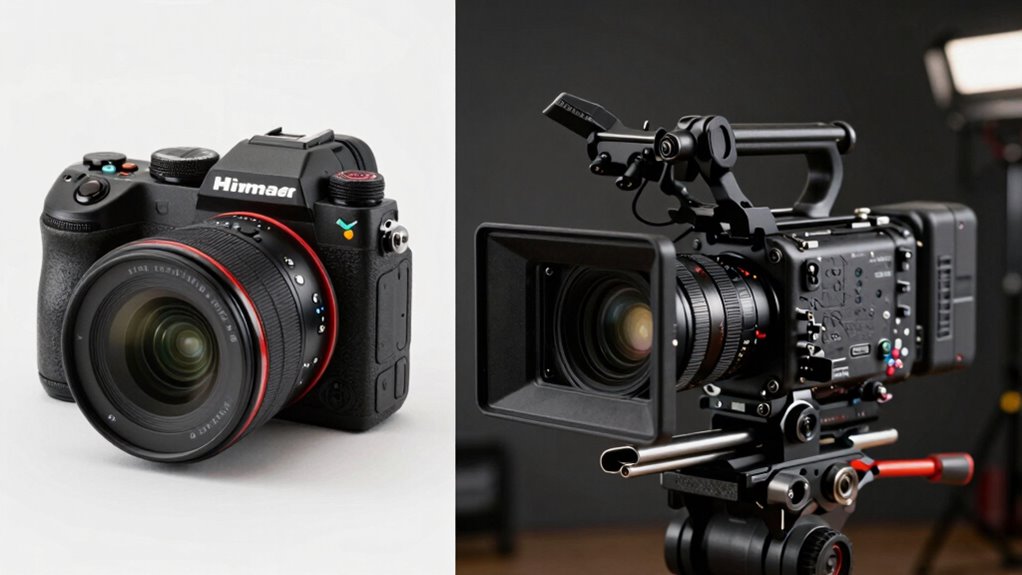
Creator cameras offer versatility with a wide range of lenses and advanced autofocus, making them ideal for quick, spontaneous shots like vlogging or run-and-gun filmmaking. Cinema cameras focus on high-quality images, larger sensors, and precise manual focus, perfect for controlled, professional productions. Your choice depends on whether you need fast, flexible shooting or cinematic control. To understand which suits your style best, explore the differences further—there’s more to discover.
Key Takeaways
- Creator cameras offer versatile lenses and advanced autofocus, ideal for fast-paced, spontaneous shooting scenarios.
- Cinema cameras feature larger sensors and cinema-specific lenses for a more cinematic, film-like image quality.
- Creator cameras prioritize ease of use and workflow integration, while cinema cameras focus on manual controls and focus precision.
- Autofocus and face detection are prominent in creator cameras, whereas cinema cameras excel in manual focus control.
- Lens options and sensor sizes differ, with creator cameras supporting quick lens changes and cinema cameras emphasizing cinematic depth of field.
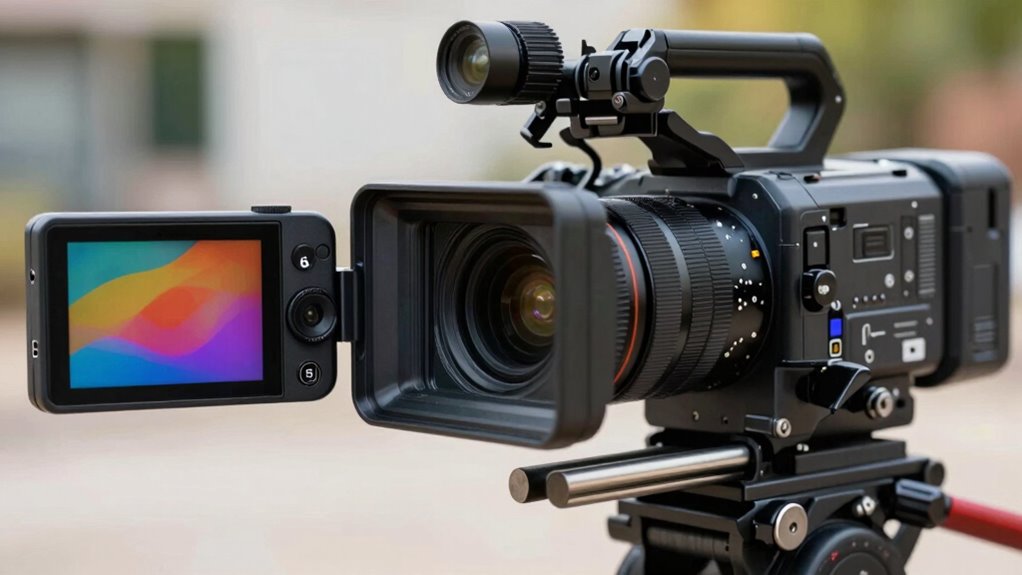
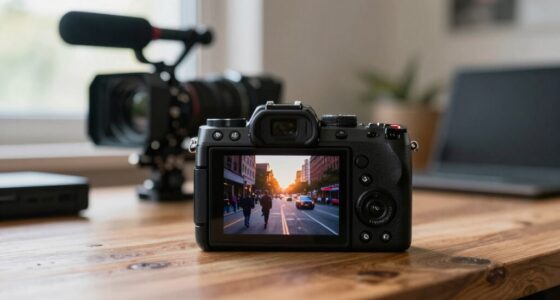
When choosing between creator cameras and cinema cameras, understanding their differences can markedly impact your production quality and workflow. Both types of cameras serve distinct purposes, and knowing what sets them apart helps you pick the right gear for your projects. One of the most noticeable differences lies in lens versatility. Creator cameras often feature a broader range of lens options, allowing you to switch from wide-angle shots to close-ups with ease. They’re typically compatible with popular mount systems that support a variety of lenses, giving you flexibility to adapt to different shooting conditions. Cinema cameras, on the other hand, tend to focus on high-quality, cinema-specific lenses designed for precision and cinematic look. While they might offer fewer lens choices in terms of mount compatibility, the lenses they support are often optimized for cinematic depth of field and sharpness. This distinction means that creator cameras excel in dynamic, fast-paced environments where quick lens changes are necessary, whereas cinema cameras are ideal for controlled, high-end productions where image quality and consistency matter most. Additionally, the sensor size can significantly influence the overall image quality and depth of field, with cinema cameras often featuring larger sensors for a more cinematic aesthetic. Understanding sensor sizes and their impact on image quality can help filmmakers make more informed decisions. Another aspect worth considering is the workflow involved in editing and post-production, as certain camera systems may integrate more seamlessly with editing software, streamlining the overall process. Autofocus performance is another critical aspect that distinguishes these camera types. Creator cameras generally excel in autofocus capabilities, often equipped with advanced tracking, face detection, and eye autofocus features. This makes them particularly suitable for run-and-gun shooting, vlogging, or scenarios where you need to keep subjects in focus without manual adjustments. Cinema cameras, however, tend to prioritize manual focus control, offering focus pulls and precise adjustments that are essential for narrative filmmaking. They usually lack the sophisticated autofocus systems found in creator cameras, but this is a deliberate choice to give filmmakers more control over focus transitions, especially during complex shots. This trade-off influences how you approach your shooting style. If you prefer fast-paced, spontaneous shoots or need to keep focus locked on moving subjects effortlessly, a creator camera with its autofocus performance will serve you well. Conversely, if your work involves meticulous focus pulls and controlled cinematic scenes, a cinema camera’s manual focus system provides the precision you need. Ultimately, your choice should align with your workflow, shooting environment, and the level of control you desire over focus and lens flexibility. Recognizing these fundamental differences will help you select the right camera to elevate your production quality and streamline your filmmaking process.
best creator camera for vlogging
As an affiliate, we earn on qualifying purchases.
As an affiliate, we earn on qualifying purchases.
Frequently Asked Questions
How Do Creator Cameras Handle Low-Light Conditions?
You’ll find that creator cameras handle low-light conditions fairly well thanks to their sensor sensitivity, which is often optimized for better performance in dim environments. They also benefit from lens adaptability, allowing you to switch to faster lenses that let in more light. This combination helps you capture clearer, brighter footage in low-light settings, making them a versatile choice for creators working in diverse lighting conditions.
Can Creator Cameras Be Used for Professional Filmmaking?
Yes, creator cameras can be used for professional filmmaking. For example, a documentary filmmaker might choose a creator camera for its excellent camera ergonomics and cinematic storytelling capabilities on a tight budget. These cameras often deliver high-quality images suitable for professional projects, especially when paired with proper lighting and sound. While they may lack some advanced features of cinema cameras, they’re versatile tools that serve many filmmaking needs effectively.
What Is the Durability Difference Between the Two Camera Types?
Creator cameras often feature a lighter build with less emphasis on ruggedness, while cinema cameras prioritize durability through robust build quality. You’ll find that cinema cameras have sensors designed for long shoots, with enhanced sensor robustness to withstand challenging conditions. If you work outdoors or in tough environments, cinema cameras tend to be more durable, ensuring your equipment lasts longer. Creator cameras may be more vulnerable to wear and tear over time.
Are Creator Cameras Compatible With Professional Cinema Lenses?
Creator cameras can be compatible with professional cinema lenses, but it largely depends on the lens mount and your camera’s specifications. While some models support interchangeable lenses, others are limited to specific mounts. Autofocus performance on creator cameras is often superior, making lens compatibility vital for quick, precise shots. Always check your camera’s lens mount compatibility and autofocus features before investing in cinema lenses to guarantee seamless operation.
How Do Battery Life and Power Options Compare?
You’ll find that battery longevity varies between creator and cinema cameras, with cinema cameras often offering longer-lasting batteries suited for extended shoots. Power versatility is also key; cinema cameras typically support multiple power options like AC adapters and larger batteries, giving you more flexibility on set. Creator cameras may have shorter battery life but are designed for quick swaps and portability. Overall, your choice depends on your shoot’s duration and power needs.
cinema camera lenses for filmmaking
As an affiliate, we earn on qualifying purchases.
As an affiliate, we earn on qualifying purchases.
Conclusion
So, whether you’re chasing crisp clarity with creator cameras or capturing cinematic charm with cinema cameras, remember the difference lies in your needs. Creator cameras cater to quick, quality content, while cinema cameras craft compelling, controlled storytelling. By understanding these distinctions, you can confidently choose your camera and conquer your creative goals. Embrace the excitement, explore the options, and elevate your visuals—because your perfect picture is just a decision away.
autofocus camera for run-and-gun shooting
As an affiliate, we earn on qualifying purchases.
As an affiliate, we earn on qualifying purchases.
manual focus cinema camera
As an affiliate, we earn on qualifying purchases.
As an affiliate, we earn on qualifying purchases.