

To measure trailer engagement in data-driven campaigns, focus on real-time analytics that track viewer interactions such as view duration, clicks, and social shares. Segment your audience based on their behaviors and preferences to see which groups respond best. Use this data to refine your messaging and creative assets quickly. Continuously monitor key metrics to identify patterns and make informed adjustments. Keep exploring these techniques to unseal even more insights into your trailer’s performance.
Key Takeaways
- Utilize real-time analytics to track viewer interactions such as views, clicks, and shares for immediate engagement insights.
- Segment audiences based on behaviors and demographics to evaluate trailer performance across different viewer groups.
- Monitor key engagement metrics like view duration and click-through rates to assess trailer effectiveness.
- Adjust creative content and targeting strategies dynamically based on ongoing performance data.
- Analyze post-campaign data to identify successful themes and inform future trailer optimization efforts.
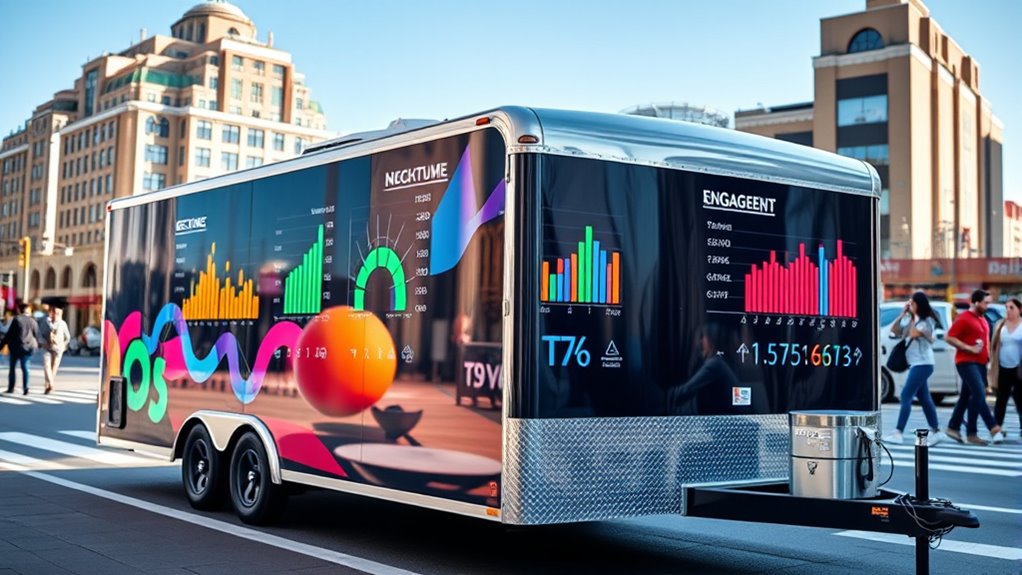
Have you ever wondered how modern campaigns increasingly target audiences with pinpoint accuracy? The secret lies in the power of data-driven strategies, especially when it comes to measuring trailer engagement. Marketers now use sophisticated tools like audience segmentation to divide viewers into specific groups based on their behaviors, preferences, and demographics. Instead of casting a wide net and hoping for the best, you can tailor your trailer content to resonate with distinct segments, ensuring that each viewer sees what’s most relevant to them. This targeted approach maximizes engagement and minimizes wasted ad spend.
Data-driven strategies like audience segmentation enhance trailer engagement by targeting specific viewer groups effectively.
But identifying the right audiences is just the beginning. The real power emerges through real-time analytics, which allows you to track how viewers are interacting with your trailers as they watch. With real-time data, you don’t have to wait days or weeks to gauge success; you see immediate feedback on which segments are most responsive. For example, if a particular age group or geographic location shows high engagement, you can quickly allocate more resources to amplify those efforts. Conversely, if another segment isn’t responding, you can tweak your messaging or creative assets on the fly, optimizing the campaign in real time.
This combination of audience segmentation and real-time analytics creates a dynamic feedback loop that continuously refines your approach. You start with a hypothesis about who your most receptive audiences are, then measure their reactions instantly. If the data confirms your assumptions, you can double down on those segments. If not, you pivot and experiment with different targeting strategies. This agility ensures your trailer campaigns stay relevant and effective, adapting to viewer preferences as they evolve.
Moreover, by analyzing engagement metrics like view duration, click-through rates, and social shares, you gain deeper insights into what resonates most. These insights inform not just your current campaign but also future marketing efforts. You understand better which themes, visuals, or messages prompt viewers to take action, enabling you to craft more compelling trailers that drive conversions. Incorporating content analysis techniques allows marketers to better interpret viewer interactions and preferences.
In essence, measuring trailer engagement through data-driven methods isn’t just about numbers; it’s about understanding your audience at a granular level. It empowers you to deliver the right message to the right people at the right time, boosting engagement and ultimately increasing your campaign’s return on investment. With audience segmentation guiding your targeting and real-time analytics providing immediate feedback, you’re equipped to run smarter, more responsive campaigns that truly connect with viewers.
Frequently Asked Questions
What Metrics Best Predict Trailer Success?
You should focus on viewer retention and social sharing to predict trailer success. High viewer retention indicates people stay engaged, increasing the likelihood they’ll watch more or share it. Social sharing measures how much your trailer resonates with audiences, spreading awareness. Tracking these metrics helps you understand engagement levels, allowing you to refine your campaign strategies for better reach and impact. The more viewers stay and share, the more successful your trailer likely is.
How Can Engagement Data Improve Future Trailers?
You can considerably improve future trailers by analyzing engagement data, especially how viewers respond to visual storytelling. For example, if data shows a drop in audience retention during specific scenes, you can refine those visuals to hold viewers’ attention longer. This insight helps you craft more compelling trailers that keep audiences engaged, making your storytelling more effective and increasing the chances of capturing viewer interest from start to finish.
What Tools Are Recommended for Tracking Trailer Views?
You should use tools like social media analytics platforms, such as Facebook Insights, YouTube Analytics, or Instagram Insights, to track trailer views effectively. These tools give you real-time data on viewer engagement and feedback, helping you understand how your trailer performs across different channels. By monitoring this data, you can identify what resonates with your audience and refine your future trailers for better engagement.
How Do Audience Demographics Influence Trailer Engagement?
Audience demographics notably influence trailer engagement by helping you tailor content to specific viewer segments. Through audience segmentation and demographic analysis, you can identify which groups are most interested in your trailer, allowing you to optimize messaging and visuals accordingly. This targeted approach increases engagement, ensuring your trailer resonates with the right viewers, ultimately boosting views and fostering stronger connections with your audience.
What Are Common Challenges in Measuring Trailer Performance?
Measuring trailer performance can feel like hitting a moving target. You often face challenges like inconsistent audience segmentation and limited data accuracy. Personalization efforts may fall flat if you can’t track how different viewer groups respond. Additionally, attributing engagement to specific trailers gets tricky, making it hard to refine content strategies. Overcoming these hurdles requires precise data collection and continuous analysis to truly understand what drives viewer interest.
Conclusion
By analyzing trailer engagement data, you can tailor your campaigns for better results. Did you know that trailers with personalized thumbnails see a 30% higher engagement rate? That’s a huge boost, showing how data-driven insights can make a real difference. Keep tracking viewer interactions and refining your approach—it’s the key to maximizing your campaign’s impact. Embrace data, and watch your trailer engagement soar!