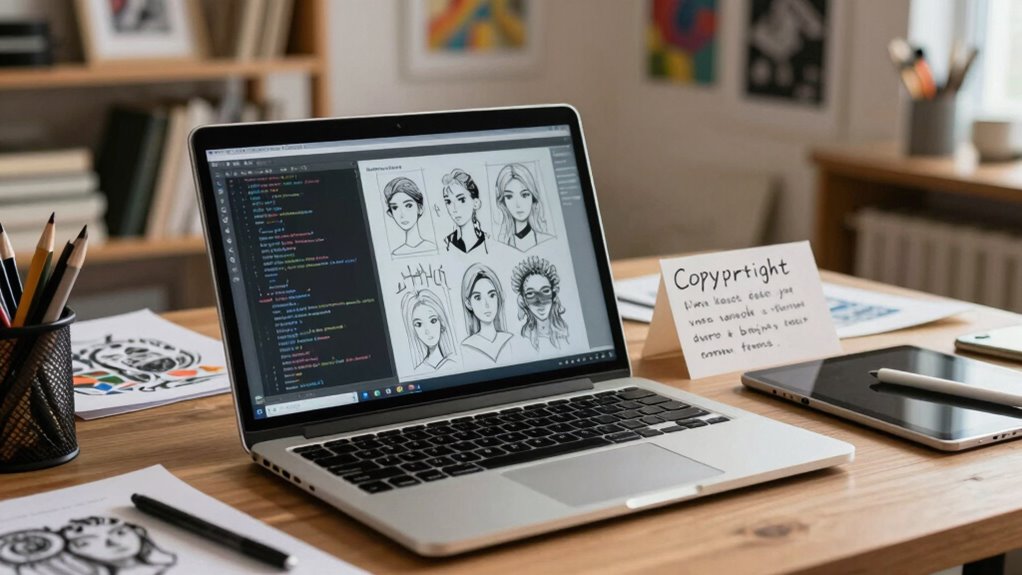

As a creator, understanding AI copyright questions is more important than ever because legal and ethical issues are rapidly evolving. Courts haven’t yet set clear rules on who owns AI-generated works, increasing your risk of infringement or disputes. Ethical concerns about originality and transparency also impact your reputation. Staying informed helps you protect your rights and build trust with your audience. If you keep exploring, you’ll gain valuable insights to navigate this complex landscape more confidently.
Key Takeaways
- Legal ambiguities threaten creators’ rights and may lead to unintentional infringement or disputes over AI-generated works.
- Clarifying ownership ensures fair compensation and protects investments in AI-assisted creations.
- Ethical transparency about AI’s role maintains credibility and fosters trust with audiences and clients.
- Staying informed about evolving legal precedents helps creators navigate complex intellectual property landscapes.
- As AI tools become more accessible, understanding legal and ethical issues is crucial for responsible and protected creation.
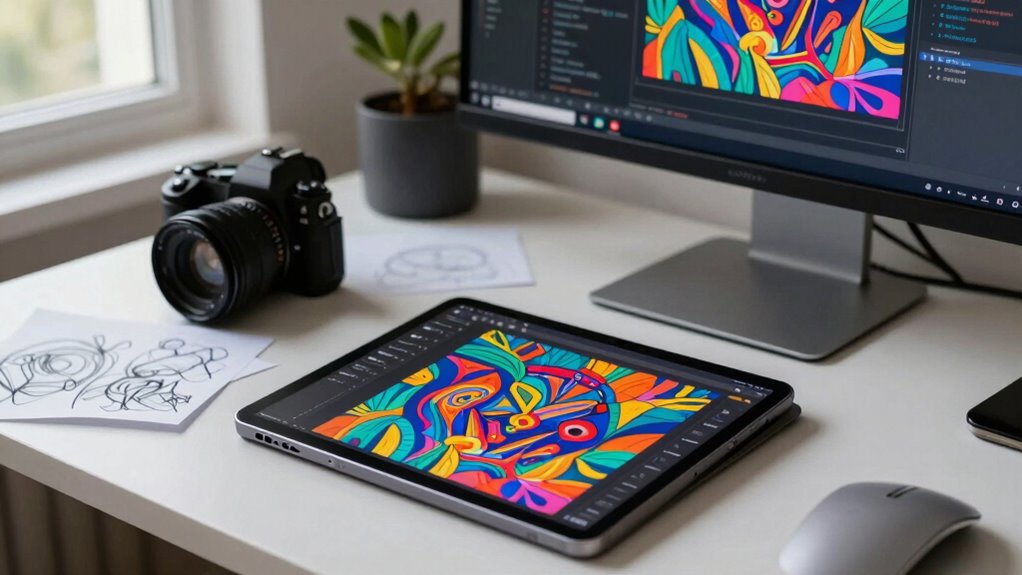
As artificial intelligence increasingly shapes the creative landscape, many creators find themselves questioning who owns the rights to works generated with AI tools. This isn’t just an abstract debate; it’s a pressing concern with real legal and ethical implications. Legal precedents in this area are still emerging, and they often leave creators uncertain about their rights. Courts have yet to establish clear rules on whether AI-generated works can be copyrighted, who holds the rights—the programmer, the user, or the AI itself—and how to apply existing copyright laws to these novel creations. Without concrete legal guidance, you risk losing control over your work or unintentionally infringing on someone else’s rights. That’s why understanding the current legal landscape is crucial. Moreover, media literacy plays a vital role in helping creators evaluate the sources and authenticity of AI-influenced content, ensuring they navigate this complex environment responsibly. Staying informed about the Legal precedents can also help you anticipate potential disputes and protect your creative rights as AI technology evolves. Additionally, understanding the importance of storytelling in branding can help creators craft compelling narratives that highlight transparency and integrity in their AI-related projects. Recognizing how copyright law applies to AI-generated content can further support your efforts to secure and defend your creative investments. As AI tools become more sophisticated, it’s essential to be aware of the ethical considerations involved in AI-assisted creation, which are often interconnected with legal issues.
Understanding AI rights is essential as legal rules around AI-created works remain uncertain and evolving.
Ethical considerations also loom large in this debate. When you create with AI, questions about originality, authorship, and fairness come into play. Is the output truly your creation if an AI contributed significantly? Should you claim full ownership, or acknowledge the role of the AI? These questions challenge traditional ideas about authorship and intellectual property. As a creator, you might feel a moral obligation to disclose how much of your work was driven by AI, especially as society grapples with what constitutes genuine creativity. Failing to consider these issues could lead to reputational risks or accusations of misrepresentation.
The stakes are higher than ever because AI tools are becoming more sophisticated and accessible. You could be working on a project that’s partially automated, but the legal and ethical questions about rights and credit remain complicated. If you’re not proactive, you might find yourself in a legal gray area, vulnerable to disputes or infringement claims. On the ethical side, neglecting transparency about AI’s role in your work could harm your credibility and trust with your audience or clients.
In this evolving landscape, staying informed about legal precedents helps you navigate rights issues wisely. Meanwhile, reflecting on ethical considerations ensures you uphold integrity and respect for the creative process. As AI continues to advance, the importance of understanding both legal and ethical aspects grows exponentially for creators like you. It’s no longer enough to focus solely on the art—you also need to be aware of the rules and morals shaping how AI-generated work is owned, shared, and valued.
AI copyright management software
As an affiliate, we earn on qualifying purchases.
As an affiliate, we earn on qualifying purchases.
Frequently Asked Questions
How Can Creators Protect Their Work From Ai-Generated Infringement?
To safeguard your work from AI-generated infringement, you should focus on establishing clear copyright notices and licensing terms. Emphasize the importance of transparent AI usage in your creative collaboration processes, making it clear what content is protected. Stay informed about evolving AI transparency regulations, and consider registering your work with copyright authorities. These steps help enforce your rights and ensure your creations are respected amidst AI advancements.
What Legal Rights Do Creators Have Over Ai-Created Content?
You have legal rights over AI-created content, especially if you contributed original ideas or inputs. However, AI ethical concerns, like transparency and creator attribution, complicate ownership. Laws are evolving to address these issues, so you should document your contributions and advocate for clear attribution standards. Protecting your rights involves staying informed about legal developments and engaging in discussions about fair creator attribution in AI-generated works.
Can Ai-Generated Work Be Copyrighted Independently?
AI-generated work generally can’t be copyrighted independently because it lacks human authorship, which is essential for creative authenticity. This raises ethical implications about ownership and originality. As a creator, you should consider how AI influences your work’s authenticity and the legal rights you hold. Understanding these nuances helps you protect your creations while steering through the evolving landscape of AI and copyright laws.
How Do International Copyright Laws Address Ai-Created Works?
Did you know that only about 15% of countries have clear laws addressing AI-created works? International copyright laws vary, often focusing on human authorship, which complicates AI ethics and copyright implications. You might find that some regions grant copyright if a human considerably contributed, while others leave AI-generated content unprotected. Managing these differences affects your ability to protect and monetize AI-driven creations globally.
What Are the Potential Consequences for AI Copyright Violations?
You could face serious consequences for AI copyright violations, including legal action, fines, or injunctions. These issues often lead to ethical dilemmas, questioning the fairness of ownership and creative credit. Ownership disputes become more complex when AI is involved, making it harder to determine who holds rights. If you violate copyright laws, you risk damaging your reputation and facing costly legal battles, emphasizing the importance of understanding AI’s legal and ethical boundaries.
AI-generated content copyright tools
As an affiliate, we earn on qualifying purchases.
As an affiliate, we earn on qualifying purchases.
Conclusion
Just as Da Vinci’s brushstrokes sparked debate in his time, today’s AI questions challenge your creative boundaries. By understanding these copyright issues, you guarantee your work remains your own masterpiece amidst a rapidly evolving landscape. Embrace the power of knowledge, like a modern-day Leonardo, shaping your art’s future. Remember, in this digital age, your creativity is your greatest treasure—protect it wisely, and let your voice be heard in the symphony of innovation.
intellectual property legal guides for creators
As an affiliate, we earn on qualifying purchases.
As an affiliate, we earn on qualifying purchases.
As an affiliate, we earn on qualifying purchases.