Since 1913, film trailers have transformed from simple, brief clips mainly for informing audiences into powerful marketing tools crafted to generate excitement and anticipation. Over the decades, technological advances improved editing styles, making trailers more dynamic and emotionally impactful. In the digital age, trailers now premiere online with interactive and behind-the-scenes content, engaging audiences worldwide. To discover how these changes continue shaping the industry, explore the fascinating development of film trailers over the years.
Key Takeaways
- Early trailers (1913–20th century) were brief, simple previews primarily for informing audiences about upcoming films.
- Mid-20th-century trailers evolved into strategic marketing tools, emphasizing story elements and audience engagement.
- From the 1970s onwards, montage editing and digital effects created energetic, emotionally impactful trailers targeting specific demographics.
- In the 2000s, trailers expanded online with teasers, behind-the-scenes content, and social media campaigns to boost anticipation.
- The evolution continues through innovative visuals, diverse representation, and interactive content driven by technological advancements.
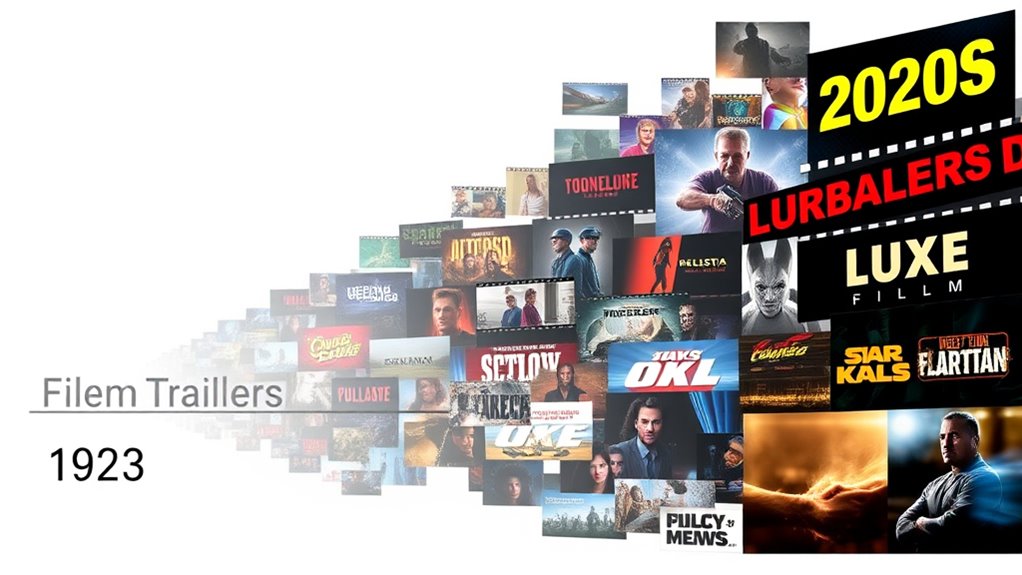
Have you ever wondered how film trailers have transformed over the years? The journey from simple previews to sophisticated marketing tools has been remarkable. In the early days, trailers were straightforward snippets, often just a few seconds long, designed primarily to inform rather than excite. As cinema grew in popularity, filmmakers and studios realized that trailers could serve as powerful tools for trailer marketing, drawing audiences into theaters by teasing the story and showcasing key moments. Over time, trailers became more than just clips; they evolved into carefully crafted trailers marketing campaigns aimed at maximizing audience engagement. This shift meant that trailers started to incorporate compelling visuals, dramatic music, and narrative hints that piqued curiosity and created anticipation.
As technology advanced, so did the art of trailer editing. The 1970s and 80s saw the rise of montage-style trailers, blending quick cuts and energetic pacing to build excitement. These trailers aimed to hook viewers almost instantly, making every frame count. The advent of digital editing tools in the late 20th century allowed for more sophisticated effects and seamless *shifts*, further enhancing the emotional impact. The emphasis on audience engagement grew stronger as studios learned to tailor trailers to specific demographics, using targeted marketing strategies to attract different viewer segments. Trailers began to incorporate memorable taglines, iconic visuals, and voiceovers that resonated with potential viewers, turning trailers into mini-films that generated buzz well before a movie’s release. Additionally, understanding audience preferences and public health trends has increasingly influenced how trailers are crafted, ensuring they appeal to diverse and modern viewers.
The rise of the internet and social media transformed trailer marketing again, offering new avenues for engaging audiences worldwide. Trailers now premiere online, often accompanied by teasers, posters, and interactive content designed to generate conversation and shareability. Social media platforms allow fans to dissect trailers frame-by-frame, increasing anticipation and fostering a sense of community. The use of trailers as a tool for audience engagement has become more strategic, with studios releasing multiple versions, behind-the-scenes clips, and viral campaigns to keep the excitement alive. In recent years, trailers have also started to reflect the changing preferences of viewers, emphasizing diverse representation, innovative visuals, and compelling storytelling that resonate with modern audiences. From their humble beginnings to the highly curated marketing events of today, film trailers continue to evolve, driven by technological advancements and a deep understanding of what captures viewers’ attention and keeps them engaged.
Frequently Asked Questions
How Have Cultural Shifts Influenced Trailer Content Over the Decades?
You see, cultural shifts have deeply shaped trailer content over the decades. As pop culture evolves, trailers reflect current trends, humor, and societal values, making them more relatable and engaging. You notice that trailers now emphasize diverse casts and social issues, mirroring society’s increasing focus on inclusion and awareness. These changes keep trailers fresh and relevant, ensuring they resonate with audiences’ sensibilities and expectations today.
What Role Does Technology Play in Trailer Editing and Production?
Technology transforms trailer editing and production by unleashing your creativity. With digital editing tools, you can seamlessly craft compelling narratives, while visual effects add excitement and depth. These innovations speed up the process and enhance quality, making trailers more enthralling than ever. You harness technology’s power to evoke emotion, surprise, and anticipation—ensuring your trailer stands out and leaves viewers enthusiastic to see the film.
How Do Trailers Impact Audience Expectations and Film Reception?
Trailers substantially influence your audience anticipation and viewer perception by highlighting key moments that shape expectations. A well-crafted trailer can build excitement, creating a buzz that draws viewers to the film. Conversely, if it misleads, it risks disappointing your audience, negatively impacting reception. As a result, trailers act as a powerful tool to set the tone, influence perceptions, and ultimately, shape the success of the film.
What Are the Ethical Considerations in Trailer Marketing?
You should be aware that ethical trailer marketing involves avoiding misleading previews that could misrepresent the film’s tone or plot, which can deceive viewers. Additionally, trailers should respect spoiler concerns by not revealing key plot twists or endings. As a marketer, you must balance enticing audiences while maintaining honesty, ensuring viewers aren’t disappointed or misled, fostering trust and integrity in the film industry.
How Will Future Advances Shape Trailer Distribution and Consumption?
They say, “The future is now,” and with digital streaming and augmented reality, trailer distribution and consumption will transform dramatically. You’ll access trailers anytime, anywhere, with immersive AR experiences that bring movies to life. This shift makes trailers more personalized and interactive, changing how you discover and decide on films. As technology advances, expect a seamless, engaging viewing experience that blurs the line between trailers and the actual movie.
Conclusion
As you’ve seen, film trailers have dramatically evolved from simple previews in 1913 to the cinematic marketing powerhouse of today. Did you know that trailer viewership on digital platforms increased by over 300% between 2015 and 2020? This growth shows how trailers continue to shape your movie choices and expectations. So, next time you watch one, remember you’re witnessing a centuries-long journey of storytelling and innovation—just for you.