To save time on set with practical lighting, position your fixtures thoughtfully to achieve your desired mood and effects without extra equipment. Use dimmable bulbs and controllable fixtures to quickly adjust scene atmosphere, reducing the need for additional lights. Incorporate diffusers or gels to soften light and prevent glare, simplifying setup. By mastering fixture placement and using lights already part of the scene, you’ll streamline your shoot and achieve authentic results faster—if you keep exploring, you’ll uncover even more efficient techniques.

Get movie nights delivered free with Prime
- Fast, free delivery on millions of items
- Prime Video, Amazon Music and more included
- Member-only deals all year
Key Takeaways
- Incorporate existing practical lights to eliminate the need for additional fixtures and reduce setup time.
- Use dimmable practicals for quick scene mood adjustments without extra equipment.
- Position practical lights strategically to achieve desired effects and minimize the need for supplementary lighting.
- Diffuse practical sources to enhance light quality, reducing the need for complex lighting setups.
- Match color temperature and consider placement in advance to ensure consistency and streamline scene execution.
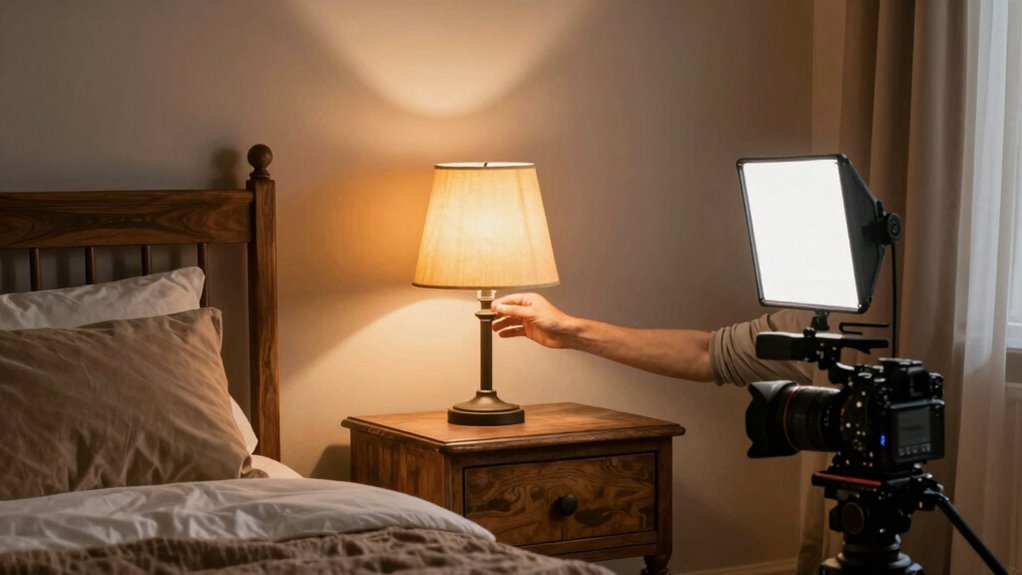
Light diffusion plays an essential role in softening the light emitted by practical sources, making shadows less harsh and creating a more flattering look. You can achieve this by adding materials like frosted gels, lampshades, or diffusing fabrics over the light source. This not only enhances the visual quality but also minimizes the need for additional lighting setups, which can be time-consuming. By diffusing practical lights, you control the spread of light, ensuring it covers the scene evenly and reduces unwanted glare or hotspots. This approach simplifies your lighting setup and accelerates the shooting process because you won’t need to constantly adjust or reposition lights to fix harsh shadows. Proper light diffusion techniques can also help prevent accidental glare or reflections that might distract viewers. Additionally, understanding lighting principles can help you make more informed choices about fixture placement and diffusion methods, further enhancing efficiency.
Incorporating practical lighting effectively means thinking ahead about how each source interacts with your scene’s environment. For example, if you plan to shoot a nighttime scene, using practical streetlights or table lamps with dimmable bulbs can help you quickly establish a believable atmosphere. Dimming or adjusting the practical lights to the desired intensity allows you to set the mood without additional lighting, saving setup time. Keep in mind that the placement of practical lights affects both the aesthetic and the shadows cast, so consider their positions carefully to achieve the desired effect while maintaining efficiency. Utilizing lighting control tools such as dimmers or remote adjustments can further streamline this process. Moreover, considering color temperature compatibility between practical fixtures and other scene elements can help maintain visual consistency and reduce post-production adjustments. Being mindful of color rendering can also improve the scene’s overall look, reducing the need for extensive color correction later.
Finally, leveraging practical lighting reduces the amount of equipment you need on set, which not only saves time but also minimizes clutter and complexity. When you select fixtures that are already in your scene, you eliminate the need for extra stands, cables, or power sources. This streamlined approach lets you focus more on directing and capturing your shot rather than troubleshooting complex setups. Overall, by mastering the use of color temperature and light diffusion with practical fixtures, you can create authentic, beautiful scenes quicker and more efficiently, making your production smoother and more cost-effective.
dimmable practical lighting fixtures
As an affiliate, we earn on qualifying purchases.
As an affiliate, we earn on qualifying purchases.
Frequently Asked Questions
What Are the Best Portable Lighting Options for Quick Setup?
For quick setup, you should consider portable LED lights like the Aputure Amaran or Godox SL-60W, which offer excellent portability and strong light quality. Look for options with built-in rechargeable batteries for better portability and reliable battery life, so you don’t need external power sources. These lights are lightweight, easy to position, and provide adjustable brightness, helping you save time while ensuring consistent lighting on set.
How Can I Troubleshoot Common Practical Lighting Issues?
Troubleshooting practical lighting issues is like tuning an instrument—you need to identify the right note. First, check the color temperature to match your scene’s mood and guarantee bulbs aren’t flickering or mismatched. Always prioritize electrical safety; inspect cords for damage and avoid overloading circuits. If lights won’t turn on, verify power sources and connections. These steps keep your setup harmonious and safe, preventing delays and maintaining a smooth shoot.
What Safety Precautions Should I Take With Practical Lights?
You should always prioritize safety when working with practical lights. Wear appropriate safety gear like gloves and goggles to protect against electrical hazards. Make sure all electrical connections are secure and grounded to prevent shocks or fires. Regularly inspect cords and fixtures for damage before use. Keep a fire extinguisher nearby and avoid overloading circuits. Following electrical safety protocols helps prevent accidents and keeps everyone on set safe.
How Do I Modify Practical Lights for Different Moods?
You can paint different moods with your practical lights by tweaking their color temperature and dimming controls. Imagine adjusting these settings like turning a dial on a musical instrument, shifting from warm amber to cool blue or dimming to create shadows that whisper suspense. Play with intensity and hue until the light resonates with your scene’s emotion. Modifying these elements effectively transforms your lighting, shaping atmospheres with a simple flick or twist.
What Are Cost-Effective Practical Lighting Solutions for Small Budgets?
To stay within a small budget, you can opt for budget-friendly fixtures like inexpensive LED bulbs or repurposed household lamps. DIY lighting solutions work well—think using string lights, clip-on lamps, or even modified fixtures with dimmers. These options are easy to set up, flexible, and cost-effective, helping you create the desired mood without overspending. With a little creativity, your set can look professional on a tight budget.
lighting diffusion gels for photography
As an affiliate, we earn on qualifying purchases.
As an affiliate, we earn on qualifying purchases.
Conclusion
By mastering practical lighting, you’ll save time and keep your shoot running smoothly. It’s like hitting two birds with one stone—saving effort while creating stunning visuals. When you understand how to use these lights effectively, you’ll find your workflow becomes more efficient and your scenes more authentic. So, don’t wait for the perfect shot—use practical lighting to get it right the first time. Remember, a well-lit set can make all the difference and keep things ticking along seamlessly.
remote controlled practical lights
As an affiliate, we earn on qualifying purchases.
As an affiliate, we earn on qualifying purchases.
color temperature adjustable LED lights
As an affiliate, we earn on qualifying purchases.
As an affiliate, we earn on qualifying purchases.
Fall Picks
fall essentials
As an affiliate, we earn on qualifying purchases.