
To prepare for a virtual production shoot, you need to plan virtual set design carefully, ensuring environments look realistic and align with your artistic vision. Coordinate with your team to determine camera angles, actor placement, and interaction points. Test virtual backgrounds on set, communicate environment details to actors, and synchronize technical elements like lighting and real-time rendering. Paying attention to these details helps create a seamless scene—keep going to learn more about perfecting your virtual shoot setup.
Key Takeaways
- Collaborate with virtual set designers and technical experts to ensure realistic, seamless digital environments.
- Plan camera angles, movements, and actor interactions in advance to synchronize physical and virtual elements.
- Prepare and test virtual backgrounds on monitors or AR glasses, ensuring proper lighting and integration.
- Use tracking markers or motion capture technology for accurate actor placement within virtual environments.
- Conduct thorough rehearsals and testing to identify issues early, reducing surprises and retakes during filming.
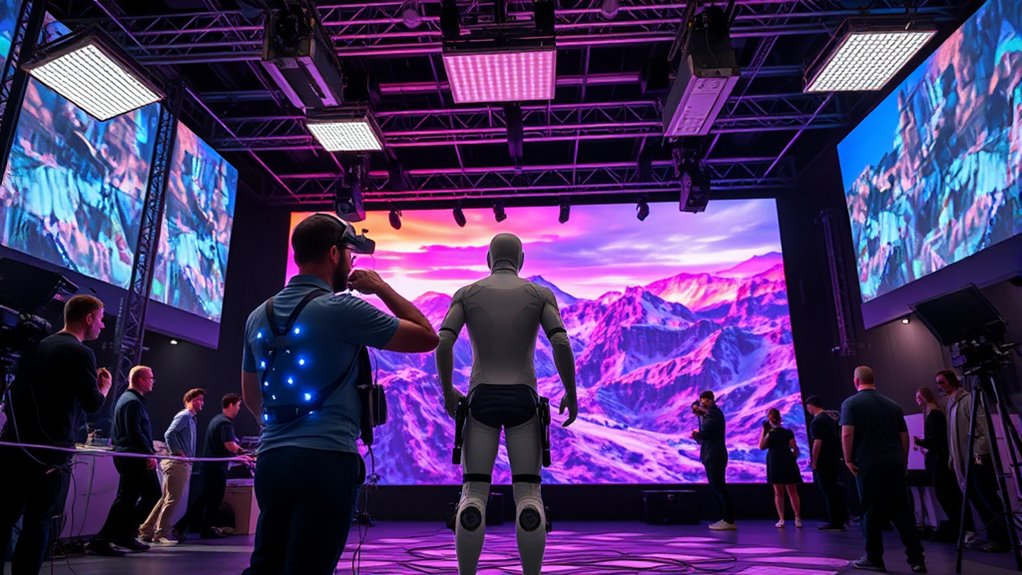
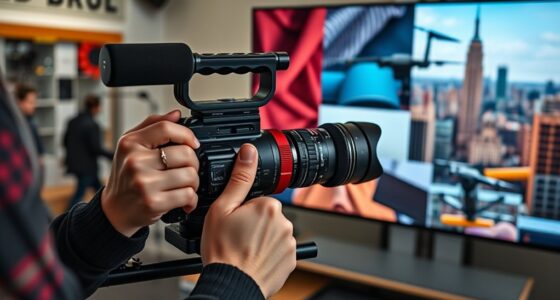
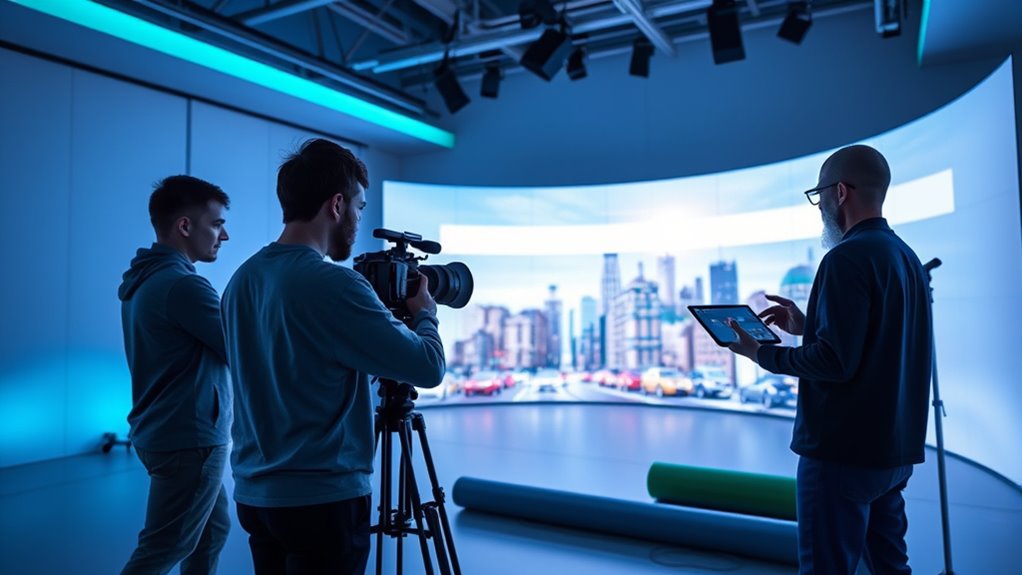
Virtual production shoots demand meticulous planning to guarantee smooth execution. One of the most vital components of this preparation is virtual set design. You need to ensure that the digital environments are visually compelling, seamlessly integrated, and aligned with your project’s artistic vision. This involves collaborating closely with designers and technical experts to create virtual backgrounds that match the scene’s mood, perspective, and lighting. You’ll want to test these virtual sets thoroughly beforehand, checking how they appear through the camera lens and making adjustments as needed. Proper virtual set design not only enhances the realism but also minimizes on-set surprises, saving time during filming. Additionally, understanding IRA Investment Strategies can inspire innovative approaches to resource allocation and project funding, ensuring your production is financially sound and resilient. Another essential aspect is actor integration. You must plan how actors will interact with the virtual environment in real time. This involves positioning them accurately within the virtual space, ensuring their eyelines match the digital backgrounds, and providing them with enough context to perform convincingly. You might use tracking markers or motion capture technology to help actors see and respond to elements that aren’t physically present. Your goal is to make sure actors feel immersed in the virtual world, so they can deliver authentic performances without distraction. Communicating clearly about the virtual environment’s look and layout before shooting helps actors visualize their surroundings and reduces the need for retakes. Additionally, integrating virtual set design with actor placement requires precise coordination between the art department, camera operators, and virtual production team. You’ll need to decide camera angles and movement in advance to see how they interact with the virtual backdrop. This planning prevents conflicts between physical and digital elements and ensures the scene’s continuity. Having a detailed shot list that accounts for virtual environment cues will streamline the filming process. On the technical side, you should also prepare for real-time rendering and synchronization. This means ensuring your virtual set design can be displayed smoothly on monitors or AR glasses used by actors and crew. Consistent lighting within the virtual environment is indispensable so that the digital backgrounds match the physical lighting setup on set. Regular communication with your virtual production team helps you troubleshoot issues early, avoiding delays. Remember, the more detail you put into virtual set design and actor integration beforehand, the more seamless and immersive your final product will be. Proper planning in these areas sets the foundation for a successful virtual production shoot, where every element works harmoniously to bring your creative vision to life.
Frequently Asked Questions
How Do I Select the Right Virtual Production Software?
You should select virtual production software that excels in virtual set design and offers real-time rendering capabilities. Look for user-friendly interfaces, compatibility with your hardware, and features tailored to your project’s needs. Consider software like Unreal Engine or Unity, which provide robust virtual set design tools and real-time rendering, helping you create immersive environments efficiently. Test demos and read reviews to verify it fits your workflow before making a final choice.
What Are the Best Practices for Managing Remote Team Collaboration?
To manage remote team collaboration effectively, prioritize clear remote communication by using reliable tools like Slack or Zoom. Keep everyone aligned through regular updates and team coordination meetings. Set defined roles and expectations, and encourage open feedback. Use shared project management platforms to track progress, ensuring accountability. By fostering transparency and consistent communication, you’ll enhance collaboration and keep your virtual production on track.
How Can I Ensure Seamless Integration of Hardware and Software?
To guarantee seamless integration of hardware and software, you should verify hardware compatibility before setup and keep all systems updated with the latest software updates. Test the equipment thoroughly to identify potential issues early. Maintain clear communication with your team about hardware requirements and updates, and document configurations for troubleshooting. Regularly monitor performance during the shoot to address any integration problems promptly, ensuring smooth virtual production operations.
What Are Common Technical Issues During Virtual Shoots?
Virtual shoots can feel like juggling fireworks—exciting but tricky. Common issues include lighting setups that don’t match the virtual environment, causing awkward shadows or glare. Camera calibration problems can lead to misalignment, making the scene look unnatural. To prevent these, double-check your camera settings and lighting before shooting. Staying vigilant and testing thoroughly ensures your virtual production runs smoothly, delivering stunning results without a hiccup.
How Do I Budget Effectively for Virtual Production Projects?
To budget effectively for virtual production projects, start with accurate cost estimation by listing all potential expenses, including equipment, software, and personnel. Allocate resources wisely by prioritizing critical areas like technology and talent. Keep a flexible budget to accommodate unexpected costs, and track your spending regularly. This approach guarantees you stay within budget while maintaining the quality and efficiency needed for a successful virtual shoot.
Conclusion
Preparing thoroughly for a virtual production shoot guarantees smooth execution and stunning results. Remember, 78% of productions report increased efficiency when properly planned, highlighting the importance of organization. By checking equipment, coordinating with your team, and testing your virtual environment beforehand, you set yourself up for success. Stay adaptable and attentive to detail. With these steps, you’ll be ready to handle any surprises and deliver a seamless, professional shoot that impresses everyone involved.