When deciding between natural and motivated lighting, consider your scene’s goals and the level of control you need. Use natural light for authentic, realistic visuals, especially when you want a soft, organic feel and are prepared to adapt to its variability. Turn to motivated lighting when you need precise color temperatures, mood control, or consistency across shots. Understanding when to choose each will help you craft scenes that effectively convey emotion and authenticity—continue to explore for more insights.
Key Takeaways
- Use natural lighting for scenes requiring authenticity, realism, and organic depth, especially during golden hour or overcast days.
- Opt for motivated lighting when precise control over mood, color temperature, or scene consistency is essential.
- Natural light is ideal when capturing the scene’s spontaneous, atmospheric qualities with minimal equipment.
- Motivated lighting is preferable in controlled environments or when natural light is unavailable or impractical.
- Choose natural lighting for dynamic, visually vibrant scenes; use motivated lighting for mood-specific or narrative-driven visuals.
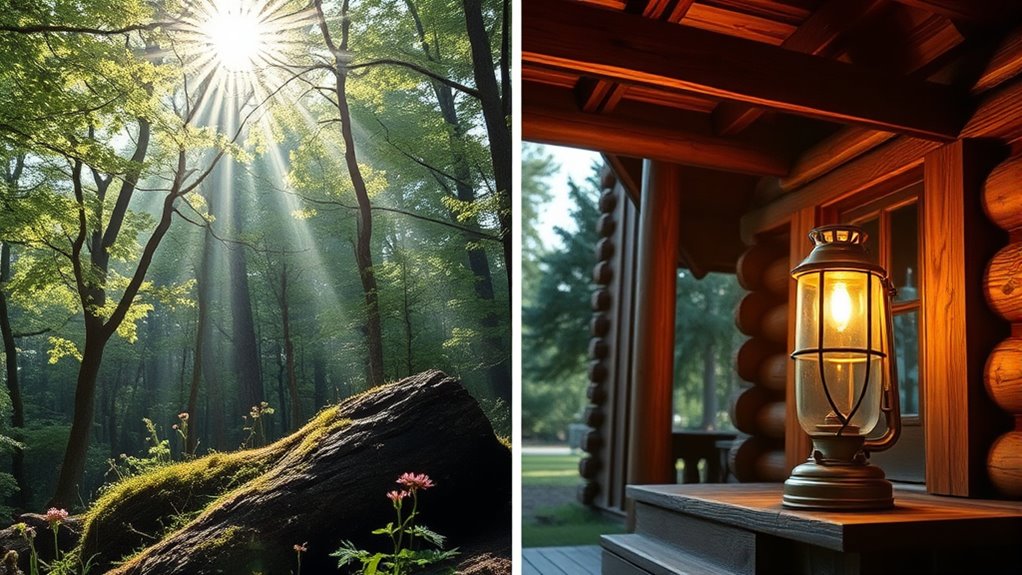
Lighting plays a crucial role in setting the mood and guiding the viewer’s attention, but choosing between natural and motivated lighting can be challenging. When you’re working on a scene, understanding how light temperature and color contrast influence your choice helps you create the desired atmosphere. Natural lighting, which comes from the sun or the environment, often has a warm, soft quality during golden hour or a cooler, more neutral tone on overcast days. Its light temperature varies naturally, making it versatile but sometimes unpredictable. Its inherent variability can influence color contrast, making certain scenes appear more vibrant or muted depending on the time and weather. If you want a scene with high color contrast, such as bright sunlight against deep shadows, natural lighting can deliver striking results, but it demands careful planning. Motivated lighting, on the other hand, involves artificial sources that mimic natural light or serve a specific narrative purpose. It allows you to control light temperature precisely, whether you want a warm glow from a lamp or a stark, cool tone from a fluorescent fixture. This control over color contrast helps you craft a scene’s mood intentionally. Additionally, understanding lighting modifications can help you better manipulate both natural and motivated sources to achieve your desired effect. Using color contrast techniques can further enhance the visual storytelling by emphasizing certain elements or creating mood through light and shadow. When you opt for natural lighting, you embrace its authenticity and organic feel. It’s ideal for scenes that benefit from realism or a sense of immediacy. The subtle shifts in light temperature throughout the day can add depth to your visuals, but they also require you to adapt quickly or shoot within specific time frames. Natural light’s inherent variability can influence color contrast, making certain scenes appear more vibrant or muted depending on the time and weather. If you want a scene with high color contrast, such as bright sunlight against deep shadows, natural lighting can deliver striking results, but it demands careful planning. Motivated lighting offers you consistent control, especially when you need to set a specific tone or match a scene’s color palette. You can choose light sources with specific color temperatures to enhance or diminish contrast as needed. For example, a warm, amber-hued motivated light can evoke intimacy or nostalgia, while a cool, bluish light might create tension or a sense of coldness. This control over light temperature and color contrast makes motivated lighting invaluable when natural light isn’t available or practical. It also simplifies matching shots in different scenes, maintaining visual continuity.
Frequently Asked Questions
How Do I Balance Natural and Motivated Lighting in a Scene?
To balance natural and motivated lighting, you should focus on practical techniques like adjusting light intensities and angles to create seamless integration. Use motivated lighting to emphasize mood or highlight key elements, while natural light provides a realistic glow. Experiment with color temperature and shadows to achieve a harmonious look, and think creatively about how each light source interacts within the scene. This approach guarantees a convincing, visually appealing result.
What Tools Can Help Simulate Motivated Lighting Realistically?
Imagine a scene where light seems to come from an unseen source, casting shadows that feel real. Software plugins and advanced rendering techniques can make this happen. Tools like V-Ray or Lumion help simulate motivated lighting with precise control, adding realism. They allow you to tweak intensity, color, and direction, making your scenes convincingly lit by actual sources, blending natural and motivated light seamlessly for stunning, believable visuals.
How Does Lighting Influence the Mood of a Scene?
Lighting dramatically influences a scene’s mood through color temperature and shadow depth. Warmer light creates intimacy or tension, while cooler tones evoke calm or detachment. Deep shadows add mystery or drama, whereas softer shadows promote comfort. You can manipulate these elements to evoke specific emotions, guiding your audience’s feelings. By adjusting color temperature and shadow depth intentionally, you shape the scene’s atmosphere, making it resonate more powerfully with viewers.
Can Motivated Lighting Be Achieved With Natural Light Sources?
You can definitely achieve motivated lighting with natural light sources by using natural illumination creatively. For instance, you might position your subject near windows or openings to utilize sunlight effectively, creating a sense of realism. When natural illumination isn’t enough, you can add artificial enhancement, like reflectors or diffusers, to shape the light and maintain the motivated look. This approach keeps your scene believable while controlling the lighting mood.
What Are Common Mistakes to Avoid When Blending Both Lighting Types?
Like a painter blending hues, you must avoid common pitfalls when merging natural and motivated lighting. Focus on maintaining lighting consistency to prevent jarring progressions, and guarantee color harmony so the scene feels cohesive. Don’t forget to control shadows and highlights, as mismatched tones can distract viewers. By paying attention to these details, you create a seamless blend that enhances your storytelling without unintended visual discord.
Conclusion
Ultimately, understanding when to use natural or motivated lighting helps you craft compelling scenes. Think of lighting as painting with sunlight or shadows—each choice shaping the mood and story you want to tell. Remember, “a picture is worth a thousand words,” so choose your lighting wisely to evoke the right emotions. Whether embracing the glow of natural light or creating motivated scenes, your vision comes alive when you master these tools.