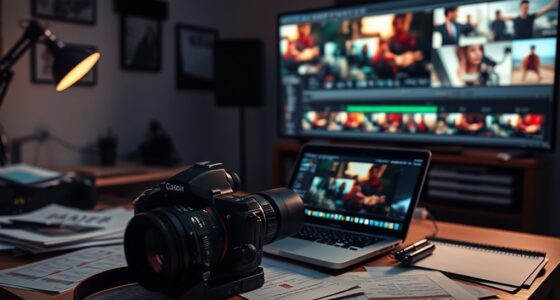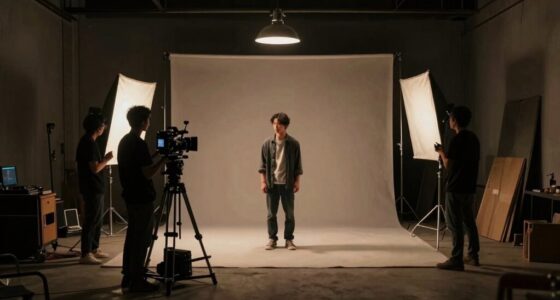

To make handheld footage feel intentional, you should control your movements and stabilize your camera, using your body as support and moving smoothly. Frame your shots thoughtfully with the rule of thirds and anticipate subject movement for better composition. Maintain proper grip, focus sharply, and use deliberate panning or tilts to add purpose. Good lighting and post-production stabilization also help. If you master these techniques, your footage will look purposeful rather than messy—there’s more to discover if you keep exploring.
Key Takeaways
- Use deliberate, controlled camera movements to convey purpose and avoid jitteriness.
- Apply framing techniques like the rule of thirds to create balanced, intentional compositions.
- Stabilize footage through proper handling, posture, and equipment to reduce unintended shakes.
- Plan shots in advance to anticipate subject movement and maintain cohesive framing.
- Edit out unnecessary shaky segments and enhance stability in post-production for a polished look.

Handheld footage often feels raw and spontaneous, but when done intentionally, it can convey emotion, immediacy, and authenticity. You have to be deliberate with how you handle your camera to avoid it looking messy or chaotic. One key to achieving this is understanding camera stabilization. Even if you’re shooting without a tripod, you can use your body as a stabilizer—plant your feet firmly, keep your elbows close to your sides, and move smoothly. Small, controlled movements prevent shaky footage that distracts viewers. If your camera has built-in stabilization features, turn them on, but don’t rely solely on tech—your physical stability matters most. The goal is to make the movement feel purposeful, not uncontrolled. Additionally, practicing camera control techniques regularly can help you develop a more intuitive sense of stable, intentional movement. Developing a consistent shooting style also helps viewers recognize your work and perceive it as deliberate, rather than accidental. Proper camera ergonomics can further improve your ability to hold the camera steadily over extended shots, reducing fatigue and unwanted movement. Understanding techniques for stabilization can also help you better anticipate and counteract unwanted shakes during filming. Framing techniques are equally important in making handheld footage look intentional. Before you start filming, take a moment to visualize what you want to capture. Use the rule of thirds to position your subject thoughtfully within the frame, which guides the viewer’s eye and creates balance. When moving the camera, do so deliberately—pan slowly, tilt intentionally, and avoid jittery, erratic motions. Think about your shot composition as you go; framing should be tight enough to focus on your subject but also give space for context. If you’re filming a moving subject, anticipate their path and keep them within the frame without excessive panning or abrupt shifts. This kind of controlled framing makes your footage feel more polished and purposeful. Lighting and focus also contribute to an intentional look. Use natural light when possible, but adjust your position to ensure your subject is well-lit. Keep focus sharp on your main subject, especially during movement, to avoid distracting blurriness. When you plan your shots around specific framing techniques, you’re fundamentally guiding the audience’s attention and establishing a visual rhythm that feels deliberate. Finally, editing plays a significant role in transforming raw handheld shots into a cohesive story. Cut out unnecessary jitter or shaky segments, and consider adding subtle stabilization in post-production if needed. Color correction and contrast adjustments can enhance the mood and further reinforce the feeling of intention behind your footage. By combining stable handling, thoughtful framing, and careful editing, your handheld footage can transcend chaos and communicate a clear, authentic message. It’s about mastering control while maintaining a sense of spontaneity—making every shot feel purposeful rather than messy.
As an affiliate, we earn on qualifying purchases.
Frequently Asked Questions
How Does Camera Stabilization Impact Footage Perception?
Camera stabilization markedly influences how you perceive footage. When sensor stability is high, your shots feel smooth and controlled, making the footage seem intentional. Features like motion smoothing help reduce shaky movements, enhancing viewer engagement. Without stabilization, handheld shots can appear chaotic or messy. But when stabilized properly, even dynamic handheld footage feels purposeful, guiding your eye and creating a polished, professional look that draws you into the story.
What Role Does Framing Play in Intentional Handheld Shots?
Framing is your compass in creating intentional handheld shots, guiding your audience through focus precision and composition balance. Like a tightrope walker’s pole, good framing stabilizes chaos, making your footage feel purposeful. You carefully select what to include or exclude, emphasizing key elements. This deliberate approach transforms spontaneous movement into a storytelling tool, ensuring your shots feel crafted rather than accidental, pulling viewers into your visual narrative.
How Can Lighting Influence the Feel of Handheld Footage?
Lighting profoundly influences the feel of handheld footage by setting the mood and tone. Using natural light can create a more authentic, intimate atmosphere, making your shots feel deliberate rather than chaotic. You can enhance this by controlling the intensity and direction of the light, which helps emphasize emotions or details. Mood setting through lighting guides viewers’ perceptions, ensuring your footage feels purposeful and thoughtfully crafted rather than messy.
What Editing Techniques Enhance the Sense of Purpose in Footage?
A picture is worth a thousand words, so use editing techniques that highlight storytelling clarity and emotional resonance. Tighten shots to eliminate distractions, add subtle stabilization for smoothness, and employ color grading to set tone. Use purposeful cuts and deliberate pacing to guide viewers’ emotions. These choices show intent, transforming raw footage into a compelling narrative that feels deliberate and meaningful rather than messy or aimless.
How Does Camera Movement Style Affect Viewer Perception?
Your camera movement style, including camera angle variations, directly influences how viewers perceive your footage. Dynamic angles can heighten emotional tone, making scenes feel more intense or intimate, while steady movements convey calmness or purpose. When you intentionally vary camera angles, you create a sense of deliberate storytelling, guiding viewers’ emotions and focus. This intentionality makes your handheld footage feel purposeful, engaging, and emotionally resonant rather than chaotic or messy.
As an affiliate, we earn on qualifying purchases.
Conclusion
When you master the art of intentional handheld footage, it’s like guiding a dance partner with purpose rather than chaos. Every shaky step and sudden move becomes a brushstroke in a vivid painting, telling your story with clarity amid the chaos. By focusing on composition, movement, and pacing, you turn what could be a wild storm into a symphony of deliberate motion. So, wield your camera like a skilled conductor—transforming mess into mesmerizing art.
As an affiliate, we earn on qualifying purchases.
video tripod for handheld filming
As an affiliate, we earn on qualifying purchases.
As an affiliate, we earn on qualifying purchases.