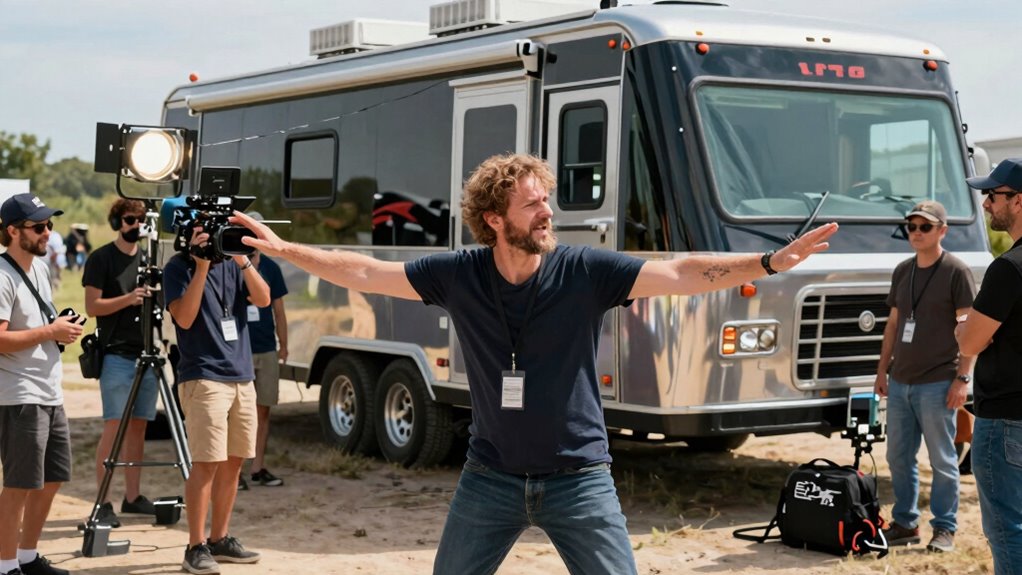

To direct performance for trailer-ready moments, focus on clearly defining emotional beats and guiding actors to deliver authentic, nuanced reactions. Encourage subtle gestures, precise timing, and genuine interactions that amplify the scene’s impact. Create a safe environment where performers feel free to experiment and fully inhabit their roles. Pay attention to visual storytelling through body language and expressions, syncing performances with cinematography. Keep refining these elements, and you’ll discover how to craft unforgettable moments that captivate viewers from start to finish.

Get movie nights delivered free with Prime
- Fast, free delivery on millions of items
- Prime Video, Amazon Music and more included
- Member-only deals all year
Key Takeaways
- Identify and communicate clear emotional objectives for each scene to guide authentic performances.
- Use subtle gestures and nuanced expressions to convey complex emotions effectively.
- Synchronize actors’ movements and reactions with cinematography to enhance emotional storytelling.
- Emphasize timing, pauses, and genuine interactions to create impactful, memorable moments.
- Foster a safe, creative environment that encourages authentic performances and emotional risk-taking.
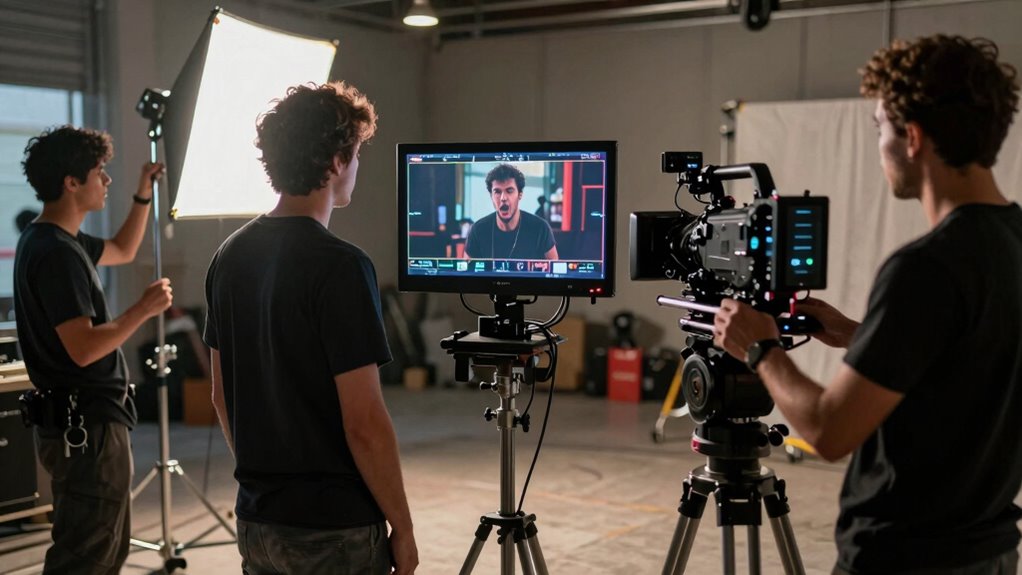
Ever wondered how trailers achieve their mesmerizing performance on screen? It’s all about mastering performance direction to craft moments that captivate viewers and leave them wanting more. When you focus on performance, you’re shaping how actors deliver their lines and actions, which directly influences audience engagement. The goal is to evoke emotion quickly and powerfully, making every second count. To do this effectively, you need to understand that performance isn’t just about actors hitting marks; it’s about creating a subtle, compelling visual storytelling experience that resonates with viewers from the first frame to the last.
Mastering performance direction transforms actors’ subtle moments into captivating, emotionally resonant storytelling that hooks viewers from start to finish.
You start by clearly defining the emotional beats of each scene. Think about what you want your audience to feel—excitement, tension, curiosity—and then guide your actors to express those feelings authentically. Encourage them to find moments of truth within their characters, even in the briefest of exchanges. Sometimes, less is more: a simple glance, a slight shift in posture, or a nuanced expression can communicate a wealth of information. These small, deliberate choices make your trailer more engaging because they build a visual language that hooks the viewer emotionally. Recognizing the importance of performance nuances can help you fine-tune these moments for maximum impact. Additionally, understanding how character development influences performance can lead to more authentic and compelling portrayals that resonate with audiences. Developing a keen awareness of emotional storytelling allows you to guide performances that truly resonate with viewers.
In terms of visual storytelling, it’s essential to choreograph performances that complement the cinematography and editing. You want your actors’ movements and expressions to enhance the narrative’s rhythm, creating a seamless flow that draws viewers in. Paying attention to timing and pacing is crucial for maximizing emotional impact, as well as ensuring that performances align with the overall tone of the trailer. Pay close attention to timing—whether it’s a punchline delivered with perfect comedic timing or a tense silence that amplifies suspense. Your direction should emphasize these moments by encouraging actors to play off each other naturally, allowing genuine reactions to shine through. This authenticity boosts audience engagement and makes the moments feel more visceral and real. When performers are guided to use their body language intentionally, it further amplifies the emotional depth of each scene.
Additionally, direct your performers to use their body language intentionally. Every gesture should serve a purpose, whether it’s to convey confidence, vulnerability, or menace. When actors inhabit their roles fully, their performances become more compelling and memorable. It’s your job to create an environment where they feel safe to experiment and express, giving you the chance to capture those perfect, trailer-ready moments. Recognizing the importance of performance direction can elevate scenes from ordinary to unforgettable. When executed skillfully, these performances become the backbone of visual storytelling, transforming simple snippets into powerful, emotionally resonant scenes that draw audiences in and leave a lasting impression.
As an affiliate, we earn on qualifying purchases.
Frequently Asked Questions
How Do You Manage Actors’ Emotional States During Intense Trailer Scenes?
You manage actors’ emotional states by fostering emotional authenticity and encouraging subtle cues that convey deep feelings without overacting. Keep dialogue clear and moments grounded, prompting your actors to tap into genuine emotions. Use gentle guidance, offering feedback that helps them stay connected to their characters’ inner worlds. Stay attentive to their reactions, adjusting your direction to maintain authenticity and guarantee the emotional intensity feels real and compelling.
What Are Common Mistakes to Avoid in Trailer Performance Direction?
You should avoid neglecting lighting cues and sound synchronization, as these can make performances feel disconnected. Don’t overact or underplay emotional moments, which can dilute the impact. Make sure actors understand the scene’s rhythm, so their delivery matches the trailer’s pacing. Overlooking subtlety or rushing through key beats can weaken the scene’s tension. Focus on precise timing and clear communication to keep performances engaging and trailer-ready.
How Do You Balance Naturalism With Heightened Emotions in Trailers?
You balance naturalism with heightened emotions by focusing on visual storytelling that captures genuine reactions while amplifying key moments for audience anticipation. Use subtle cues and authentic interactions to ground performances, then elevate them with deliberate, intense expressions or gestures at pivotal points. This contrast creates compelling trailer moments that feel real yet exciting, drawing viewers in emotionally without sacrificing believability. Always keep the audience’s anticipation at the forefront of your direction.
What Techniques Help Actors Deliver Compelling Trailer Performances Quickly?
Think of your actors as actors in a Shakespearean play—delivering powerful lines quickly. To help them, focus on clear character motivation and scene pacing, which guide their emotional intensity. Use rapid, targeted rehearsals to build instinctive reactions. Encourage them to internalize core stakes, so they can swiftly channel authenticity. This approach guarantees compelling trailer performances, capturing raw emotion efficiently without sacrificing depth or urgency.
How Do You Coordinate Multiple Performers for a Cohesive Trailer Scene?
You coordinate multiple performers by planning your lighting cues and camera angles carefully, ensuring everyone hits their marks. Communicate clearly with actors about timing and emotional beats, then synchronize their movements with your lighting cues to create a cohesive look. Use camera angles to emphasize interactions and maintain visual unity. Rehearse together, adjusting as needed, so all performers deliver their lines and actions seamlessly, creating a dynamic, unified trailer scene.
As an affiliate, we earn on qualifying purchases.
Conclusion
Now that you know the secrets to guiding performances for trailer-ready moments, remember that timing is everything. Did you know that trailers typically use around 15% of the film’s footage? That’s a tight window where every gesture, expression, and line counts. By focusing on these key moments and directing with precision, you’ll craft trailers that hook audiences instantly and leave them excited for more. Keep these tips in mind, and your trailers will truly stand out.
cinematography and actor interaction tools
As an affiliate, we earn on qualifying purchases.
As an affiliate, we earn on qualifying purchases.
performance direction for trailers
As an affiliate, we earn on qualifying purchases.
As an affiliate, we earn on qualifying purchases.
Halloween Picks
halloween
As an affiliate, we earn on qualifying purchases.