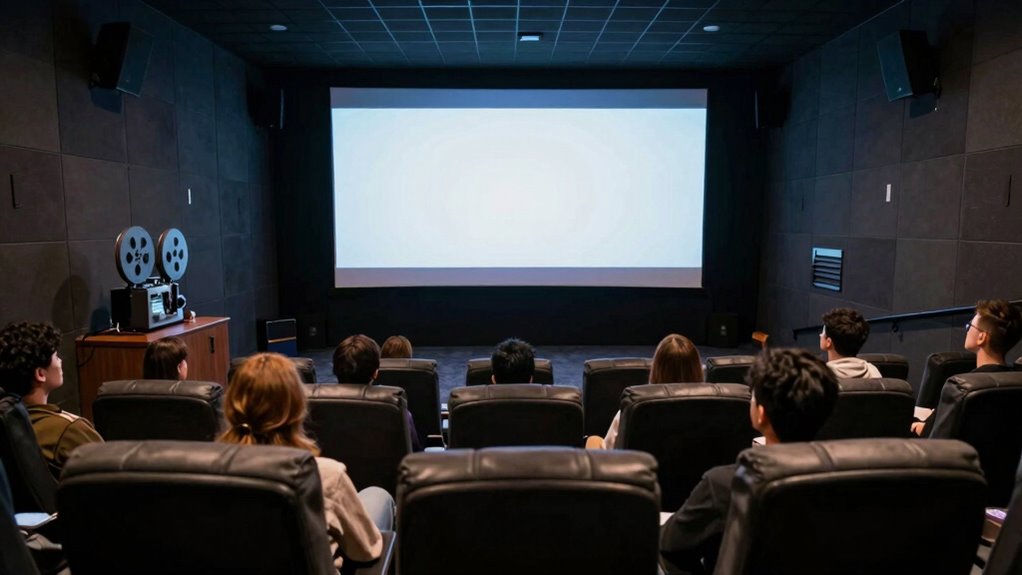

Screening rooms teach you to see your work from fresh perspectives, revealing details you might have missed during production. You observe audience reactions in real time, which helps you understand how well your story connects. Their feedback guides your adjustments, making your work more engaging and authentic. This process develops your critical instincts, teaching humility and resilience. If you want to discover how this experience can transform your creative journey, keep exploring these insights.
Key Takeaways
- Screening rooms offer fresh perspectives and reveal details missed during production, fostering self-awareness.
- Audience reactions provide immediate, honest feedback to assess emotional impact and storytelling effectiveness.
- Observing responses guides creators in refining pacing, editing, and narrative clarity.
- The process cultivates critical self-awareness, helping creators recognize patterns of success and failure.
- Screenings promote personal growth by teaching humility, resilience, and the importance of active listening.
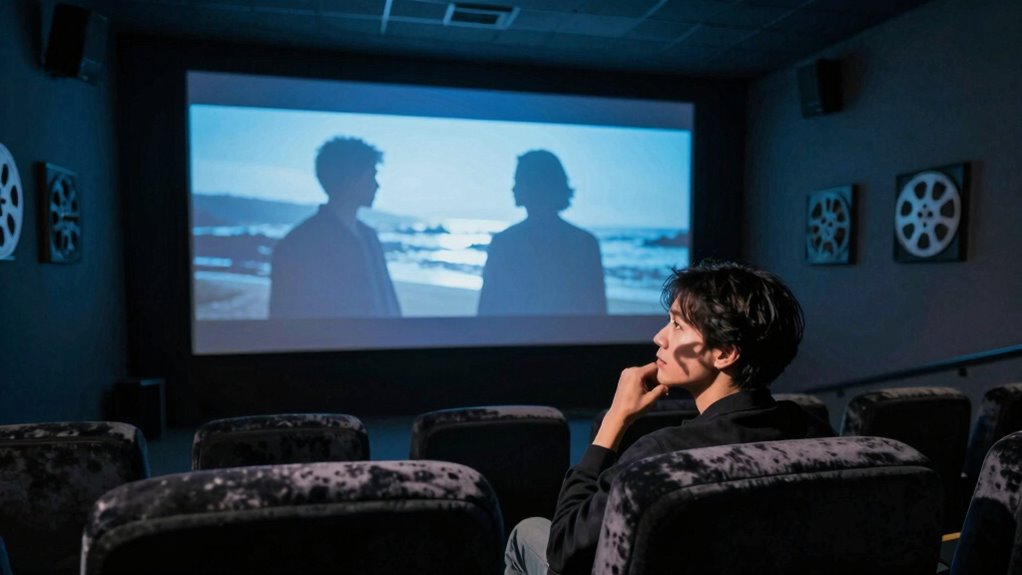
Have you ever wondered how screening rooms can reveal a creator’s true potential? When you step into these spaces, you’re not just showcasing your work—you’re opening yourself up to a powerful process of self-discovery. As you watch your creation on the big screen, you begin to see it through fresh eyes, noticing details you might have missed during production. This is where audience engagement becomes invaluable. Observing how viewers respond—whether they laugh, remain silent, or shift in their seats—gives you immediate insight into what resonates and what falls flat. It’s a real-time read on emotional impact, helping you identify the strengths of your work and areas needing refinement.
Screening rooms serve as a testing ground for your ideas, and the feedback you receive can be both enlightening and humbling. Creative feedback from an audience isn’t just about criticism; it’s about understanding the narrative’s clarity, pacing, and emotional pull. When you see people reacting authentically—clapping at the right moments, showing confusion, or feeling moved—you understand your story’s power and its shortcomings. This honest engagement pushes you to refine your craft, to make adjustments that better connect with viewers. It’s an essential step in the creative process, transforming raw work into polished art through direct audience interaction. Additionally, audience feedback can help you develop a deeper understanding of how storytelling impacts viewers emotionally, which is crucial for growth as a creator.
Beyond immediate reactions, screening rooms teach you to trust your instincts and develop critical self-awareness. As you observe the audience’s engagement, you start to recognize patterns—what works and what doesn’t. These moments of reflection help you make informed choices about editing, storytelling, and pacing. You learn to interpret subtle cues, like a shift in energy or a quiet pause, which can signal where your work hits or misses the mark. That kind of insight is invaluable because it guides your creative decisions in a way that theory or isolated feedback can’t replicate.
Ultimately, screening rooms are more than just a venue for presentation—they’re a mirror for your creative soul. They teach you humility, resilience, and the importance of listening. Every screening provides an opportunity for growth, allowing you to connect more deeply with your audience’s experience and, in turn, discover new layers within your own work. When you embrace this process, you realize that your best creations are often born from honest audience engagement and constructive creative feedback. It’s here that you truly uncover your potential as a creator.
As an affiliate, we earn on qualifying purchases.
Frequently Asked Questions
How Do Screening Rooms Influence Creative Confidence?
Screening rooms boost your creative confidence by encouraging you to take more creative risks, knowing you’ll get honest feedback. Watching your work with an audience helps you understand what engages them and refine your storytelling skills. This environment fosters a sense of vulnerability, pushing you to experiment and improve. As a result, you become more confident in your creative choices, trusting your instincts to craft compelling, audience-focused content.
What Common Mistakes Do Creators Notice During Screenings?
During screenings, you often notice common mistakes like unclear storytelling or pacing issues. Visual feedback reveals when scenes don’t evoke the intended emotions or seem confusing. Technical glitches, such as sound problems or image distortions, also stand out. These mistakes can distract viewers and hinder your message. Recognizing them helps you improve your work, ensuring your final project is polished, cohesive, and engaging for your audience.
How Do Screening Rooms Affect Storytelling Techniques?
You might find it surprising, but screening rooms profoundly influence your storytelling techniques. As you watch your work, the environment sharpens your focus on visual storytelling and pacing analysis, revealing how scenes flow and emotions build. This coincidence helps you refine pacing and visual cues, making your narrative more compelling. By noticing what works and what doesn’t, you adapt your techniques, ultimately creating more engaging, well-paced stories.
Can Screening Rooms Help Identify Audience Preferences?
Yes, screening rooms can help you identify audience preferences by gauging audience engagement and reactions. When viewers watch your content, their responses reveal what resonates and what doesn’t, helping you refine your work. You can assess content relevance based on their feedback, ensuring your future projects align better with audience interests. This process enables you to create more targeted, engaging content that truly connects with your viewers.
What Emotional Responses Do Creators Typically Experience?
You often feel a mix of emotional vulnerability and creative anxiety when watching your work in screening rooms. These feelings come from exposing your ideas to others and fearing judgment. Yet, this emotional response reveals your passion and commitment. Embracing vulnerability helps deepen your connection to your work, ultimately fostering growth. Screening rooms teach you to manage these emotions, transforming anxiety into motivation and vulnerability into strength.
As an affiliate, we earn on qualifying purchases.
Conclusion
Screening rooms teach you to see your work clearly, to hear its true voice, and to understand its impact fully. They reveal your strengths and expose your flaws, guiding you to refine your craft. They challenge you to grow, inspire you to improve, and remind you to stay authentic. Embrace the lessons they offer, and let them shape your journey—because in these rooms, you don’t just watch your work; you learn from it, grow with it, and become better because of it.
As an affiliate, we earn on qualifying purchases.
As an affiliate, we earn on qualifying purchases.