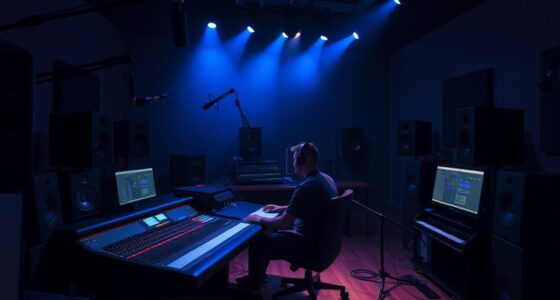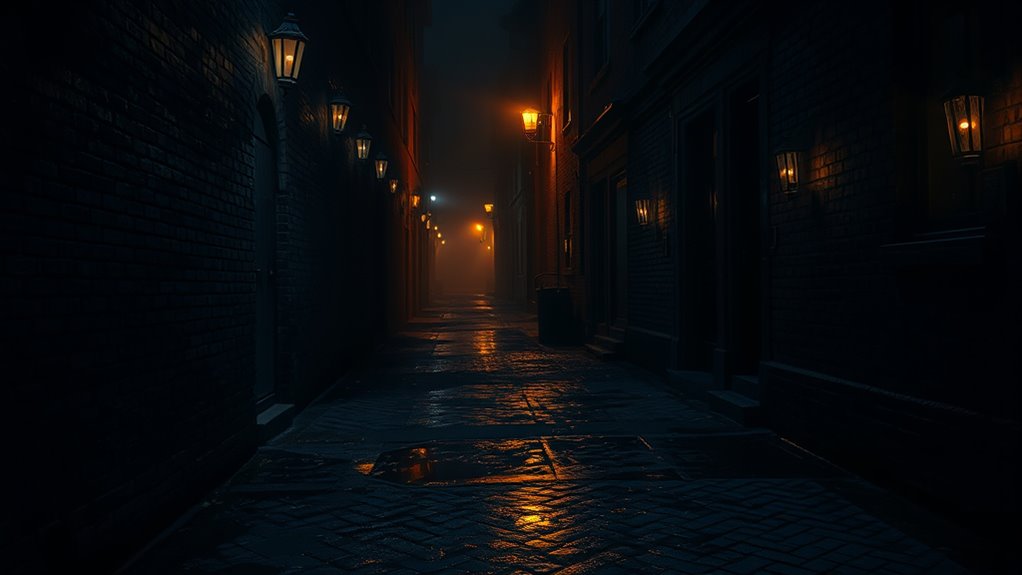

To set the perfect tone, use color and lighting thoughtfully. Warm colors like reds and oranges evoke energy or passion, while cool tones like blues and greens create calm or melancholy. Complement these with lighting choices—soft light for comfort, high contrast for tension, or silhouettes for mystery. Combining these elements allows you to guide viewers’ emotions and reinforce your story’s mood seamlessly. Keep exploring how to blend these techniques for even more compelling visuals.
Key Takeaways
- Select warm colors with soft lighting to create a cozy, inviting atmosphere.
- Use cool, desaturated tones combined with harsh lighting to evoke tension or unease.
- Employ high contrast lighting to heighten drama and suspense within scenes.
- Incorporate backlighting and silhouettes to add mystery and reinforce emotional ambiguity.
- Harmonize color choices and lighting techniques to reinforce the overall mood and story tone.

Color psychology is the study of how different hues impact human emotions and behaviors. For example, warm colors like reds and oranges tend to evoke energy, passion, or urgency. Blues and greens often create a sense of calm, serenity, or melancholy. When you select colors intentionally, you guide viewers’ emotional reactions without explicitly telling them what to feel. Using red in a tense scene might heighten a sense of danger or excitement, while a soft pastel palette can lend a dreamy, nostalgic quality. Recognizing the psychological effects of colors allows you to reinforce the story’s tone subtly but powerfully. Additionally, understanding how color combinations influence perception can help you craft more harmonious and emotionally resonant visuals.
Color choices influence emotions; warm hues energize, cool tones soothe, shaping viewer reactions subtly yet powerfully.
Lighting techniques are equally vital in setting the tone. The way you illuminate your scene can dramatically alter its mood. High contrast lighting, with deep shadows and bright highlights, can generate feelings of suspense or drama. Soft, diffused light creates a gentle, warm atmosphere that feels inviting or intimate. Directional lighting, such as side lighting, can add depth and mystery, while backlighting can produce silhouettes that evoke suspense or anonymity. When you experiment with different lighting setups, you control not just visibility but also the emotional undercurrent of your scene.
Combining color psychology with lighting techniques allows you to craft a cohesive visual narrative. For example, if you want to depict a tense confrontation, you might use cool, desaturated colors combined with harsh, directional lighting to emphasize starkness and unease. Conversely, for a romantic or hopeful moment, warm tones illuminated by soft, glowing light can evoke comfort and tenderness. The key is to think about how each element contributes to the story you want to tell and to use them intentionally.
Frequently Asked Questions
How Can Color and Lighting Influence Audience Emotions?
Color and lighting influence your audience’s emotions through their psychological effects and cultural associations. Bright, warm colors like red and yellow evoke excitement and energy, while cool tones like blue create calmness and trust. Lighting can highlight or shadow characters, affecting feelings of suspense or safety. By choosing colors and lighting thoughtfully, you guide your audience’s mood and reactions, making your message more powerful and emotionally resonant.
What Are Common Color Schemes Used in Film Genres?
You’ll notice that each film genre often uses specific color schemes to create a consistent mood. For example, horror movies frequently adopt a dark, muted color palette to evoke fear, while romantic films use warm, soft tones for intimacy. Sci-fi often features cool, metallic hues for a futuristic feel. These color palettes guarantee visual consistency, helping viewers instantly identify the genre and feel the intended emotional tone.
How Does Lighting Contrast Affect Scene Mood?
You notice how lighting contrast shapes a scene’s mood by emphasizing shadow intensity and highlight focus. High contrast creates stark differences, making scenes feel tense or dramatic, while low contrast fosters calm or intimacy. Juxtaposing bright highlights with deep shadows draws your attention, heightening emotional impact. By adjusting contrast, you influence how viewers interpret the scene, making moments feel more suspenseful or tender depending on the desired tone.
Can Color Symbolism Vary Across Cultures?
Yes, color symbolism can vary across cultures. You might find that red symbolizes luck in China, while in Western countries, it often represents danger or passion. Cultural color meanings influence how you perceive scenes and characters. Be aware of cross cultural symbolism, as colors that evoke specific feelings or ideas in one culture may have entirely different connotations elsewhere. This awareness helps you create more authentic and sensitive visual storytelling.
What Tools Are Best for Analyzing Color and Lighting Choices?
Imagine you’re a film director in 1920s, but today, you use digital tools to analyze your color palette and lighting techniques. The best tools include color grading software like DaVinci Resolve, which helps you tweak hues and brightness. Additionally, histogram analyzers and scope tools provide precise data on color distribution and luminance, ensuring your lighting choices perfectly match the mood you’re aiming for.
Conclusion
By carefully choosing colors and lighting, you shape the mood of your scene. Bright hues and harsh lights energize, while muted tones and soft illumination soothe. It’s a delicate balance—contrast sharpness with subtlety, warmth with coolness. Your choices craft a world that feels alive, tense, or tender. In this dance of light and color, every decision guides your audience’s emotions, making your story unforgettable. Embrace the power of tone to truly bring your vision to life.