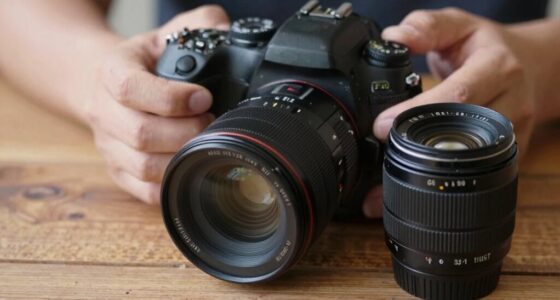
Fluid head tripods are still essential because they give you unbeatable stability and smooth camera movements. You can control panning and tilting precisely, creating professional-looking footage that’s polished and natural. This equipment helps you capture sweeping landscapes or detailed shots effortlessly. Proper maintenance guarantees it keeps performing at its best, making it a smart investment for serious videographers. To discover how to optimize your tripods and get the most out of your gear, keep exploring.
Key Takeaways
- They provide smooth, controlled camera movements essential for professional-quality footage.
- Enable precise panning and tilting, enhancing creative shot composition.
- Their stability and fluidity improve visual storytelling and viewer engagement.
- Proper maintenance ensures consistent performance and extends equipment lifespan.
- They remain a vital investment for reliable, high-quality video production.
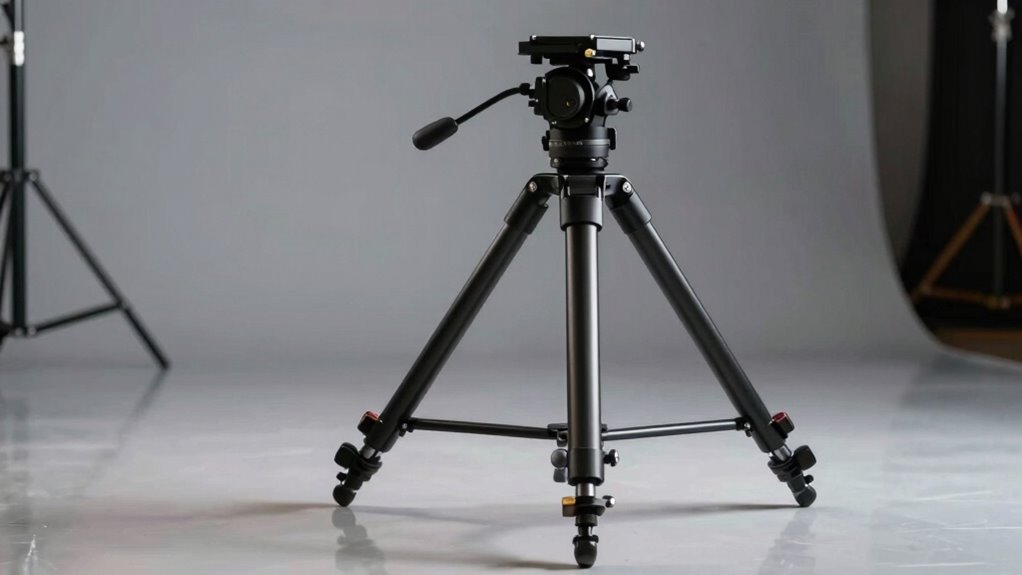
Ever wondered how professional videographers achieve smooth, steady shots? The secret often lies in the use of a fluid head tripod. Unlike handheld methods, a fluid head provides the camera stabilization needed to produce professional-quality footage. When you mount your camera on a fluid head tripod, you gain precise control over panning and tilting movements, making your shots look polished and intentional. This level of control is especially important in cinematic productions, interviews, or any scenario where smooth motion elevates the visual storytelling. It’s not just about having a sturdy tripod; it’s about the quality of the fluid head itself, which guarantees those movements are fluid and natural.
A fluid head tripod ensures smooth, controlled camera movements for professional-quality footage.
But to maintain these benefits consistently, equipment maintenance becomes crucial. Regularly checking your fluid head for leaks or damage guarantees your camera stabilization remains reliable. Over time, the lubricant inside the fluid head can degrade or leak, leading to jerky or inconsistent movements. Keeping the fluid head clean, properly lubricated, and free of debris helps preserve its smooth operation. Proper maintenance includes inspecting all moving parts, tightening screws, and replacing worn-out components, which is essential for equipment longevity and optimal performance. Doing so not only prolongs the lifespan of your gear but guarantees the high-quality performance you rely on during shoots. Additionally, understanding the mechanics of fluid head operation can help you troubleshoot issues more effectively and optimize your setup.
Using a fluid head tripod isn’t just about stability; it’s about giving you the confidence to focus on your creative vision without worrying about shaky footage. The precision of fluid head controls allows for seamless transitions and fluid camera movements, which are difficult to replicate with other stabilization methods. Whether you’re capturing a sweeping landscape or a close-up interview, the fluid head’s ability to smoothly pan and tilt enhances the viewer’s experience. To truly benefit from this, you need to treat your equipment with care, performing routine maintenance to keep everything functioning at its best. Regular maintenance also helps prevent equipment failure, which can disrupt a shoot and compromise footage quality. This proactive approach ensures your camera stabilization remains flawless, and your footage looks professional every time.
In the end, fluid head tripods remain a core tool in video because of their unparalleled ability to deliver steady, controlled shots. They are an essential part of any serious videographer’s kit, especially when paired with diligent equipment maintenance. Regular maintenance not only preserves smooth operation but also ensures that your fluid head’s performance remains consistent over time. With the right care, your fluid head will continue to provide smooth, reliable performance, making your videos look polished and professional. So, if you aim for high-quality footage, investing in a good fluid head tripod and staying on top of its maintenance is a smart choice that pays off every time you hit record.
As an affiliate, we earn on qualifying purchases.
Frequently Asked Questions
How Do Fluid Head Tripods Compare to Digital Stabilizers?
Fluid head tripods offer smoother, more controlled camera movements compared to digital stabilizers, especially when you consider camera compatibility and weight considerations. They are ideal for static shots or slow pans, providing consistent motion without extra power. Digital stabilizers excel in handheld dynamic shots and are more portable, but they often struggle with heavier cameras. Choose based on your shoot’s stability needs and the weight of your gear.
Are Fluid Head Tripods Suitable for Outdoor Shooting Environments?
Yes, fluid head tripods are suitable for outdoor shooting, but you should consider weather resistance and portability concerns. Look for models with weatherproof features to protect against rain, dust, and wind. While they may be slightly bulkier than handheld options, many tripods are portable enough for outdoor use. Just make certain you choose one that balances stability, weather resistance, and ease of transport to get the best results in outdoor environments.
What Is the Typical Lifespan of a Professional Fluid Head Tripod?
A professional fluid head tripod typically lasts between 5 to 10 years, depending on usage and maintenance. You can extend its lifespan through regular tripod durability checks and proper fluid head maintenance, like cleaning and lubricating moving parts. Heavy or frequent use may shorten its life, but with careful care, your tripod can remain reliable for years, ensuring smooth footage and consistent performance during your shoots.
Can Fluid Head Tripods Support Professional Cinema Cameras?
Imagine a sturdy tree standing firm amidst wind—fluid head tripods do the same for your camera. They can support professional cinema cameras if their weight capacity aligns with your gear, ensuring stability and smooth movement. Check the camera compatibility carefully; many fluid heads are designed for high weights, making them reliable choices for capturing cinematic shots. With proper support, your professional camera stays steady, ready for dynamic, high-quality footage.
How Do You Maintain and Calibrate a Fluid Head Tripod?
To maintain and calibrate your fluid head tripod, start with regular tripod maintenance by cleaning the fluid pan and tilt mechanisms to prevent dust buildup. Follow calibration procedures by adjusting tension controls to guarantee smooth, precise movements. Check for leaks or wear in the fluid system, and tighten any loose screws or bolts. Proper maintenance and calibration keep your tripod functioning smoothly, ensuring professional-quality footage every time you shoot.
professional video tripod fluid head
As an affiliate, we earn on qualifying purchases.
As an affiliate, we earn on qualifying purchases.
Conclusion
A fluid head tripod isn’t just a tool; it’s the steady hand that guides your vision through chaos, much like a lighthouse guiding ships safely ashore. It symbolizes reliability amid the unpredictable waves of filming, ensuring your shots remain smooth and true. As you master your craft, remember that this humble device anchors your creativity, allowing your story to unfold seamlessly. Embrace it—you’re steering your narrative toward clarity and excellence, no matter how turbulent the journey.
camera fluid head maintenance kit
As an affiliate, we earn on qualifying purchases.
As an affiliate, we earn on qualifying purchases.
As an affiliate, we earn on qualifying purchases.