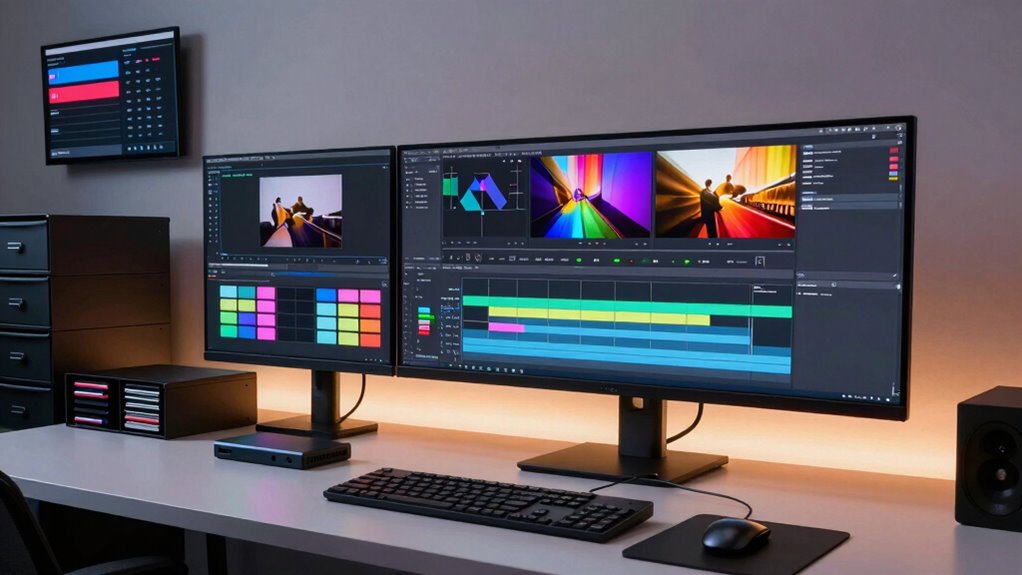

Smarter archive systems help you find and access footage faster, saving you time and reducing frustration. By tagging clips with detailed metadata and automating repetitive tasks, you spend less effort searching manually and stay focused on creative work. These systems also improve collaboration, ensuring everyone has quick, secure access to assets. With advanced features like content insights and seamless tool integration, you’ll work more efficiently. Keep going to discover how these innovations can elevate your editing process even further.
Key Takeaways
- Quick retrieval of specific footage speeds up editing and reduces project turnaround times.
- Advanced metadata tagging ensures consistent organization and easy searching across large asset libraries.
- Workflow automation minimizes manual tasks, allowing editors to focus on creative aspects.
- Enhanced security and cloud integration facilitate remote collaboration and protect sensitive content.
- AI-driven content insights improve asset categorization, streamlining the editing process.
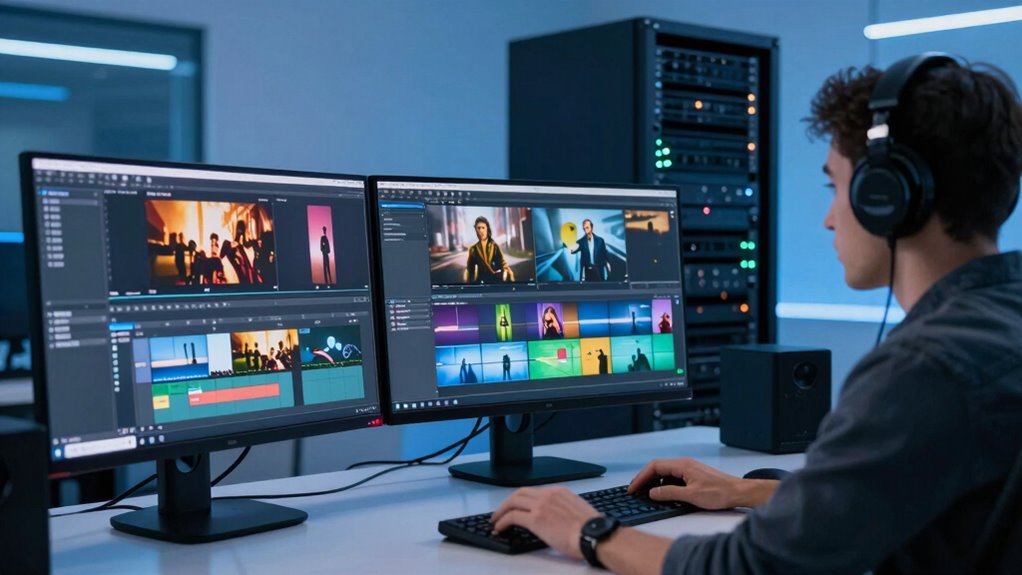
In today’s fast-paced editing environment, trailer editors are discovering that smarter archive systems can substantially streamline their workflow. These advanced systems improve how you manage your assets, making it easier to locate, organize, and utilize footage efficiently. One of the key advantages is enhanced metadata management. Instead of sifting through countless files manually, you can tag clips with detailed metadata—keywords, descriptions, shot types, and timestamps—that allow for quick, precise searches. This means you spend less time hunting for specific moments and more time focusing on creative editing. Accurate metadata also helps keep your entire team aligned, reducing miscommunications and ensuring everyone accesses the same assets with consistent labeling. Additionally, these systems leverage content insights, enabling automatic tagging and categorization based on footage analysis, further optimizing the workflow. These insights often incorporate machine learning techniques, which improve over time as the system learns from your editing patterns. A well-designed archive system can also incorporate security features to protect sensitive footage from unauthorized access. Workflow automation is another crucial benefit. Smarter archive systems automate repetitive tasks like ingesting footage, transcoding files into multiple formats, and even tagging clips based on preset criteria. When you set up these automations, your workflow becomes more streamlined, cutting down on manual labor and minimizing errors. For example, as soon as footage is imported, the system can automatically analyze and categorize clips, making them ready for editing without additional steps. This saves valuable time during tight deadlines, allowing you to focus on crafting compelling trailers rather than managing files. The automation also extends to version control, so you can easily track different edits and revisions, preventing confusion and ensuring everyone works with the latest assets. These systems often incorporate cloud storage solutions, offering flexible access and secure backups that safeguard your valuable footage. Furthermore, many of these systems provide real-time collaboration features, enabling multiple editors to work on the same project simultaneously without conflicts. Another aspect where smarter archive systems shine is in their ability to integrate seamlessly with your editing tools. When metadata management is robust, and workflows are automated, you eliminate the need for constant data entry or manual transfers between platforms. This integration speeds up the entire process, from initial footage ingestion to final export, keeping your project moving forward without unnecessary delays. It also enhances collaboration, as team members can access and share assets effortlessly, reducing bottlenecks and fostering a more cohesive creative process.
As an affiliate, we earn on qualifying purchases.
Frequently Asked Questions
How Do Archive Systems Improve Collaboration Among Trailer Editing Teams?
Archive systems improve collaboration among trailer editing teams by providing centralized access to footage, making it easier to share and review content. You benefit from metadata tagging, which organizes assets for quick retrieval, and version control keeps everyone on the same page by tracking edits. This streamlines communication, reduces errors, and guarantees your team works efficiently with the latest files, ultimately speeding up the editing process.
Can Smarter Archives Integrate With Existing Editing Software?
Smarter archives act like a skilled translator, seamlessly bridging the gap between your editing software and new technologies. They effortlessly integrate with existing tools by leveraging metadata management and cloud integration, ensuring your workflows stay smooth as silk. These systems sync with your editing software, transforming chaos into harmony, so you can focus on crafting compelling trailers without worrying about compatibility issues or losing valuable footage.
What Security Features Are Included in Modern Archive Systems?
Modern archive systems include robust security features like access controls and data encryption. You can restrict who accesses sensitive footage, ensuring only authorized personnel can view or modify files. Data encryption protects your content from cyber threats during storage and transfer. These features help you maintain confidentiality, comply with industry regulations, and safeguard your valuable assets, giving you peace of mind knowing your archive is secure and protected against unauthorized access.
How Do Archive Systems Handle Large Multimedia Files Efficiently?
You’ll find that archive systems handle large multimedia files efficiently by leveraging advanced metadata management, which helps organize and quickly locate your content. Storage scalability plays a key role, allowing you to expand capacity seamlessly as your project grows. These features guarantee smooth access and management of massive files, minimizing delays. By optimizing storage and metadata, you stay productive, making it easier to retrieve and work with high-resolution trailer footage whenever you need.
What Training Is Required to Implement New Archive Technologies?
You need specialized training in archive management and new technologies to implement them effectively. While some might think it’s complicated, most systems offer user-friendly interfaces and thorough tutorials. Your training requirements include understanding metadata, file organization, and system workflows. Investing in this education guarantees seamless integration, quick access to large multimedia files, and optimized archive management, making your editing process more efficient and reducing downtime during shifts.
metadata tagging software for video editing
As an affiliate, we earn on qualifying purchases.
As an affiliate, we earn on qualifying purchases.
Conclusion
So, next time you marvel at a perfectly cut trailer, remember it’s probably thanks to those “smarter” archive systems. They’ve turned your chaotic mess of clips into a well-oiled masterpiece—no magic, just clever tech. Because who needs creative flair when you have a system that remembers everything for you? Truly, the unsung hero of trailer editing—saving us from ourselves, one clip at a time. Cheers to progress, right?
cloud-based media asset management
As an affiliate, we earn on qualifying purchases.
As an affiliate, we earn on qualifying purchases.
automatic video clip categorization tool
As an affiliate, we earn on qualifying purchases.
As an affiliate, we earn on qualifying purchases.