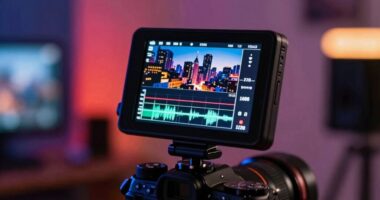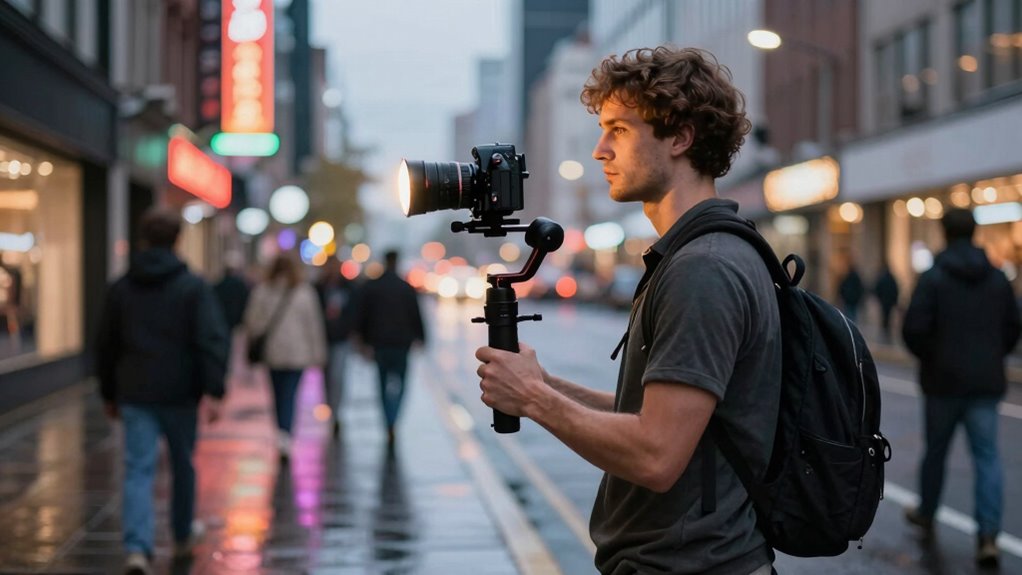

Gimbals have transformed what you can accomplish as a solo filmmaker by making smooth, professional shots accessible without heavy equipment or a crew. They let you move freely over varied terrain, capturing dynamic scenes with stability and ease. With affordable, user-friendly designs, they boost your creative freedom and save time during shoots. If you want to explore how gimbals open new filmmaking possibilities, there’s more to discover below.

Get movie-night favorites delivered free — and shop member deals
- Fast, free delivery on millions of items
- Access to Prime Big Deal Days deals on October 6–7
- Prime Video, Amazon Music and more included
Key Takeaways
- Gimbals enable solo filmmakers to achieve smooth, professional shots without additional crew or bulky equipment.
- They allow for spontaneous, dynamic camera movements, increasing creative freedom and storytelling flexibility.
- Gimbals are more affordable and user-friendly, making high-quality stabilization accessible to independent creators.
- They reduce setup time, helping filmmakers capture compelling footage efficiently and adapt quickly to scenes.
- Overall, gimbals empower solo filmmakers to produce visually polished content, elevating expectations for independent filmmaking.
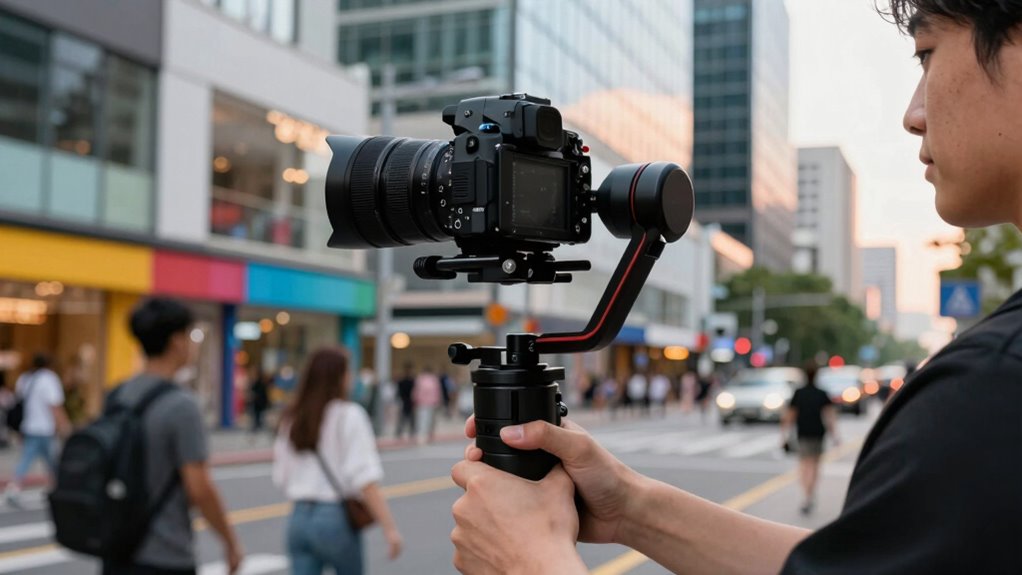
Ever wondered how solo filmmakers manage smooth, professional-looking shots without a crew? The secret often lies in the power of gimbals. These handheld devices have revolutionized camera stabilization, allowing you to capture steady, cinematic footage even when you’re working alone. No longer do you need a bulky steadicam rig or a team of assistants to get that polished look. Instead, a well-designed gimbal offers intuitive control, making it easier to move smoothly through scenes or follow action seamlessly. This advancement means you can focus more on your creative storytelling, knowing your shots will be stable and visually engaging.
Gimbals enable solo filmmakers to achieve smooth, professional shots effortlessly, transforming storytelling with stability and creative freedom.
With a gimbal, your camera stays level and steady, even when you’re on the move. This camera stabilization ensures that your footage remains smooth regardless of terrain or movement, which was previously difficult to achieve solo. As a filmmaker working alone, you often face the challenge of maintaining stability without extra hands or equipment. Gimbals eliminate this obstacle, empowering you to shoot dynamic scenes with ease. You can walk, run, or pivot without sacrificing image quality, making your shots look more professional and immersive. This stability also allows for more creative storytelling, as you can experiment with sweeping shots, tight follow-cams, or complex camera angles that would be hard to execute otherwise. Additionally, technological advancements have made gimbals more accessible and user-friendly for solo creators.
Moreover, gimbals foster a new level of spontaneity and flexibility. You don’t need to pre-plan every shot or rely on static frames. Instead, you can move freely through your environment, capturing authentic moments or dramatic cinematic sequences on the fly. This freedom inspires more creative storytelling, as your shots can adapt to the story’s flow without sacrificing quality. The ability to quickly switch between different shot types without extensive setup saves time and energy, enabling you to focus on capturing raw, compelling footage. Additionally, advancements in technology have made gimbals more accessible and user-friendly for solo creators. This progress has also contributed to the rise of independent filmmaking, allowing creators to produce high-quality content without the need for large crews.
Ultimately, gimbals have changed what’s possible for solo filmmakers. They remove technical barriers that once made smooth, professional-looking shots difficult without a crew. By enhancing camera stabilization, they open up new creative avenues, allowing you to tell stories more vividly and convincingly. With a gimbal, you’re no longer limited by equipment constraints or shaky footage—your vision becomes clearer and more impactful. This tool empowers you to produce high-quality content independently, making your filmmaking process more efficient, creative, and rewarding.
handheld camera gimbal for filmmaking
As an affiliate, we earn on qualifying purchases.
As an affiliate, we earn on qualifying purchases.
Frequently Asked Questions
What Are the Best Gimbals for Beginner Solo Filmmakers?
As a beginner solo filmmaker, the DJI Ronin-SC and Zhiyun Crane M2 are excellent gimbals for camera stabilization. They’re lightweight, easy to set up, and offer smooth footage, perfect for learning the basics. Follow beginner tips like balancing your camera properly and practicing steady movements. These gimbals help you build confidence, capture professional-looking shots, and elevate your storytelling without overwhelming complexity.
How Do Gimbals Affect Filming Speed and Efficiency?
Gimbals substantially boost your filming speed and efficiency by providing superior stabilization techniques, allowing you to capture smooth, professional-looking footage without extra effort. They improve shooting ergonomics, reducing fatigue during extended shoots. With quick setup and intuitive controls, gimbals let you move swiftly between shots, saving time. This streamlined approach enables you to focus more on creativity and storytelling while minimizing the need for extensive post-production stabilization.
Are Gimbals Suitable for Outdoor or Rugged Environments?
Yes, gimbals are suitable for outdoor or rugged environments, but you should consider durability concerns and weather resistance. Look for models built with sturdy materials and those that offer weather sealing to withstand dust, rain, or rough handling. While many gimbals perform well outdoors, selecting one specifically designed for tough conditions guarantees your equipment remains dependable, helping you capture smooth footage even in challenging environments.
What Maintenance Is Required for Gimbals After Prolonged Use?
Imagine you’re a tech-savvy explorer in a sci-fi adventure—your gimbal needs some TLC after prolonged use. You should regularly calibrate it to maintain smooth footage and check the battery life, replacing or recharging batteries as needed. Keep the gimbal clean and store it in a cool, dry place. Periodic firmware updates also guarantee peak performance. These simple maintenance tips keep your gear operating smoothly, ready for your next cinematic quest.
Can Gimbals Improve Audio Quality in Handheld Shots?
Gimbals primarily enhance video stability, but some models offer improved audio stabilization, reducing handling noise during handheld shots. While they don’t directly improve audio quality, certain gimbals allow microphone integration, enabling you to connect external mics for clearer sound. By minimizing vibrations and allowing better positioning of microphones, gimbals indirectly support better audio capture, making your handheld shots more professional and balanced.
professional camera stabilizer for solo filmmakers
As an affiliate, we earn on qualifying purchases.
As an affiliate, we earn on qualifying purchases.
Conclusion
Gimbals have truly transformed what you, as a solo filmmaker, can achieve. They’ve made smooth, professional shots accessible without a crew, fueling your creativity and confidence. Some say it’s like having a steady hand in a chaotic world—maybe even a bit of magic. While they don’t replace skill or vision, gimbals level the playing field, proving that with the right gear, you can turn any shot into a masterpiece.
affordable smartphone gimbal for video
As an affiliate, we earn on qualifying purchases.
As an affiliate, we earn on qualifying purchases.
camera stabilization device for independent creators
As an affiliate, we earn on qualifying purchases.
As an affiliate, we earn on qualifying purchases.
Fall Picks
fall essentials
As an affiliate, we earn on qualifying purchases.