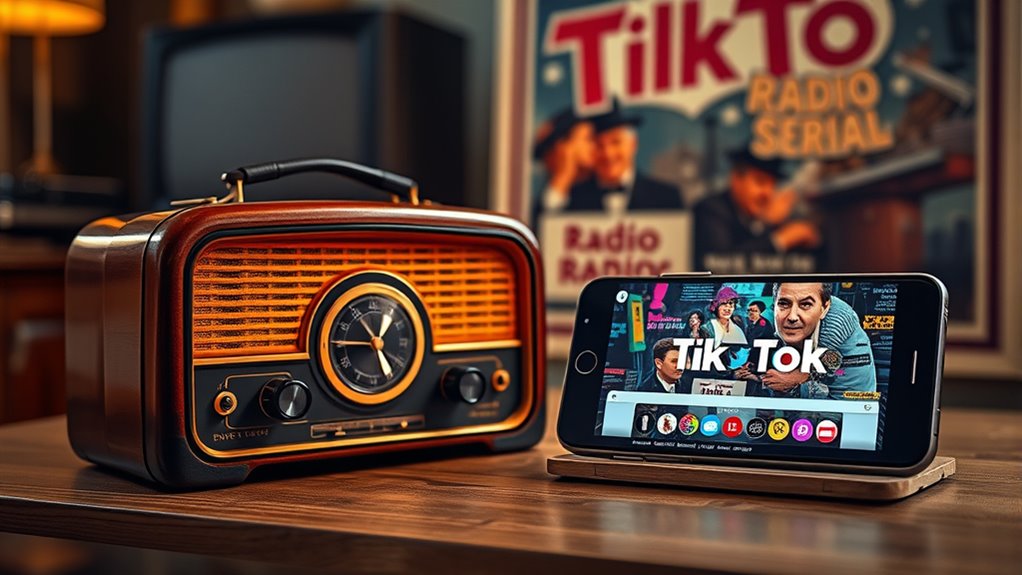

From radio serials to TikTok, trailer evolution shows how promotional content has transformed over time. Early trailers were simple, silent previews relying on visuals and title cards, while sound and editing enhancements made them more dynamic during Hollywood’s Golden Age. Today, digital tools and social media turn trailers into quick, engaging clips that go viral. If you keep exploring, you’ll discover how each era shaped the way we get excited for movies and shows.
Key Takeaways
- Trailers originated as silent film previews relying on visuals and title cards before sound integration.
- The advent of synchronized sound transformed trailers into dynamic, music-enhanced promotional tools.
- During Hollywood’s Golden Age, trailers became elaborate short films highlighting key moments to generate excitement.
- CGI and visual effects revolutionized trailers, enabling spectacular, cinematic visuals that tease epic stories.
- Digital editing, social media, and platforms like TikTok now facilitate rapid, viral, and emotionally impactful trailer content.

Have you ever wondered how trailers have transformed over the years? It’s a fascinating journey that reflects the evolution of cinema itself. In the early days, trailers were almost nonexistent or limited to brief previews shown in theaters, but the roots of trailer storytelling stretch back to the silent film era. Back then, films didn’t have synchronized sound, so promotional material relied heavily on visual storytelling. These silent film trailers used title cards and dramatic imagery to entice audiences, setting the stage for what was to come. They were straightforward, often highlighting the film’s stars or key moments without the sophisticated editing or sound design we see today. As technology advanced, trailers began to incorporate sound, and with that, the art of editing and music became essential, transforming trailers into more dynamic and engaging previews.
Fast forward to the golden age of cinema, and trailers became more elaborate, often released as standalone short films that showcased the most exciting parts of upcoming movies. This period also marked the beginning of the blockbuster era, with trailers becoming a crucial marketing tool. As special effects technology evolved, so did trailers. The introduction of modern CGI (computer-generated imagery) revolutionized how trailers looked and felt. Now, filmmakers could create spectacular visuals that were impossible to shoot practically, making trailers more visually stunning and engaging. With CGI, trailers could hint at epic battles, fantastical worlds, or futuristic technology, all designed to excite and intrigue audiences. This shift helped trailers evolve from simple previews into cinematic experiences that teased the grandeur of the full film.
In recent decades, trailers have continued to adapt with technological innovations. The rise of digital editing and faster-paced editing styles have made trailers more exciting and immediate. Today, trailers are crafted to evoke emotion quickly, often using quick cuts, powerful music, and carefully chosen dialogue. The use of Digital editing tools has played a significant role in allowing creators to craft more polished and impactful trailers in shorter timeframes. The advent of social media has further transformed how trailers are shared—short clips, teasers, and even TikTok videos now serve as bite-sized trailers that reach millions instantly. Viral marketing strategies have become an essential component of modern trailer releases, amplifying their reach and impact. The goal remains the same: capture attention and generate buzz. But the methods have changed dramatically from the silent film days to the modern CGI spectacles and viral clips. As technology keeps advancing, trailers will continue to evolve, blending innovation with storytelling to keep audiences hooked from the first glimpse.
Frequently Asked Questions
How Did Radio Serials Influence Early Film Trailers?
Radio serials influenced early film trailers through their use of narrative techniques and sound design. You can see how they built suspense and engaged audiences by carefully crafting story snippets and using sound effects to evoke emotions. This approach carried over into trailers, where they emphasized storytelling and immersive audio to attract viewers, making trailers more compelling and dynamic, just like radio serials did for their audiences.
What Are the Key Technological Advances in Trailer Production?
You see, key technological advances in trailer production include the use of advanced visual effects and innovative sound design. These tools let you create more compelling and immersive trailers, grabbing viewers’ attention instantly. Digital editing software speeds up production, enabling quick edits and seamless integration of effects. As a result, trailers become more dynamic and engaging, helping you better promote films and connect with audiences across different platforms.
How Do Social Media Trends Shape Modern Trailer Styles?
Like Pandora’s box opening, social media trends release new trailer styles that captivate audiences. You see viral marketing in action, where brief, eye-catching clips spark curiosity and drive shareability. This fosters heightened audience engagement, making trailers more interactive and personalized. Platforms like TikTok and Instagram influence creators to craft shorter, dynamic trailers, turning viewers into active participants and amplifying the trailer’s reach—shaping modern marketing just as much as the content itself.
What Role Did Censorship Play in Trailer Evolution?
You see, censorship considerably influences trailer evolution by enforcing moral constraints and political censorship. Filmmakers often have to modify trailers to avoid offending audiences or political groups, shaping how trailers are crafted. This pressure leads to more subtlety or sanitized content, ensuring films reach wider audiences without controversy. As a result, trailer styles adapt over time, balancing creative expression with societal and political sensitivities, ultimately impacting how stories are marketed.
How Do Trailers Impact Audience Expectations and Movie Success?
Trailers greatly shape your audience anticipation and influence a movie’s success by highlighting key moments and setting expectations. Effective marketing strategies use trailers to generate excitement, build curiosity, and attract viewers. When these trailers align with what you expect, they boost your confidence in the film. Conversely, misleading trailers can disappoint, but well-crafted ones ensure you’re enthusiastic to see the movie, ultimately driving box office results and long-term popularity.
Conclusion
So, as you’ve seen, trailers have gone from humble radio serials to the explosive, mind-blowing TikTok snippets of today. They’ve evolved faster than you can say “viral,” shaping every moment of your entertainment obsession. If you think about it, these trailers are now so powerful, they could probably launch a rocket to Mars—or at least make you hit “replay” a hundred times. Truly, the evolution of trailers is nothing short of a cinematic miracle!