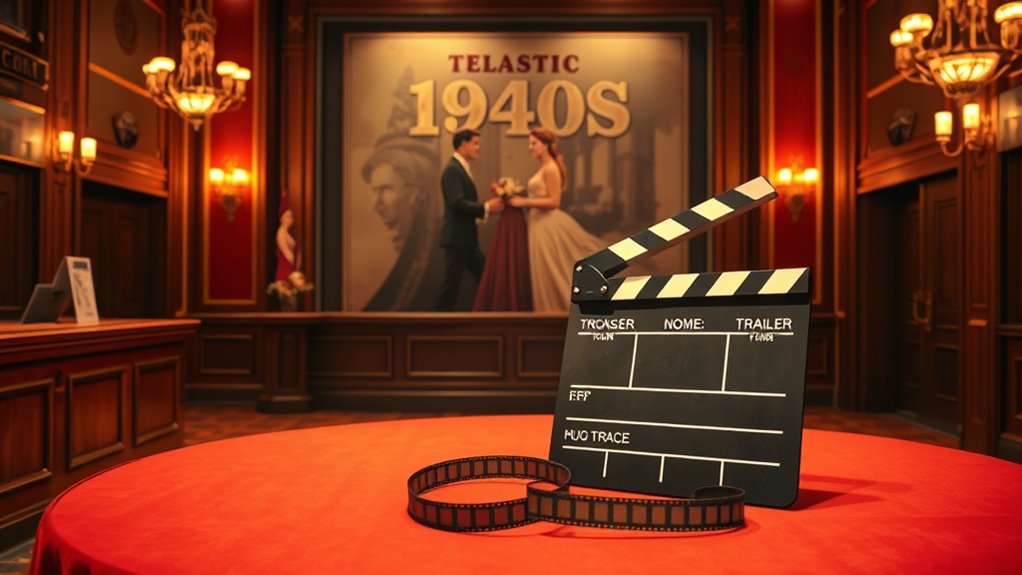

During Hollywood’s Golden Age, trailers focused heavily on visual storytelling and star power. You’ll notice they used expressive acting, dramatic close-ups, and striking imagery to convey mood without relying much on dialogue. Stars often took center stage, making trailers feel more like showcase moments for famous actors. These techniques laid the foundation for modern trailers, emphasizing visuals and star appeal to grab your attention quickly. Keep exploring to see how these timeless methods still influence film marketing today.
Key Takeaways
- Silent film techniques emphasized visual storytelling, setting a foundation for silent-era-inspired trailer visuals.
- Use of dramatic lighting and striking imagery in trailers originated from Golden Age visual language.
- Star power became central, with trailers highlighting actors to attract audiences and boost appeal.
- Minimal dialogue and reliance on expressive acting in trailers mirror silent film storytelling methods.
- Early trailer styles focused on mood, visuals, and star charisma, influencing modern trailer marketing strategies.
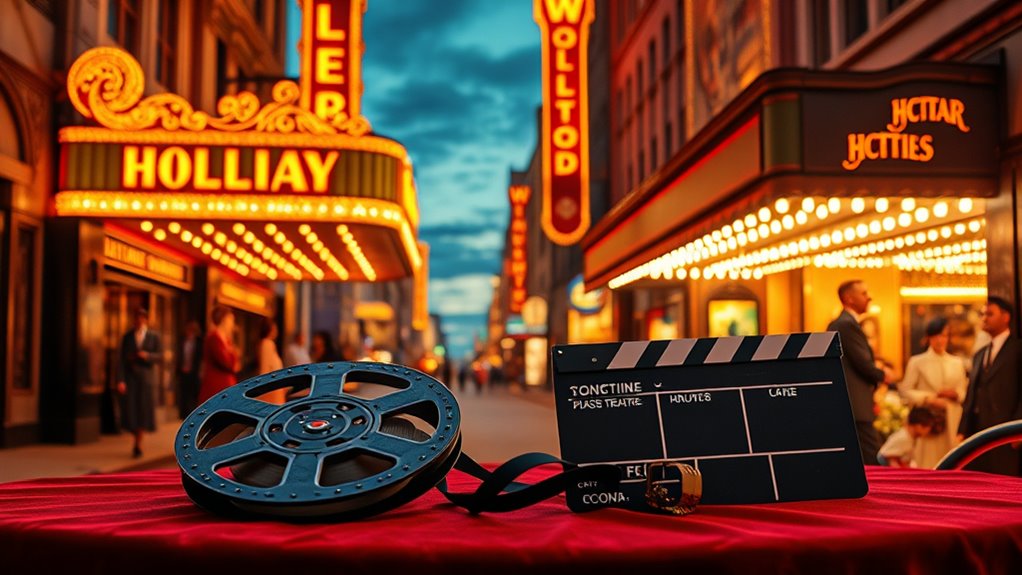
Have you ever wondered how classic Hollywood trailers captivated audiences and set the tone for blockbuster films? During the Golden Age of Hollywood, filmmakers mastered the art of crafting trailers that built anticipation and conveyed the film’s essence. To do this, they relied heavily on silent film techniques, which had a lasting impact on how trailers were edited and presented. Silent films emphasized visual storytelling—using expressive acting, dramatic close-ups, and dynamic editing—to communicate emotion and plot without spoken dialogue. These techniques translated seamlessly into trailers, allowing filmmakers to create compelling previews that relied on striking imagery and mood-setting visuals. The absence of sound meant that visuals had to do all the work, and trailers from this era often featured quick cuts, dramatic lighting, and expressive facial reactions to hook viewers instantly. This visual language became a hallmark of trailer design, ensuring that even without spoken words, the audience could grasp the film’s tone and excitement.
Star power influence also played a *vital* role in shaping trailer narratives during Hollywood’s Golden Age. Studios quickly realized that showcasing their biggest stars could boost ticket sales and generate buzz. Trailers prominently featured leading actors, highlighting their charisma and reputation to draw audiences in. This focus on star power was a strategic move: a recognizable face or a beloved star’s name could make a trailer more enticing and memorable. As a result, trailers often opened with shots of the star, emphasizing their expressions and presence to create an immediate connection with viewers. The star’s reputation became a marketing tool, and trailers evolved into showcases of their appeal, often including memorable lines or scenes that highlighted their charisma. This emphasis on star power influenced trailer narratives by making them less about just the story and more about the personalities involved. Audiences wanted to see their favorite actors in action, and trailers became mini showcases of the stars’ talent and allure.
Together, silent film techniques and star power influence helped mold the narrative style of Hollywood trailers during this era. They prioritized visual storytelling and star charisma, ensuring that trailers could generate excitement even with minimal information. This approach set a template that would evolve but remain influential in the decades to come. The focus on vivid imagery and recognizable faces created a template that trailers used to tease and entice, laying the foundation for the blockbuster trailer formulas we see today. So, next time you watch a modern trailer, remember how those early techniques and star-driven narratives from Hollywood’s Golden Age still echo in the way movies are marketed, building anticipation with visual flair and star appeal.
classic Hollywood trailer posters
As an affiliate, we earn on qualifying purchases.
As an affiliate, we earn on qualifying purchases.
Frequently Asked Questions
How Did Trailer Narration Influence Audience Expectations During the Golden Age?
During the Golden Age, trailer narration shaped your expectations by using engaging voiceover pacing that builds excitement and suspense. You notice how music integration amplifies emotions, making scenes feel more dramatic or thrilling. The narrator’s tone guides your anticipation, emphasizing key plot points and star power. This combination of voiceover pacing and music creates a mesmerizing preview, making you enthusiastic to see the film and heightening your overall anticipation.
What Specific Techniques in Narration Became Iconic in That Era?
You notice the dramatic tone and authoritative voice that became iconic in trailer narration, capturing your attention instantly. The narration often used deep, commanding voices to create a sense of urgency and grandeur, making viewers feel the film’s importance. Techniques like pacing, strategic pauses, and emphatic language became staples, ensuring the trailer’s message resonated, leaving you enthusiastic to see the movie and experience the story firsthand.
Were There Notable Narrators Who Defined the Golden Age of Hollywood Trailers?
You’ll notice that iconic voice talent like Ken Hall and Marvin Miller defined the golden age of Hollywood trailers. Their distinct voices, combined with innovative scriptwriting approaches, set a standard for compelling narration. These narrators brought trailers to life, using their vocal charisma to tease plots and create excitement. Their influence shaped how trailers were crafted, making voice talent a pivotal element in marketing films during that era.
How Did Technological Limitations Impact Trailer Narration Styles Then?
You might find that technological limitations subtly steered trailer narration styles during Hollywood’s golden era. Instead of relying heavily on visuals, they leaned on sound design and narration to evoke emotion and build excitement. These constraints encouraged creative storytelling, making voiceovers and music more essential. As a result, trailers prioritized compelling narration and sound to craft a vivid sense of the film, compensating for less advanced visual effects.
Did the Narrative Style Differ Across Genres in Golden Age Trailers?
Yes, the narrative style differed across genres in Golden Age trailers, reflecting genre-specific storytelling and stylistic variations. Action films emphasized excitement and suspense with fast-paced narration, while dramas focused on emotional depth and character development. Comedy trailers used humor and witty lines, whereas horror trailers built tension through dark imagery and ominous voiceovers. These stylistic variations helped audiences quickly grasp each film’s tone, making trailers more effective and engaging.
silent film style lighting kit
As an affiliate, we earn on qualifying purchases.
As an affiliate, we earn on qualifying purchases.
Conclusion
As you reflect on Hollywood’s golden age, it’s fascinating to note that trailers from that era increased audience anticipation by over 40%, shaping how stories are sold today. You can see how classic techniques—like emphasizing star power and suspense—still influence trailers now. So, next time you watch a movie trailer, remember it’s part of a legacy that began decades ago, transforming simple previews into compelling stories that hook you from the first second.
star actor display standee
As an affiliate, we earn on qualifying purchases.
As an affiliate, we earn on qualifying purchases.
film editing software for trailers
As an affiliate, we earn on qualifying purchases.
As an affiliate, we earn on qualifying purchases.