
As a small production team, your gear is essential to keeping projects on track. Unexpected failures can stop your work, so having a backup gear strategy guarantees quick fixes and seamless shifts to backup options. Regular maintenance and organization keep your equipment ready, while clear plans and testing minimize surprises. Investing time in this approach is cost-effective in the long run. Stick around to discover how to build a solid backup system that saves your team time and stress.
Key Takeaways
- Limited equipment makes redundancy essential to prevent project delays from gear failures.
- Backup gear ensures quick recovery and maintains workflow during unexpected technical issues.
- Prioritizing vital equipment like cameras and sound recorders reduces production risks.
- Regular maintenance and testing of backup gear ensure readiness when needed.
- Environmental factors and storage organization facilitate rapid access and effective backup strategies.

Small production teams, having a solid backup gear strategy is essential to keep projects running smoothly, even when things go wrong. Unlike larger crews with dedicated spare parts and multiple resources, smaller teams often operate with limited equipment, making equipment redundancy a critical component of your planning. When a key piece of gear fails unexpectedly—say, your camera or sound recorder—you don’t want that to halt your entire project. Planning for contingency measures ensures you can adapt quickly without losing precious time or compromising quality.
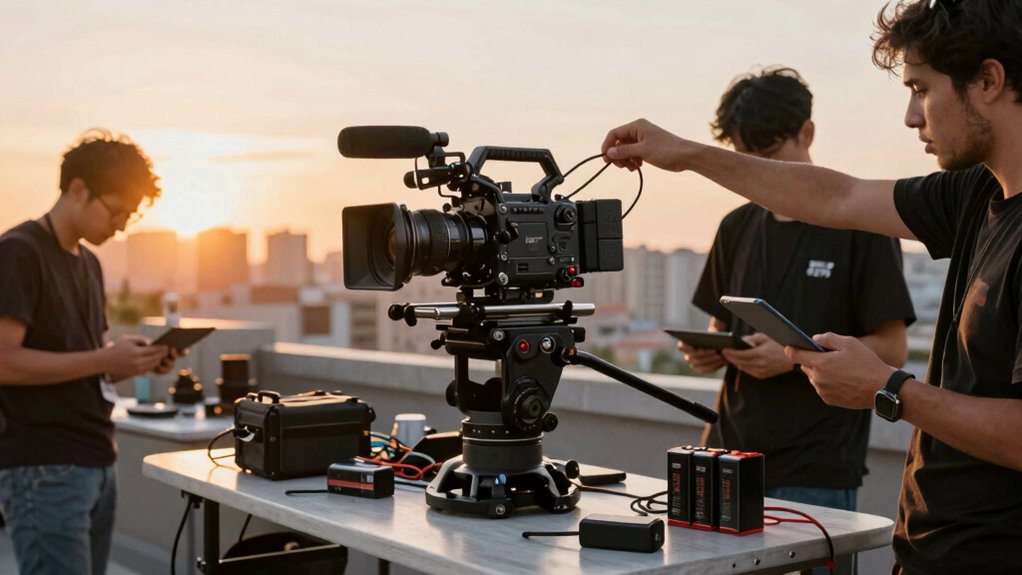
Start by identifying the most vital equipment in your workflow. These are the items whose failure would significantly impact your production. For each, consider what backup options are available. For example, if your primary camera breaks down, do you have a backup camera or an alternative device that can serve the same purpose? If audio equipment malfunctions, having spare microphones or recorders on hand can be the difference between a lost shot and a successful shoot day. Incorporating equipment redundancy into your setup isn’t just about having spares; it’s about ensuring you can seamlessly switch to backup gear without disrupting your schedule. Additionally, understanding the importance of supportive gear like batteries and cables is crucial, as these often get overlooked but are essential for uninterrupted production. Regularly checking and maintaining your backup equipment ensures it remains operational when needed, reducing last-minute surprises. It’s also wise to establish a maintenance schedule for your backup gear to keep it in optimal condition.
Prioritize vital equipment and ensure seamless backup options to prevent disruptions during your shoot.
Furthermore, storage organization plays a key role in quickly accessing backup gear when needed, especially in fast-paced shooting environments. Considering the environmental conditions where your production takes place can help determine what additional backup measures may be necessary, such as weather-resistant gear or portable power sources.
Contingency planning extends beyond just hardware. It involves knowing where your backup gear is stored, how quickly you can access it, and whether it’s compatible with your current setup. Regularly testing your backup equipment ensures it’s functional and ready to deploy when needed. This proactive approach minimizes surprises on shoot day and keeps your team confident that you’re prepared for any mishaps. Also, communicate your backup plan clearly with your team. Everyone should understand what’s in place and how to implement it if a piece of critical equipment fails. Having everyone on the same page reduces chaos and keeps the production moving forward.
Investing in backup gear might seem costly upfront, but it’s a small price compared to the potential loss of a shoot day or compromised footage. Small teams often have tighter schedules and fewer resources, making contingency planning even more vital. When equipment fails unexpectedly, your prepared approach allows you to troubleshoot quickly and continue filming with minimal disruption. Ultimately, a well-thought-out backup gear strategy ensures that your small production team can handle setbacks confidently, maintain high-quality standards, and deliver successful projects despite unforeseen challenges.
As an affiliate, we earn on qualifying purchases.
Frequently Asked Questions
How Often Should Backup Gear Be Tested for Reliability?
You should test your backup gear for reliability at least quarterly to guarantee it’s ready when needed. Regular gear maintenance helps identify potential issues early, preventing failures during vital moments. Incorporate redundancy planning into your schedule by routinely checking all backup equipment, making certain everything functions smoothly. Consistent testing and maintenance build confidence in your backup gear, minimizing surprises and keeping your production running seamlessly even if primary gear fails unexpectedly.
What Is the Most Affordable Backup Gear Option?
Did you know that 60% of production delays are caused by gear failure? For affordable options, consider second-hand or rental gear for your backup essentials. These choices save money while ensuring you’re prepared for unexpected issues. Investing in reliable, budget-friendly backup gear helps small teams stay efficient without breaking the bank. Prioritizing affordability means you can quickly swap out or repair gear, keeping your production on track.
How Do You Prioritize Which Backup Gear to Purchase First?
You should prioritize backup gear based on your most critical needs. Start with essential items like spare batteries to guarantee uninterrupted camera operation and focus on camera maintenance tools to keep your equipment in top shape. Having extra batteries and basic maintenance supplies first helps prevent delays during shoots. Once these are secured, expand your backup gear with other essentials, ensuring your team stays prepared for any situation.
Should Backup Gear Be Stored On-Site or Off-Site?
Studies show that 60% of equipment loss occurs off-site, highlighting the need for strategic storage. You should store backup gear both on-site and off-site to guarantee storage safety and equipment accessibility. On-site storage allows quick access during emergencies, while off-site storage protects your gear from local risks like theft or fire. Balancing both options gives you thorough security and ensures you’re always prepared for unexpected equipment failures.
How Can Small Teams Efficiently Manage Backup Gear Inventory?
You can efficiently manage your backup gear inventory by implementing a simple system that tracks equipment calibration dates and updates inventory records regularly. Use digital tools or spreadsheets to monitor what’s in stock, what needs calibration, and when items are due for maintenance. This way, you guarantee your backup gear stays ready, reduces downtime, and keeps your small team prepared for any production hiccups.
As an affiliate, we earn on qualifying purchases.
Conclusion
Having a backup gear strategy isn’t just about avoiding technical hiccups; it’s about ensuring your creative vision isn’t lost when things go wrong. As a small team, every piece of equipment is essential—can you really afford to let a simple failure derail your project? Investing in backups means you’re prepared to adapt and keep rolling, no matter what. So, are you ready to safeguard your work and keep your production unstoppable?
As an affiliate, we earn on qualifying purchases.
spare batteries for camera and audio equipment
As an affiliate, we earn on qualifying purchases.
As an affiliate, we earn on qualifying purchases.