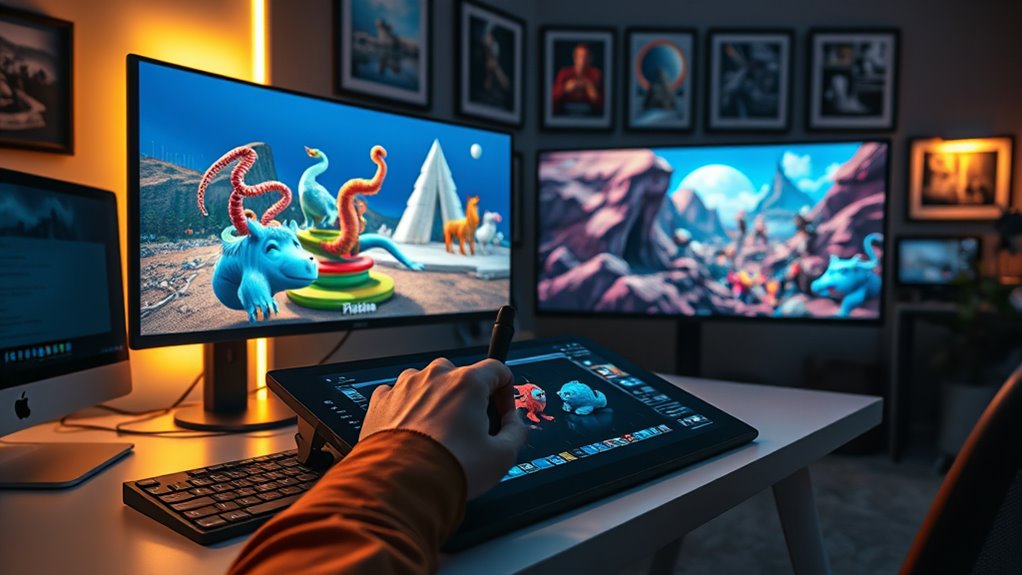

Milestones in CGI access for independent creators include the rise of open-source software, affordable hardware, and cloud computing that lowered costs and barriers. User-friendly interfaces and online tutorials made learning easier, while communities offered support and inspiration. As a result, high-quality CGI tools are now accessible to anyone with a computer, enabling you to explore your creative ideas without studio resources. If you want to discover the key developments behind this democratization, keep exploring this fascinating evolution.

Get movie nights delivered free — and shop member deals
- Fast, free delivery on millions of items
- Access to Prime Big Deal Days deals on October 6–7
- Prime Video, Amazon Music and more included
Key Takeaways
- Introduction of open-source CGI software reduced licensing costs, making tools accessible to independent creators.
- Cloud computing services enabled affordable access to high processing power without expensive hardware.
- User-friendly interfaces and guided tutorials simplified learning curves for novices and small teams.
- The rise of online communities and tutorials supported skill development and experimentation.
- Hardware affordability and open-source options democratized high-quality CGI production for individual artists.
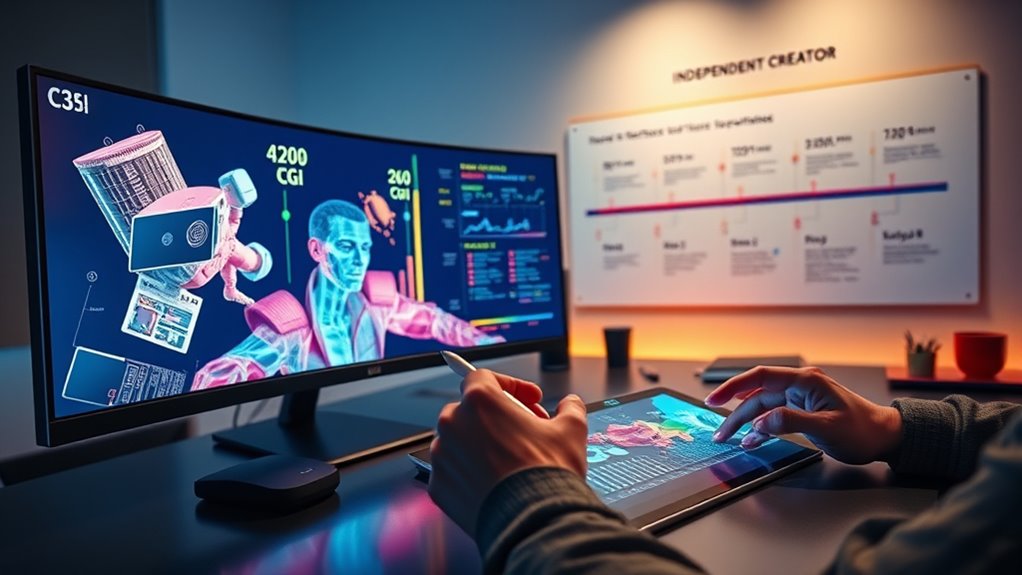
Have you ever wondered how CGI access has evolved over the years? It’s been a fascinating journey, especially for independent creators who rely on accessible and efficient tools. In the early days, CGI work was limited to large studios with hefty budgets, making it nearly impossible for solo artists or small teams to explore high-quality visual effects. Over time, technological advancements brought about significant milestones that changed the game, particularly in reducing costs and enhancing user interfaces. These developments allowed independent creators to access powerful CGI tools without breaking the bank or struggling through complicated interfaces.
Initially, CGI access was plagued with high costs, requiring expensive hardware and specialized software. This limited its use to big studios with deep pockets. But as technology progressed, cloud computing and open-source software began to emerge. These innovations introduced a new era where cost reduction became a reality. Now, creators could rent processing power via the cloud or download free, open-source tools that offered robust features without hefty licensing fees. This shift lowered the barrier to entry, enabling more independent creators to experiment and produce professional-level CGI work. The affordability of these tools meant that creators no longer had to compromise on quality due to budget constraints.
Cloud computing and open-source software revolutionized CGI accessibility, allowing independent creators to produce professional-quality work affordably.
Alongside cost reduction, user interface improvements played a pivotal role in democratizing CGI access. Early CGI software often featured complex, unintuitive interfaces that required extensive training and experience. Recognizing this, developers started designing more user-friendly interfaces, with intuitive workflows and guided tutorials. As a result, creators could learn and adapt more quickly, reducing the learning curve and enabling faster project turnaround times. Modern CGI platforms now emphasize accessibility, with drag-and-drop features, real-time previews, and customizable layouts that cater to both novices and experienced artists. These enhancements foster a more inclusive environment where creativity isn’t hindered by technical barriers. Additionally, the integration of home decor-inspired aesthetic elements into some CGI tools has made visual effects more appealing and adaptable for creative projects. The evolution of user-friendly interfaces has also contributed significantly to lowering the skill barrier, making CGI creation more approachable for beginners. Furthermore, the development of cloud-based services has enabled creators to access high-powered computing resources from anywhere, further democratizing the field. A notable trend has been the emergence of open-source software, which has empowered countless independent artists to customize and extend their tools without licensing restrictions.
Furthermore, the rise of online communities and tutorials has complemented these interface improvements. Independent creators now have access to a wealth of resources, making it easier to master new tools and techniques. This supportive environment encourages experimentation, pushing the boundaries of what individual artists can achieve with CGI. Additionally, the growth of affordable hardware options has made high-quality CGI creation more feasible for small-scale creators. The combination of cost reduction and improved user interfaces has created a landscape where high-quality CGI work is increasingly within reach for independent creators. It’s no longer solely the domain of large studios; now, anyone with a computer and a passion for visual storytelling can create stunning CGI effects. As technology continues to advance, the accessibility of professional-grade CGI tools will likely become even more widespread, fostering a new wave of creative innovation.
Top picks for "mileston acces independent"
As an affiliate, we earn on qualifying purchases.
Frequently Asked Questions
What Are the Future Trends in CGI Access Technology?
You can expect future CGI access technology to focus on AI integration and cloud-based rendering. AI will streamline workflows, enabling quicker, more realistic creations, while cloud rendering offers scalable, cost-effective solutions that let you work from anywhere. These advancements will make CGI more accessible and efficient, empowering you to produce high-quality content without expensive hardware. Prepare for a more seamless, collaborative, and innovative creative process ahead.
How Do Costs Vary With Different CGI Access Solutions?
When comparing CGI access solutions, you’ll notice costs vary based on features, scalability, and quality considerations. Free or low-cost options might save you money initially, but they often lack advanced tools or high-quality output. Premium solutions offer better quality and more capabilities, but at a higher price. Do a thorough cost comparison to find a balance that meets your needs without compromising quality, ensuring you get the best value for your investment.
Are There Any Legal Restrictions on CGI Content Creation?
Imagine your CGI creations are like a ship steering legal waters; you must follow the rules of the sea. You’re bound by intellectual property laws and licensing regulations that protect others’ work and set boundaries for your content. Violating these restrictions can lead to legal storms. So, always make certain you have proper rights and licenses, stay informed about legal restrictions, and steer clear of infringing on others’ intellectual property.
How Can Independent Creators Secure Funding for CGI Projects?
You can secure funding for your CGI projects by exploring crowdfunding platforms like Kickstarter or Indiegogo, where supporters can directly fund your ideas. Additionally, look into grant opportunities from arts organizations, tech companies, or government agencies that support creative projects. Building a compelling pitch and showcasing your talent can increase your chances of receiving these funds, helping you bring your CGI visions to life without significant upfront costs.
What Skills Are Essential for Leveraging New CGI Access Tools?
To leverage new CGI access tools, you need sharp skills that bring your visions to life. Master character modeling to craft detailed, believable characters, and refine lighting techniques to set moods and highlight features. Practice blending creativity with technical precision, stay updated on software innovations, and develop an eye for detail. These skills help you transform ideas into stunning visuals, making your projects stand out and resonate with audiences.
Conclusion
You’ve seen how access to CGI has evolved from exclusive studios to empower independent creators like you. It’s clear that barriers are falling, opening doors you once only dreamed of walking through. Remember, the tide is turning, and now’s your chance to ride the wave of innovation. Keep pushing boundaries and don’t let the grass grow under your feet—your creative journey is just getting started. The future’s bright, and it’s waiting for you to seize it.
Fall Picks
fall essentials
As an affiliate, we earn on qualifying purchases.