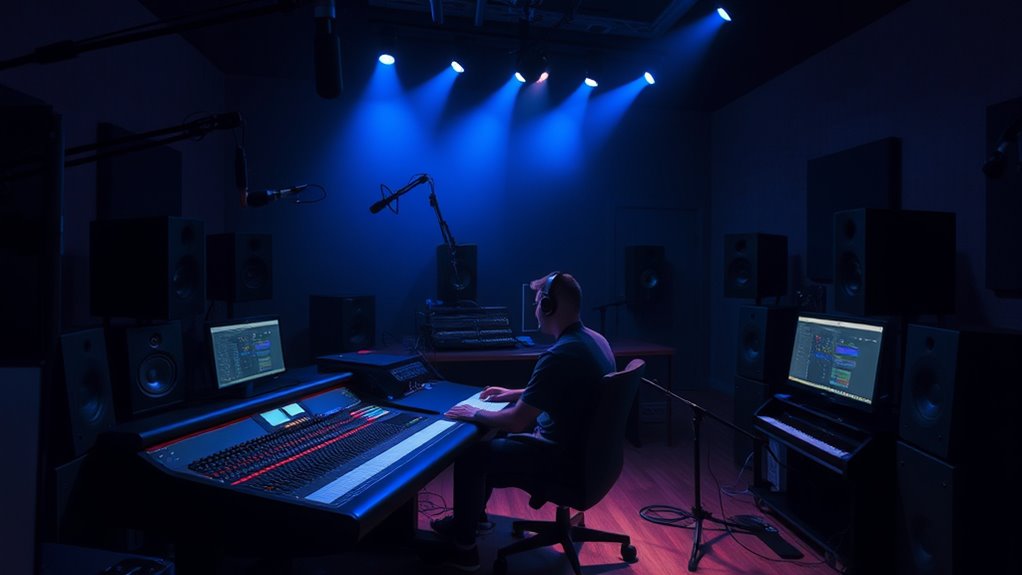

To create suspense with sound design, you’ll want to skillfully layer different audio elements, like subtle background noises or faint whispers, to build a tense atmosphere. Use silence strategically to heighten anticipation and draw focus to key moments. Balancing these techniques—adding and removing sounds—guides emotional responses without overwhelming viewers. High-quality equipment helps achieve clarity and precision. Keep exploring these core strategies to master suspense and craft unforgettable scenes that keep your audience on edge.
Key Takeaways
- Layer subtle background noises beneath key sounds to build an immersive and tense atmosphere.
- Use silence strategically before reveals to heighten anticipation and emotional impact.
- Balance sound layers and silence to guide emotional responses without overwhelming the scene.
- Employ precise sound control to craft emotional and narrative tension throughout scenes.
- Utilize high-quality audio equipment to ensure clarity and enhance the effectiveness of suspenseful sound design.
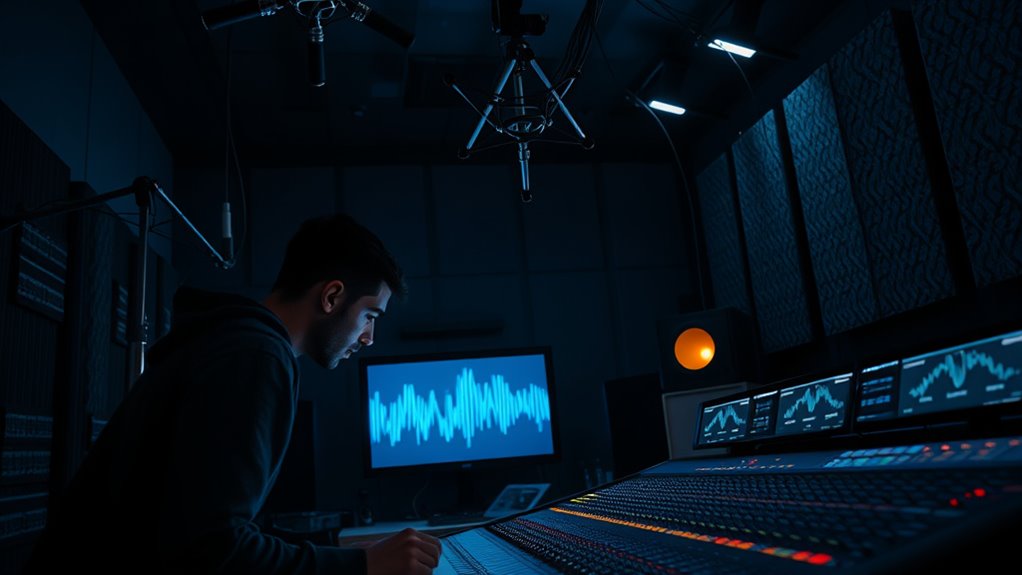
Have you ever wondered how filmmakers build tension without showing everything on screen? The secret often lies in the artful use of sound design. Sound layering is a vital technique here—by combining different audio elements, you can create a rich, immersive atmosphere that keeps viewers on edge. For instance, subtle background noises layered beneath a whisper or distant footsteps can suggest unseen threats, making the scene feel more tense and unpredictable. When you carefully stack sounds at varying volumes and frequencies, you build a sonic texture that enhances the visual narrative without overwhelming it. This layered approach ensures that each sound has a purpose, contributing to the overall mood and tension.
Silence manipulation is equally powerful in creating suspense. It’s not just about what you play but also what you choose to omit. Strategic silence can be more unsettling than constant noise. For example, a moment of complete silence right before a reveal or jump scare can heighten anticipation, making viewers tense and alert. When you manipulate silence in your sound design, you control the pacing and emotional rhythm of a scene. Pausing sounds at key moments draws attention to the silence itself, making it feel heavy and foreboding. This technique forces your audience to focus, filling the void with their own anxieties and expectations. The contrast between sound and silence creates a dynamic tension that keeps viewers engaged and enthusiastic to see what happens next.
Balancing sound layering with silence manipulation takes practice, but when done effectively, it transforms a simple scene into a nerve-wracking experience. You don’t have to rely on loud noises or jarring effects to generate suspense; instead, you can craft an auditory landscape that subtly guides emotions. For example, a faint heartbeat sound layered beneath a tense conversation can evoke fear or nervousness. Then, cutting to complete silence right after a shocking statement amplifies the impact, making the audience feel the weight of the moment. By carefully controlling what sounds are introduced and when silence is used, you keep viewers emotionally engaged without them realizing it.
Ultimately, creating suspense with sound design is about precision and intent. You shape the emotional landscape, guiding your audience through moments of calm and chaos alike. When you master sound layering and silence manipulation, you empower your storytelling, making every scene resonate with tension and anticipation. It’s this mastery that turns a good film into an unforgettable experience, where what’s heard is just as important as what’s seen. Incorporating elements like high-quality audio equipment can further enhance the clarity and effectiveness of your sound design, ensuring your audience remains fully immersed in the suspenseful experience.
professional sound design headphones
As an affiliate, we earn on qualifying purchases.
As an affiliate, we earn on qualifying purchases.
Frequently Asked Questions
How Does Silence Enhance Suspense in Sound Design?
Silence enhances suspense by creating silent pauses that build anticipation and keep you on the edge of your seat. When you experience moments of quiet, your attention heightens, making you more engaged with the scene. These pauses allow tension to simmer, making sudden sounds more impactful. By strategically using silence, you draw the listener deeper into the story, increasing emotional investment and making the suspense feel more intense and real.
What Are the Best Tools for Creating Suspenseful Sound Effects?
You should explore sound libraries and Foley techniques to craft suspenseful effects. Sound libraries offer a vast range of pre-recorded sounds that you can layer or manipulate for tension. Foley techniques involve recording everyday objects to create realistic, unsettling atmospheres. Combining these tools allows you to build suspense effectively, adding depth and unpredictability to your scenes. Experimenting with different sounds and textures will help you find the perfect, suspenseful auditory atmosphere.
How Can Music Influence Emotional Responses During Tense Scenes?
Music heightens emotional responses during tense scenes by building musical tension that keeps your audience on the edge of their seats. You can use subtle crescendos, dissonant chords, or sudden silences as emotional cues that trigger fear, anticipation, or relief. These techniques manipulate your audience’s feelings, guiding their reactions and intensifying suspense. By carefully crafting the soundtrack, you make every moment feel more urgent and immersive.
What Role Do Ambient Sounds Play in Building Anticipation?
Ambient sounds play a vital role in building anticipation by layering ambient layers and soundscape textures that subtly heighten the tension. You can create a sense of unease or expectancy by gradually introducing these textures, making the audience feel more immersed and alert. Carefully manipulating ambient sounds guides their emotional journey, making the suspense more compelling and immersive as the scene progresses, effectively keeping them on the edge of their seats.
How Do Different Genres Utilize Sound Design to Create Suspense?
Imagine the subtle whisper of sound symbolism guiding your emotions, as genres bend and blend to shape suspense. In thrillers, sharp, sudden noises heighten tension, while in horror, eerie silence and unsettling ambient sounds deepen fear. Action films use rhythmic sound cues to energize, whereas mysteries rely on layered, unpredictable textures. You see, each genre uses sound design and conventions to craft a unique, immersive experience that keeps you on the edge of your seat.
studio monitor speakers for sound editing
As an affiliate, we earn on qualifying purchases.
As an affiliate, we earn on qualifying purchases.
Conclusion
By mastering sound design, you hold the power to keep your audience on the edge of their seats. Every whisper, crescendo, and subtle cue builds tension, drawing listeners deeper into your story. Remember, silence can be just as powerful as sound, so use it wisely. When you strike the right balance, you’ll have your audience hanging by a thread, enthusiastic to see what’s next. After all, it’s not over until the fat lady sings.
high-quality microphone for audio recording
As an affiliate, we earn on qualifying purchases.
As an affiliate, we earn on qualifying purchases.
sound mixing headphones for filmmakers
As an affiliate, we earn on qualifying purchases.
As an affiliate, we earn on qualifying purchases.